
Beyond Numbers: Multi-Granularity Linguistic Aggregation for Dynamic Supply Performance
Applying a direct multi-granularity linguistic and strategy-oriented aggregation approach on the assessment of supply performance
2006-05-06
Summary
Problem
Method
Results
Takeaways
Abstract
This paper presents a multi-granularity linguistic assessment framework for supply chain performance, utilizing Fuzzy Set theory to handle qualitative uncertainty. It introduces the Strategy-Oriented Maximal Entropy Linguistic Ordered Weighted Averaging (ME-LOWA) operator to aggregate supplier data across different product life cycle stages.
In the era of hyper-customization and shortening product life cycles, traditional supply chain management faces a paradox: how do we objectively measure "soft" performance metrics like R&D innovation or service reliability that are inherently subjective and fuzzy?
The paper **"Applying a direct multi-granularity linguistic and strategy-oriented aggregation approach on the assessment of supply performance"** addresses this by pivoting from "crisp" numerical quantification to a sophisticated fuzzy linguistic framework.
## TL;DR
The authors propose a system that allows decision-makers to evaluate suppliers using natural language (e.g., "Very Good," "Fair") across different scales. By utilizing the **ME-LOWA operator**, the system automatically adjusts the weight of these evaluations based on the enterprise's current strategic focus (Introduction, Growth, or Maturity phases), ensuring the "fuzzy" inputs result in a logically sound, strategy-aligned ranking.
## The Problem: The Inaccuracy of Precision
In supply chain performance, many behaviors have "active continuity"—they span the past, present, and future. Prior work often forced these behaviors into rigid numerical containers.
* **The Flaw**: Assessing "R&D Ability" as a 7.5/10 is an artificial precision that masks the uncertainty of the evaluator.
* **Cognitive Bias**: Different managers use different mental scales. A shared "7" might mean something entirely different to a technical lead versus a procurement manager.
## Methodology: Bridging the "Granularity" Gap
The core of the methodology lies in three pillars:
### 1. Multi-Granularity Linguistic Term Sets (LTS)
The authors don't force a single scale. High-uncertainty areas (R&D) might use a 7-term scale (LTS7), while more stable metrics (Cost) use a 9-term scale (LTS9). This preserves **Cognitive Sensitivity**.
### 2. Information Uniformity
To aggregate these different scales, the paper uses a **Basic Linguistic Term Set (BLTS)**. It acts as a "common denominator" fuzzy set, transforming terms from various granularities into a uniform membership grade without losing semantic discrimination.
### 3. The Strategy-Oriented ME-LOWA Operator
This is where the "Why" meets the "How."
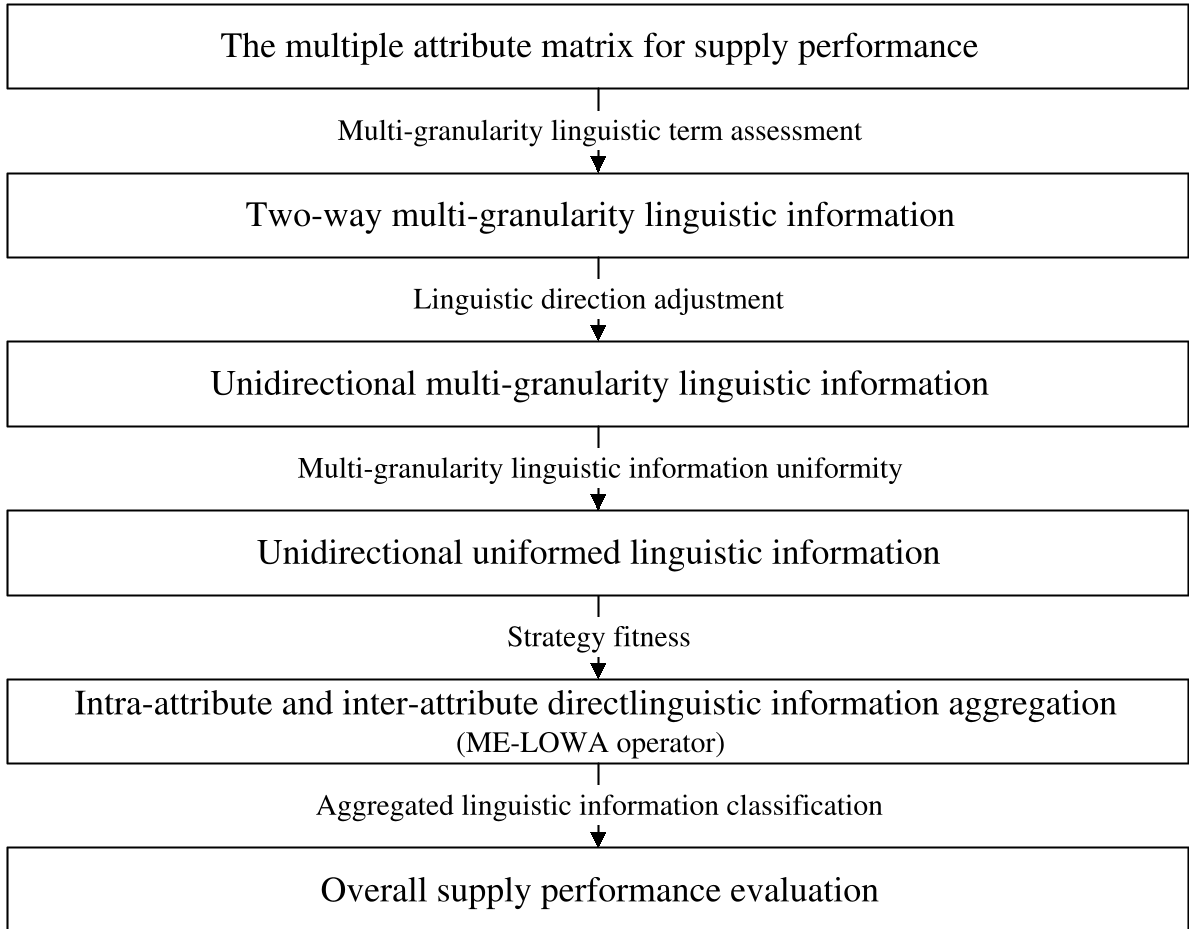
* **Orness and Entropy**: The system calculates the "Orness" (the degree to which a manager is optimistic or pessimistic) and optimizes weights using **Maximal Entropy**. This ensures that the aggregation uses as much information as possible from every behavior assessed.
* **Product Life Cycle (PLC)**: In the 'Maturity' phase, cost is "Critical" while R&D is "Basic." The fuzzy quantifiers (e.g., "Most," "At least half") shift the weights automatically to favor cost-efficiency.
## Experimental Insight: The Notebook Computer Case
The authors tested this on a notebook manufacturer choosing between three suppliers:
* **Supplier A**: R&D Leader.
* **Supplier B**: Manufacturing powerhouse.
* **Supplier C**: Distribution specialist.
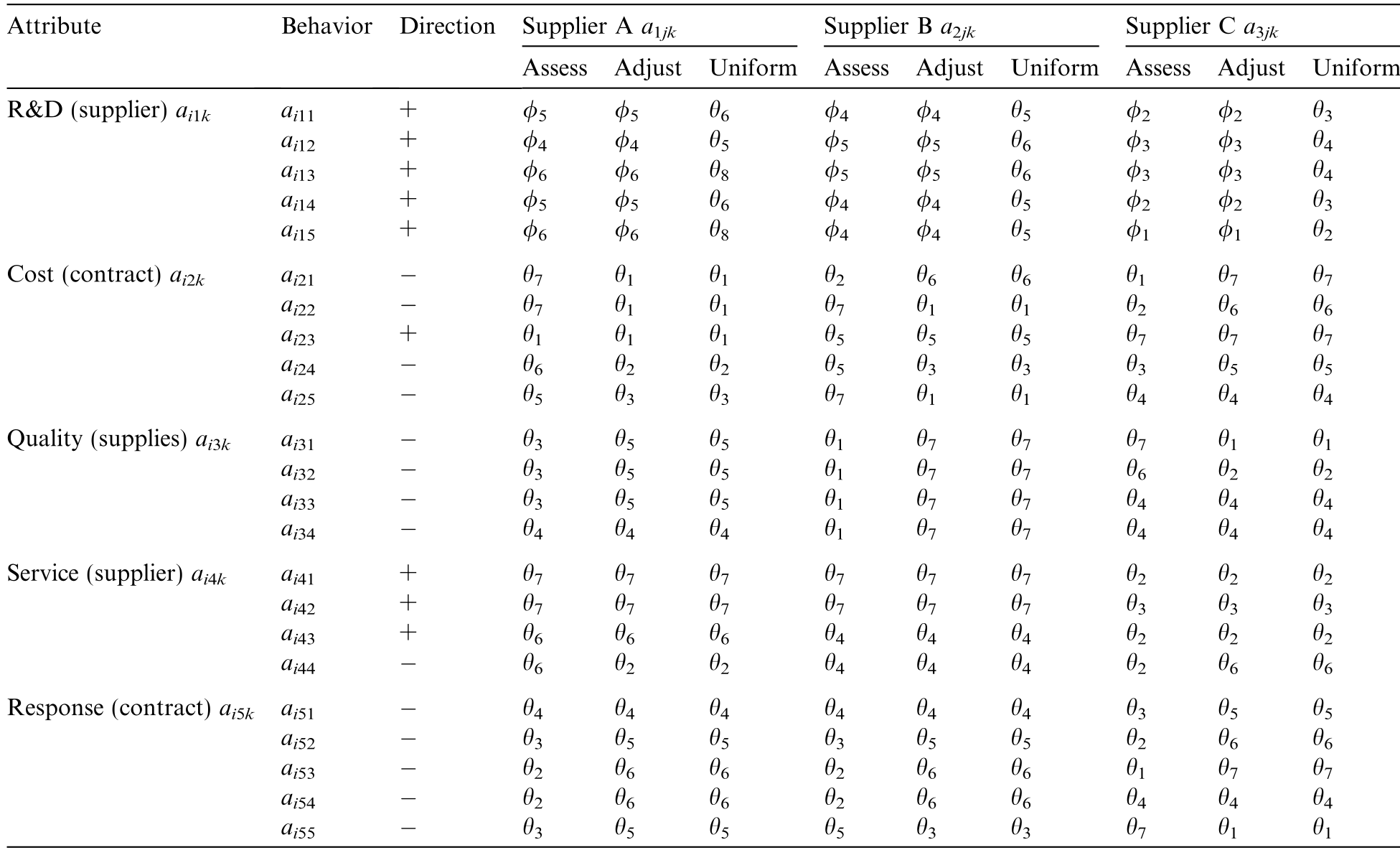
In a **Maturity phase** market, the model successfully identified **Supplier B** as the top performer (Result: θ4). Even though Supplier A had better R&D scores (θ6 vs θ5), the strategy-oriented weighting recognized that in a mature market, Supplier B's superior quality (θ7) and stable costs were more valuable to the enterprise.
## Critical Analysis & Future Outlook
The beauty of this approach is its **Directness**. There is no conversion to crisp numbers midway through, which maintains the "fuzzy" integrity of human judgment.
**Limitations**:
* **Complexity**: Defining membership functions for multiple LTS requires a high level of expertise in fuzzy logic.
* **Sensitivity**: As the authors noted, using fewer semantic elements (SE) can make the system "tight" and less sensitive to small performance shifts.
**Future Perspective**:
Integrating this linguistic model with **LLMs (Large Language Models)** could be the next frontier. Imagine an AI that reads performance reports and automatically maps them to these linguistic scales, removing the manual labor of fuzzy assessment while retaining the strategic rigor of the ME-LOWA operator.
## Conclusion
This research moves us closer to "Mental Decision Making" in automated systems. By embracing the fuzziness of human language rather than fighting it, enterprises can build supply chains that are not just efficient, but strategically coherent.