
Beyond Popularity: Discovering Hidden Value via Lexical Link Analysis and Distributed Agents
Discovering High-Value Information from Crowdsourcing
2017-07-31
Summary
Problem
Method
Results
Takeaways
Abstract
The paper introduces a unified methodology combining Lexical Link Analysis (LLA) and Collaborative Learning Agents (CLA) to discover high-value information from heterogeneous data. By leveraging unsupervised recursive learning, the LLA/CLA system categorizes information into Popular, Emerging, and Anomalous themes, achieving a significant correlation with human-voted "high-value" innovation ideas in crowdsourcing tasks.
## Executive Summary
**TL;DR**: This paper presents a robust unsupervised learning framework—**Lexical Link Analysis (LLA)** integrated with **Collaborative Learning Agents (CLA)**—designed to find the "needles in the haystack" of crowdsourced data. By moving away from frequency-based popularity and focusing on anomality, the system identifies high-value innovative ideas that traditional search and ranking algorithms (like PageRank) often overlook.
**Strategic Positioning**: This work bridges the gap between traditional graph theory and modern text mining. It moves beyond simple "Bag-of-Words" models to a more semantically rich "Bag-of-Links" approach, providing a scalable solution for organizations like the Department of Defense (DoD) to automate the discovery of innovation.
## The Problem: The "Popularity Trap" in Traditional Analytics
Current automated methods are excellent at telling us what is *popular*, but they struggle with what is *important*. Traditional algorithms like PageRank or HITS require explicit link structures (hyperlinks, citations), which don't exist in most internal databases or raw social media feeds.
Furthermore, latent space models such as LDA (Latent Dirichlet Allocation) are computationally expensive in Big Data environments and often fail to separate noisy anomalies from truly valuable "emerging" trends. The authors argue that in fields like resource management or defense, the most valuable information is often found in the **Anomalous**—the ideas that don't fit the current center of gravity but possess high potential.
## Methodology: The Architecture of LLA/CLA
The core innovation lies in treating language as a dynamic network of bi-grams (word pairs) rather than a collection of individual tokens.
### 1. Lexical Link Analysis (LLA)
Instead of a "Bag-of-Words," LLA constructs a "Social Network of Lexicons."
* **Step 1-2**: Words are filtered and paired based on proximity and frequency.
* **Step 3**: Community detection (Newman's Modularity) is applied to these pairs.
* **Step 4**: Themes are categorized based on their "internal vs. external" connectivity (Intra-cluster vs. Inter-cluster edges).
### 2. Collaborative Learning Agents (CLA)
To handle "Big Data" scale, the authors use a distributed agent-based infrastructure. Each CLA acts as an autonomous sensor that ingests data, extracts patterns, and identifies anomalies locally before fusing insights globally.
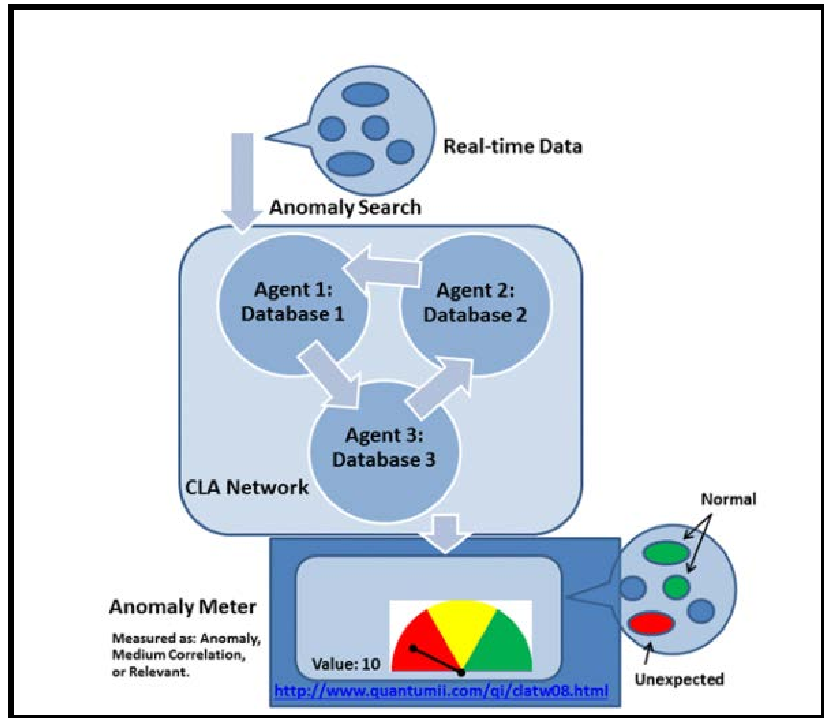
*Fig 4: Multiple agents working together to discover patterns across heterogeneous data.*
## Experiments: Validating with the US Navy's "Innovation Hatch"
The authors tested their system on 255 ideas from an open innovation forum. Crucially, they did **not** use the "Vote Up" scores (human-assigned value) during training.
### Key Findings:
* **Anomalous themes** represented the highest value ideas, with an average human score of **11.5**.
* **Popular themes**, while common, were often dismissed as "public consensus" and scored much lower (**6.8**).
* **Temporal Spread**: Anomalous and Emerging ideas showed a unique "spread" over time, indicating their potential to become the "New Normal."

*Table 1: Categorization Results showing that "Anomalous" ideas correlate with high human interest.*
## Critical Insight: Why This Works
The brilliance of LLA lies in its **Inductive Bias**. By assuming that "Standard" information is highly interconnected and "Anomalous" information is sparsely but uniquely linked, the authors mimic how a human expert spots a "weird but genius" idea.
By using a modularity matrix—essentially a Principal Component Analysis (PCA) for networks—the system mathematically separates the "signal" of innovation from the "noise" of common knowledge without requiring a single human label.
## Conclusion & Future Outlook
**Takeaway**: The LLA/CLA framework proves that we can discover high-value intelligence in an unsupervised manner by focusing on network topology rather than just word frequency.
**Limitations**: The reliance on bi-grams may miss deeper semantic nuances that Large Language Models (LLMs) capture today. However, the computational efficiency of LLA/CLA makes it a far superior choice for real-time, parallel processing of massive, heterogeneous datasets where the luxury of GPU-intensive deep learning might not be available.
**Future Direction**: Integrating this "Anomality-First" ranking system with LLMs could create a powerful pipeline where LLA filters the "interesting" data for the LLM to summarize and analyze in detail.