
Envisioning Healthcare Complexity: Marrying Simulation with Social Network Analysis
Envisioning compexity in healthcare systems using discrete event simulation and social network analysis
This paper introduces a hybrid modeling framework that integrates Discrete Event Simulation (DES) with Social Network Analysis (SNA) to quantify complexity in healthcare systems. The method categorizes emergency department operations into four complexity quadrants to analyze their impact on patient queues and waiting times.
TL;DR
Modern healthcare is an intricate web of people, technology, and protocols. This research proposes a novel approach to visualize and quantify this mess: by combining Discrete Event Simulation (DES) with Social Network Analysis (SNA). By treating the emergency department as a dynamic social network, the authors provide a scientific way to measure how the "interrelatedness" of hospital components directly impacts patient wait times.
Background: Positioning Complexity
We often call healthcare "complex," but we rarely define what that means mathematically. This work positions itself as a bridge between operational engineering (DES) and relational sociology (SNA). It moves beyond standard queueing theory to look at the topology of the system—how the specific connections between a nurse, a bed, and a specialist create bottlenecks that traditional models miss.
The Core Problem: The Missing Link in Coordination
Existing tools like Cognitive Work Analysis or basic design simulations are limited. They view tasks in isolation or focus solely on the user. However, the true "pain point" in an Emergency Department (ED) is the inter-relatedness. If a protocol change adds a new layer of communication between a triage nurse and a specialist, the complexity increases. Without accounting for these "node-level" and "tie-level" changes, hospital administrators remain blind to why their coordination is failing.
Methodology: The CSN Framework
The authors propose a Complex Social Network (CSN) model.
- Components as Nodes: Not just people (doctors, patients, nurses), but also artifacts (beds, diagnostic tech).
- Quantifying Complexity: Using the framework by Kannampallil et al., they map complexity along two axes: Number of Components vs. Degree of Interrelatedness.
Dynamic Structure
By running a Discrete Event Simulation (DES), the researchers can "mine" data at specific intervals (e.g., every 3 hours). This allows them to see how the hospital moves between four complexity quadrants: Simple, Complicated, Relatively Complex, and Complex.
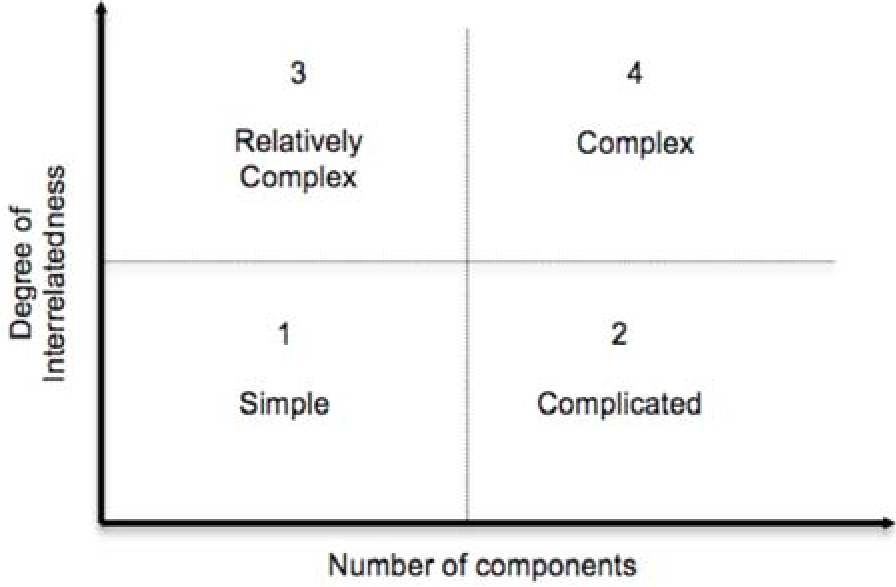
Fig 1: The framework used to categorize social system complexity based on components and their interrelatedness.
Simulation: The "What-If" Engine
The DES model (depicted below) serves as a digital twin of the emergency department. It captures the entire patient journey—from entry and treatment to discharge.
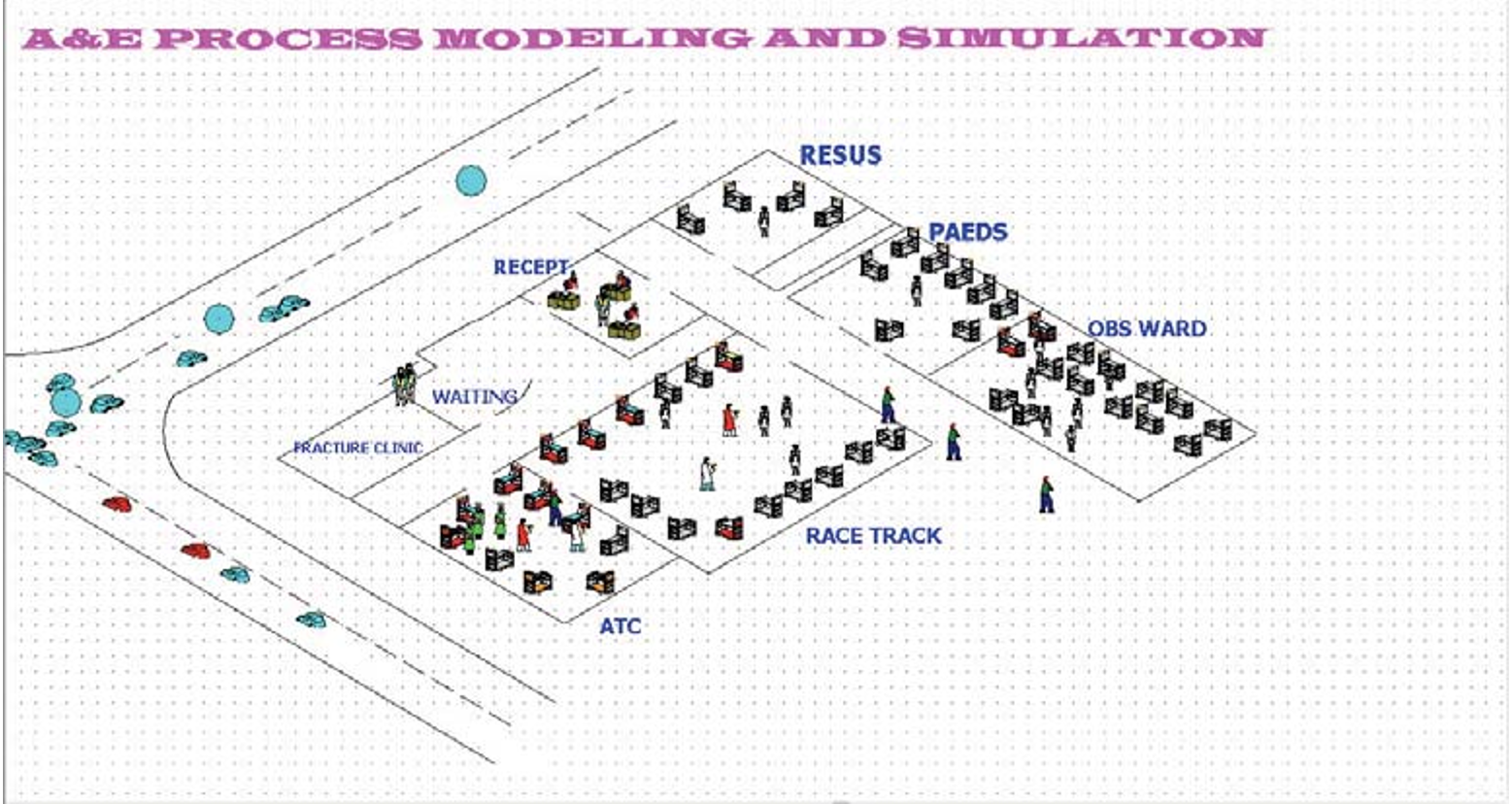
Fig 2: The architecture of the Discrete Event Simulation used to generate the relational data.
The genius of this approach is the ability to perform stress tests:
- What happens to complexity if we reduce the number of beds?
- How does modified departmental organization affect the "interrelatedness" of the network?
- Does a "Complex" state statistically correlate with a jump in waiting times? (Validated via t-tests).
Critical Insight & Conclusion
This paper transcends traditional "resource management." It suggests that the Social Network of a hospital is a living infrastructure.
Takeaway
The true value here is the operationalization of complexity. Instead of complexity being a vague excuse for inefficiency, it becomes a measurable metric. By identifying which "quadrant" a hospital is operating in, managers can deploy more targeted coordination strategies.
Limitations & Future Work
As a demonstration paper, the primary focus is on the framework rather than a long-term clinical trial. Future research should look at automated network extraction (e.g., using RFID or EHR logs to build the SNA graph in real-time) rather than relying on manual simulation parameters. The bridge between SNA and actual medical outcomes (patient recovery rates) remains the next frontier.