
Beyond Sentiment: Leveraging Plutchik’s Wheel and Emoji for High-Accuracy Emotion Detection
Distant Supervision for Emotion Classification with Discrete Binary Values
This paper introduces a distant supervision framework for emotion classification in tweets using Plutchik's eight primary bipolar emotions. By utilizing emoticons, hashtags, and (for the first time) emoji as noisy labels, the authors decompose multi-class emotion detection into four independent binary classification tasks.
TL;DR
Researchers from Vassar College have pushed the boundaries of emotion detection on Twitter by moving away from traditional multi-class classification and standard emotion sets. By adopting Plutchik’s bipolar emotion model and incorporating emoji as training labels—alongside hashtags and emoticons—they achieved accuracy rates as high as 91%, outperforming previous SOTA methods that relied on Ekman’s six categories.
Problem & Motivation: The Limits of Ekman and Manual Labels
Most existing emotion research utilizes Ekman’s six basic emotions (anger, disgust, fear, happiness, sadness, surprise). However, this model has two major flaws for social media analysis:
- Contextual Gaps: It lacks "love" and "trust," which are ubiquitous in social interactions.
- Structural Complexity: Treating emotions as 6+ independent classes makes classification difficult and data intensive.
Furthermore, the "bottleneck" of supervised learning is manual annotation. While Distant Supervision (using emoticons as proxy labels) has been used for binary sentiment (positive vs. negative), extending it to nuanced emotions requires a more robust theoretical framework and a broader vocabulary of non-textual signals.
Methodology: The Power of Polarity
The authors propose a shift to Plutchik’s psychoevolutionary theory. Plutchik organizes eight primary emotions into four mutually exclusive bipolar pairs:
- Joy vs. Sadness
- Anger vs. Fear
- Trust vs. Disgust
- Anticipation vs. Surprise
1. Architectural Insight: Binary Decomposition
By treating emotion detection as four independent binary decisions, the researchers reduced a complex multi-label problem into simpler, more manageable tasks. A tweet is evaluated for each pair; for instance, a classifier decides if a tweet is more likely to represent "Joy" or "Sadness."
2. The Input: Emoji as the New Gold Standard
While previous works focused on emoticons (":-)") and hashtags (#happy), this study is among the first to systematically incorporate Emoji (Unicode characters). The authors manually mapped 70 emoji to Plutchik’s categories, recognizing that a "heart" or "kissing face" provides a stronger emotional signal than a text-based synset.
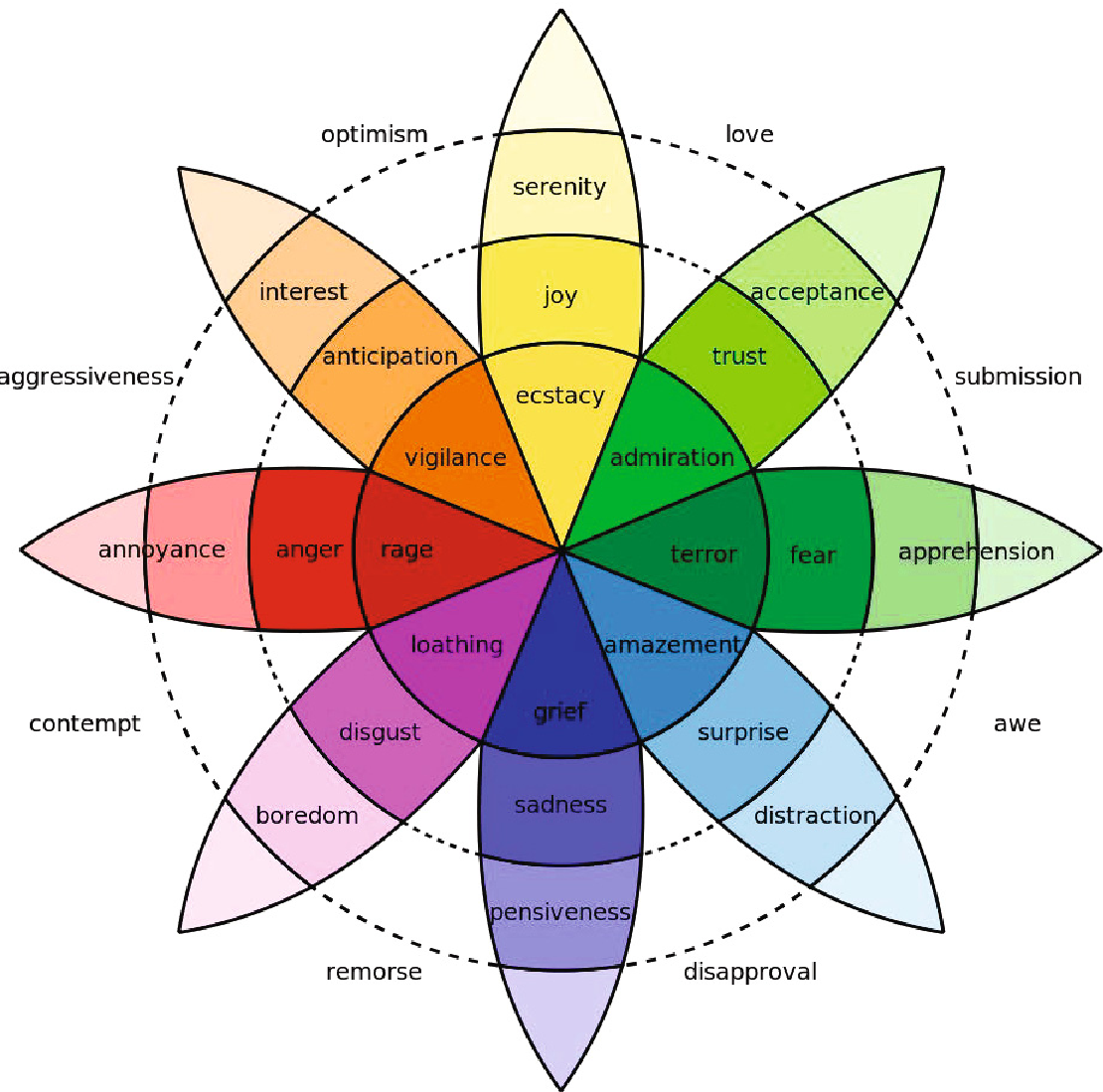 Figure 1: Plutchik's wheel informs the bipolar pairs used for binary classification.
Experiments & Results: SOTA Performance
Using 3.04 million tweets for training and a manually labeled set for evaluation, the team compared Naïve Bayes (NB) and Maximum Entropy (ME) models.
Key Findings:
- The "All" Advantage: Classifiers trained on a combination of hashtags, emoticons, and emoji performed the best.
- High Accuracy: The "Joy/Sadness" pair reached 91.0%, while even more difficult pairs like "Anger/Fear" reached 83.1% (using Maximum Entropy).
- Label Consistency: Cross-validation proved that if a user uses an emoji for joy, the textual content of the tweet aligns with the signals found in joy-related hashtags, validating the distant supervision approach.
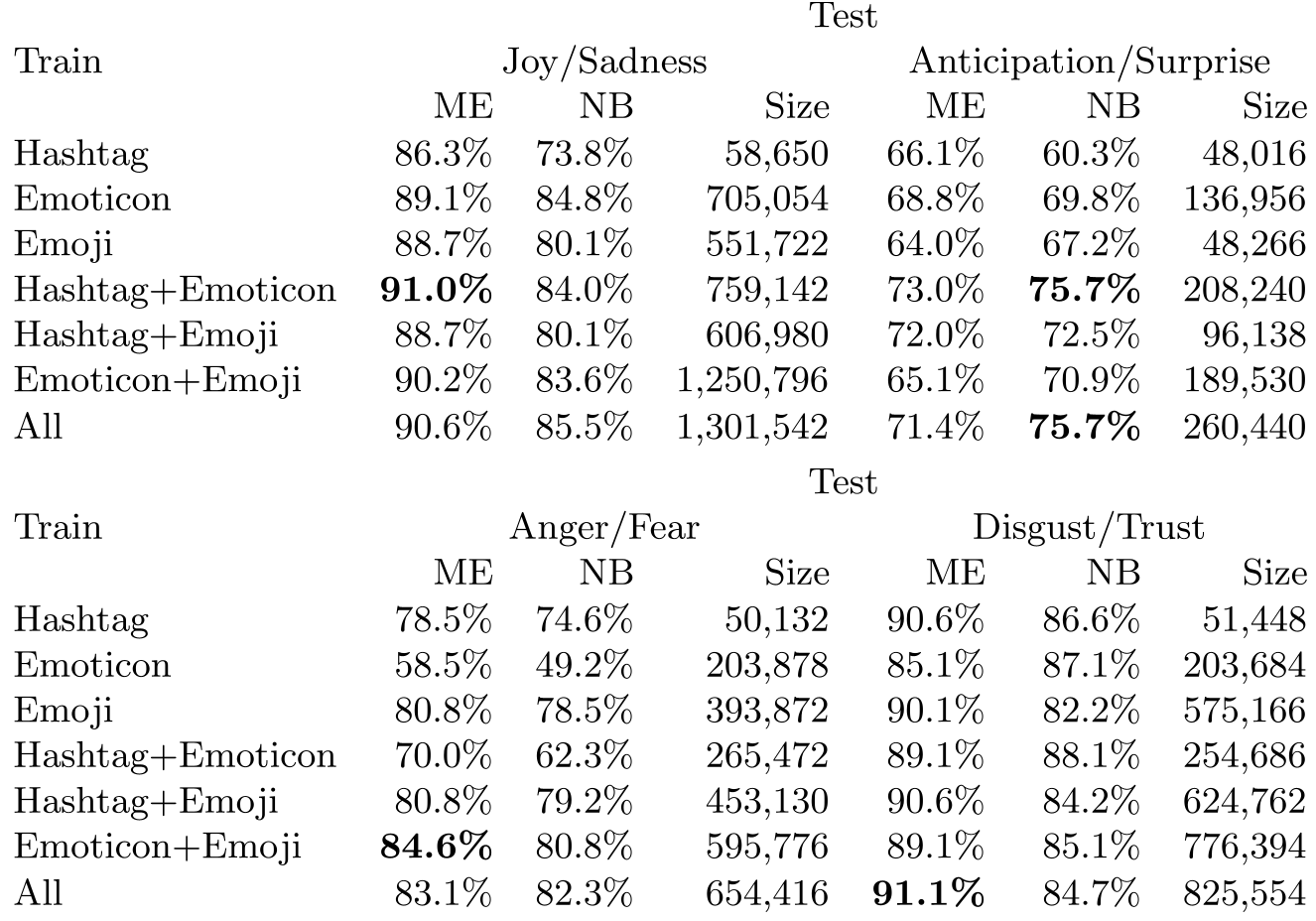 Table 2: Comparison of accuracies across different label types and emotion pairs.
Critical Analysis & Conclusion
Takeaway
The success of this work stems from its mathematical simplification of a psychological problem. By utilizing the inherent "spatial opposition" in Plutchik’s model, the authors effectively increased the Signal-to-Noise ratio in their training data.
Limitations
- Neutral Detection: The system excels at choosing between two emotions but struggles more with "neutral" tweets (non-emotional content). The authors' preliminary "neutral" classifiers showed lower accuracy (as low as 44.6% for Anticipation/Surprise).
- Feature Set: The study relies on unigrams. While unigrams are surprisingly effective for short tweets, they miss nuances like sarcasm or complex negations that Transformer-based models might capture.
Future Outlook
This framework provides a blueprint for real-time emotional monitoring of public sentiment. Future iterations could replace the Naïve Bayes backbone with LLMs (Large Language Models) while maintaining the bipolar pair structure to achieve even higher granularity in social media analytics.
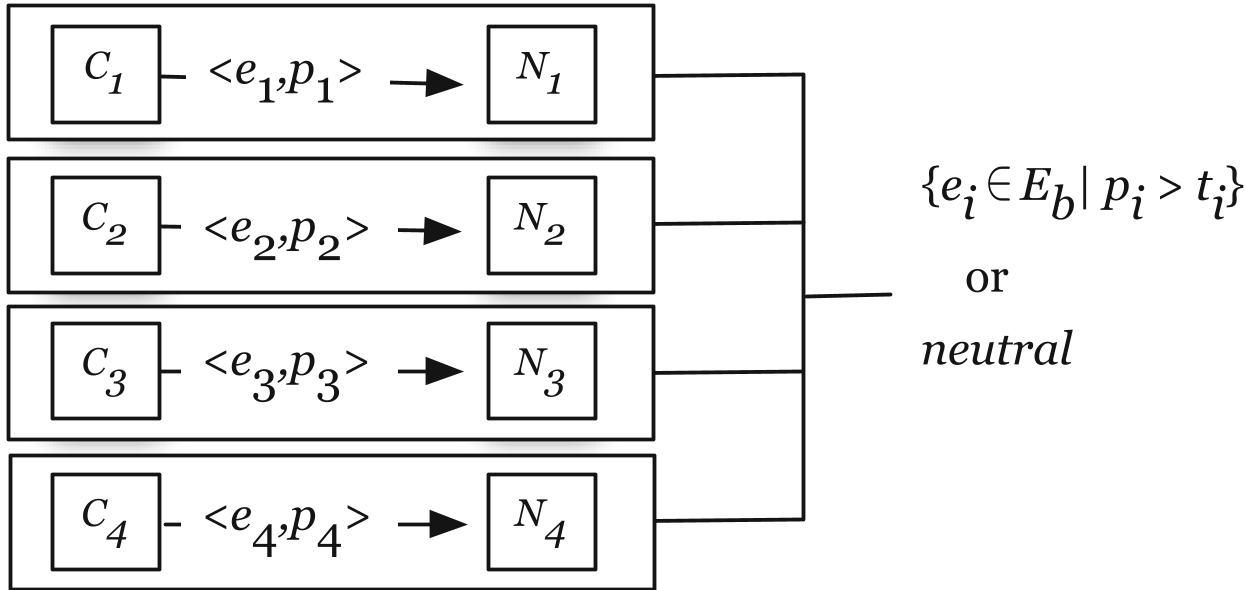 Figure 3: The vision for a multi-way classifier built from binary blocks.