
Selective Reasoning: Improving Document Classification via Ontology Leaf-Nodes and Google Distance
Documents classification by using ontology reasoning and similarity measure
This paper introduces an ontology-based document classification method that combines formal ontology reasoning with the Normalized Google Distance (NGD). By focusing on the "lowest concepts" of a category's ontology, it achieves superior performance in delicate classification tasks and significantly reduces computational overhead.
TL;DR
This research addresses the inefficiency and "semantic noise" inherent in traditional ontology-based classification. By using Description Logic reasoning to extract only the most specific (lowest) concepts from an ontology and measuring their similarity to text via Normalized Google Distance, the authors achieved a 14x speedup and significantly higher recall in difficult, fine-grained classification tasks.
Problem & Motivation: The "Noise" in Broad Ontologies
Standard Machine Learning (ML) classifiers are "hungry"—they require massive amounts of human-labeled training data and often treat words as isolated tokens, ignoring the rich semantic web connecting them.
Ontology-based methods were proposed as a training-free alternative. However, previous approaches had a fatal flaw: they treated every symbol in an ontology (from the broad root to the specific leaves) with equal weight.
- Semantic Noise: Top-level concepts (e.g., "Entity" or "Object") are too broad to help distinguish between "Fiction" and "Science Fiction."
- Computational Bottleneck: Real-world ontologies contain tens of thousands of concepts. Comparing every document term to every ontology concept is computationally prohibitive.
The authors' insight is simple yet powerful: People assign specific keywords to documents; therefore, we should only compare those keywords to the most specific concepts in our knowledge base.
Methodology: Reasoning Meets Web-Scale Similarity
The system follows a refined three-step pipeline:
1. Extraction and Ontology Selection
Documents are converted into weighted keyphrases (using the KEA tool), while categories are mapped to representative ontologies (sourced via Swoogle).
2. Finding the "Lowest Concepts" via Reasoning
Instead of a flat search, the authors use Description Logic (DL) reasoning. An algorithm performs subclass entailment tests () to identify , the set of concepts that have no further sub-concepts within that specific domain. This effectively "prunes" the ontology to its most informative nodes.
3. Semantic Scoring with Google Distance
To bridge the gap between document terms () and ontology concepts (), the paper employs the Normalized Google Distance (NGD).
Unlike WordNet-based measures which are limited by a fixed vocabulary, NGD uses the entire internet as a corpus, calculating similarity based on co-occurrence hits on search engines.
 (Formula 1: The aggregate similarity score between a document and category )
Experimental Results
The researchers tested their approach against "Original" ontology methods that use all available concepts.
Delicate Classification (The Hardest Test)
When categories are very similar (e.g., Poetry vs. Drama), the "lowest concept" approach shines. By ignoring high-level shared nodes, the model avoids confusion.
| Method | Recall | Precision |
|---|---|---|
| Original Method | 83.9% | 80.9% |
| Proposed Method | 92.9% | 83.8% |
Efficiency Gain
The most striking result is the performance. Because the number of "lowest concepts" is a tiny fraction of the total ontology, the processing time plummeted.
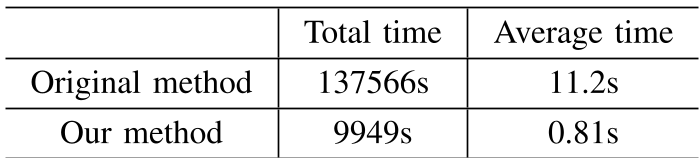 (Table V: Comparison of Execution Time)
The average execution time dropped from 11.2 seconds to 0.81 seconds, making the system viable for real-time web document processing.
Critical Analysis & Conclusion
The value of this paper lies in its structural economy. It proves that in hierarchical knowledge representations, the "leaves" often contain more discriminative power than the "branches" or the "trunk."
Takeaways:
- Precision through Pruning: Formal reasoning is not just for validation; it is a powerful tool for feature selection.
- Web as a Lexicon: Using search engine hit counts (NGD) provides a dynamic, evolving way to measure similarity that keeps up with modern language better than static databases.
Limitations: The reliance on external search engine hits (Google) can be volatile due to API changes or search algorithm updates. Future work might look into replacing NGD with local embeddings (like Word2Vec or Transformers) while maintaining the "lowest concept" reasoning logic.
Summary: This work effectively bridges the gap between formal Semantic Web reasoning and practical, high-speed document classification.