
Documents in Place: Why Medical Records are "Portable Places," Not Just Data Containers
Documents in Place: Demarcating Places for Collaboration in Healthcare Settings
This paper introduces the concept of "portable places" in healthcare, demonstrating how medical documents (like HOSO and Senior Notes) go beyond mere data storage to demarcate specific social and spatio-temporal boundaries for collaboration. By analyzing ethnographic data from a hospital, the study shows how doctors use distinct document genres to navigate distributed work and coordinate with specific colleagues.
Executive Summary
TL;DR: In a world of "universal" electronic medical records, why do doctors still keep separate, seemingly redundant notes? Carsten S. Østerlund’s research reveals that documents act as "portable places"—material anchors that define who is collaborating, when work happens, and where resources are located. Rather than being an efficiency bug, these fragmented notes are a feature that allows mobile professionals to create a shared sense of place in a chaotic hospital environment.
Academic Positioning: This work is a crucial piece of practice-oriented ethnography, bridging the gap between linguistic anthropology and Computer-Supported Cooperative Work (CSCW). It challenges the "integrated system" dogma of medical informatics by providing a sociological justification for localized record-keeping.
The Problem: The Myth of the "Universal" Record
Medical informatics has long chased the "holy grail" of a single, integrated record system. Yet, an ethnographic deep-dive reveals a different reality: a single patient’s history might be recorded over 15 times in 34 different systems.
The author argues that we’ve been looking at this the wrong way. The problem isn't that doctors are technologically illiterate; it’s that integrated systems often strip away context. When a doctor moves from the ER to the ICU, they aren't just changing coordinates; they are changing their "place"—the community of collaborators, the rhythm of their shift, and their shared background knowledge.
Methodology: The Indexical Structure of Documents
Østerlund uses indexical analysis to show how documents "point" to their context. Think of terms like "now," "here," "there," or "next." In face-to-face talk, these are clear. In distributed work, documents must do the work of "pointing."
The author compares two specific electronic systems:
- HOSO (House Officer Sign Out): Used by interns who work closely together 24/7.
- Senior Notes: Used by senior residents who float between different teams and departments.
The Core Insight: Symmetric vs. Asymmetric Access
The "weight" of a document depends on how much the writer and reader already know about each other and the patient.
- High Symmetric Knowledge (Interns): Because interns share the same space and time, their notes are "thin," focusing only on the "here-and-now" (itineraries).
- Asymmetric Knowledge (Senior Residents): Because they cover multiple teams at night, their notes must be "thick," mapping out detailed trajectories of patients and explicit lists of collaborators.
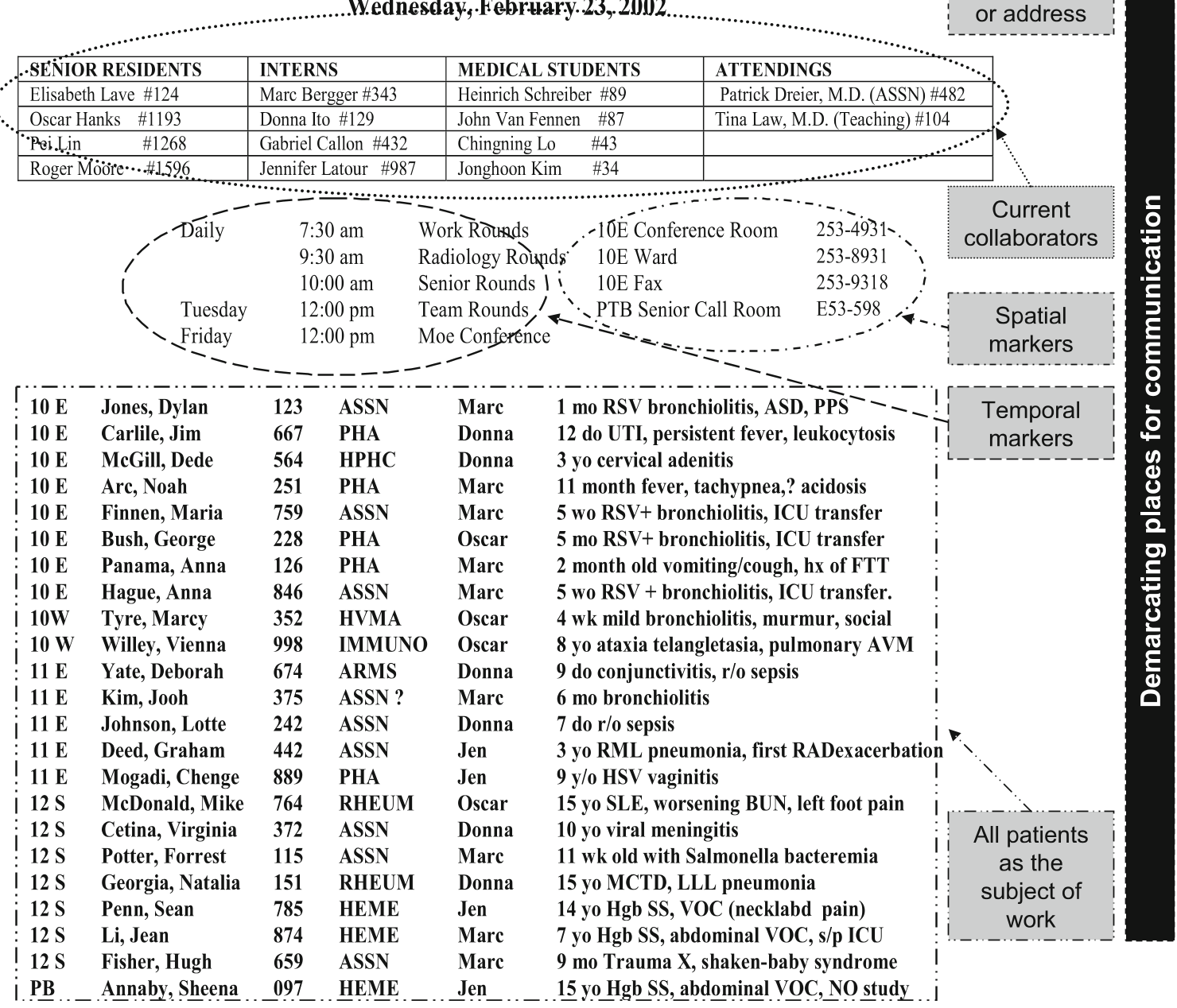 Figure 1: Comparison showing the detailed participant mapping in Senior Notes vs. the task-oriented structure of HOSO.
Experiments & Results: When Documents Go "Out of Place"
The most compelling evidence for "documents as place" comes from the failure of "Night Floats." These are doctors who work in the ER but manage patients for inpatient wards.
Even though they have the technology, they often refuse to use the "proper" ward forms. Why? In the ER, they are part of a different "place" with a faster rhythm and different resources. Using a ward document in the ER feels "out of place" because the document’s indexical pointers (scheduling, medication request protocols) don't match the ER reality.
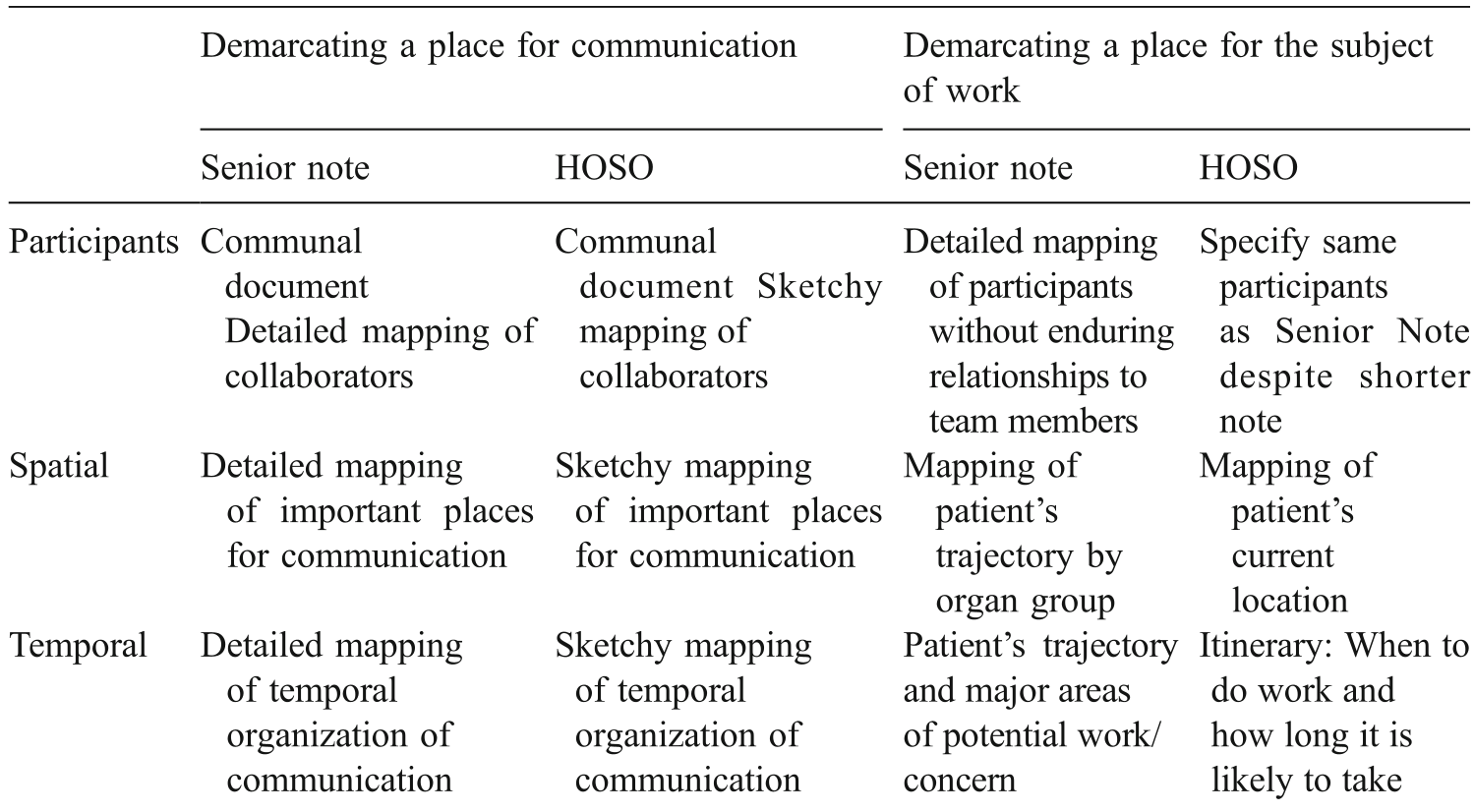 Table 1: How Senior Notes and HOSO differently demarcate participants, space, and time.
Critical Analysis & Conclusion
Takeaway for Future Systems
The industry goal should not be information convergence, but contextual flexibility.
- The Repository Model: Store raw data centrally, but allow users to generate "views" or genres that function as portable places.
- Socialization: Documents are tools for "learning the ropes." Newcomers learn the culture of a ward by learning how to write its specific records.
Limitations
The study is localized to one teaching hospital. While the "working record" vs. "archival record" distinction is robust, the specific power dynamics (interns vs. seniors) might vary in non-teaching hospitals or different healthcare cultures (e.g., socialized medicine vs. private systems).
Future Outlook
As we move toward AI-assisted charting, the risk is that AI will prioritize "complete data" over "contextual pointers." If an AI summarizes a patient's history, will it know to highlight the "night shift rhythm" for a resident or the "medication itinerary" for an intern? Protecting the indexical function of documents is the next great challenge for collaborative tech.