
Utilizing Domain Ontology to Break the Knowledge Acquisition Bottleneck in ITS
The Role of Domain Ontology in Knowledge Acquisition for ITSs
The paper introduces a structured approach to automate knowledge acquisition for Constraint-Based Modeling (CBM) in Intelligent Tutoring Systems (ITS) by leveraging domain ontologies. It validates that building an ontology prior to defining constraints significantly improves the quality and coverage of the domain model compared to manual authoring.
TL;DR
Building Intelligent Tutoring Systems (ITS) is notoriously time-consuming. This paper argues that the "Domain Ontology" is the missing link. By creating a visual map of concepts first, authors can produce higher-quality constraints for Constraint-Based Modeling (CBM). An experiment with the WETAS tutoring shell proves that ontology-driven authoring leads to more robust and comprehensive domain models.
The Bottleneck: Why ITS Development is Hard
In the world of AI in Education, Constraint-Based Modeling (CBM) is a powerful way to represent knowledge. Unlike model-tracing, which tracks every step a student takes, CBM focuses on "states of correctness." A student's solution is valid as long as it doesn't violate any domain constraints.
However, the "Knowledge Acquisition Bottleneck" is real. Historically, creating these constraints required domain experts to think like programmers. For a complex tutor like SQL-Tutor, authors could spend hundreds of hours manually writing thousands of rules. Previous automated tools like KnoMic or Disciple helped, but they were often restricted to procedural tasks (like flight simulation) or required deep technical expertise.
The Insight: Ontology as a Reflective Tool
The authors hypothesize that building a Domain Ontology—a formal representation of concepts and their relationships—before writing rules serves two purposes:
- For the Human: It forces reflection. By mapping out how "Adjectives" relate to "Degrees of Comparison," the author gains a clearer mental model of the rules they need to write.
- For the Machine: It provides a scaffold. Simple "Syntactic" constraints (e.g., "An entity must have at least one attribute") can be directly derived from the ontology structure without human intervention.
Methodology: The WETAS Ontology Front-End
To test this, the researchers enhanced WETAS, a web-based tutoring shell. They added a Java-based ontology editor where authors can draw rectangles (concepts) and arrows (relationships).
System Architecture and Interface
The interface allows authors to specify attributes and cardinalities. For instance, if a "Relationship" concept has a "Min Cardinality of 1" for its attributes, the system can automatically flag a student solution that leaves attributes empty.
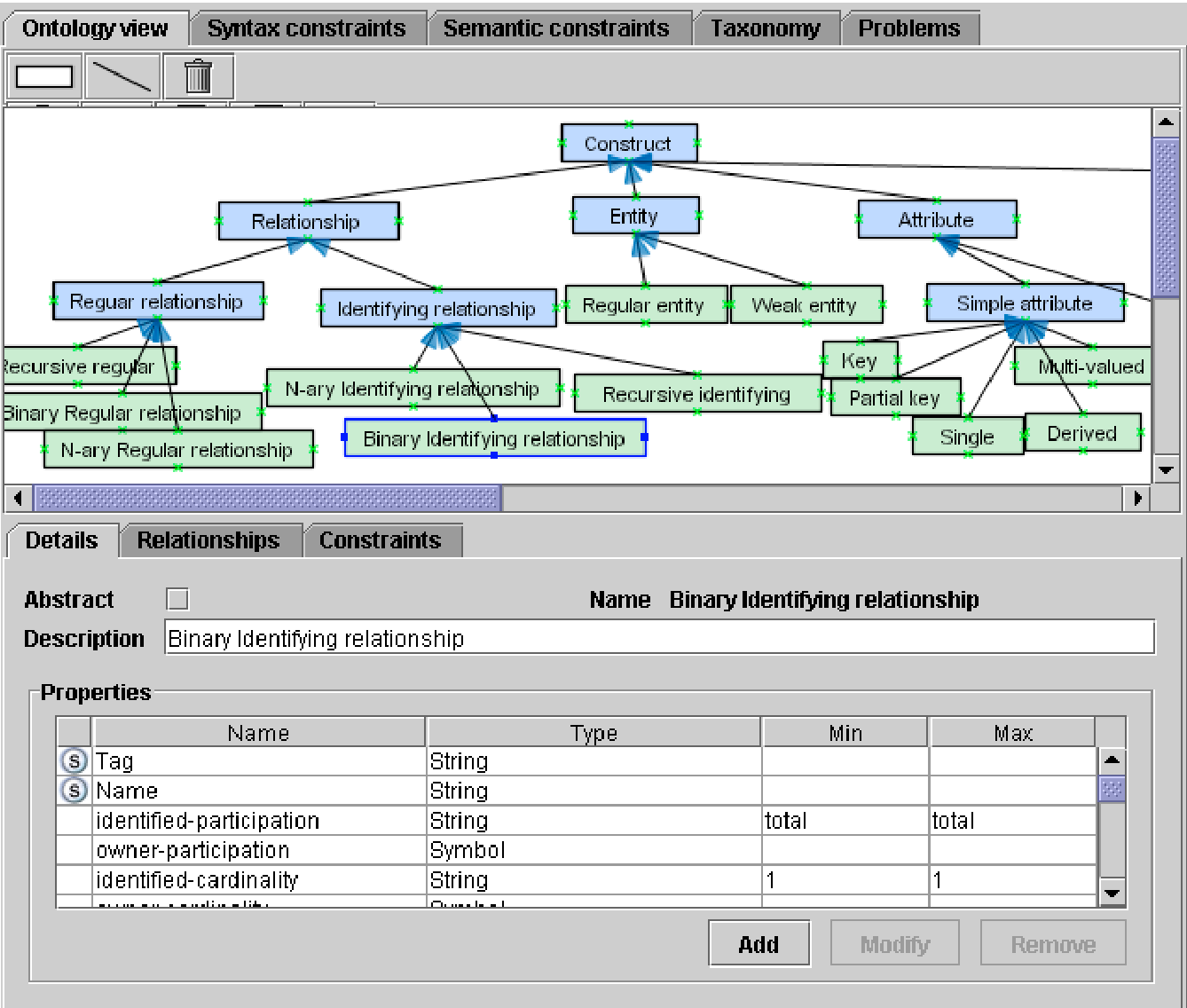 Figure 1: The WETAS ontology view showing the conceptualization of an Entity-Relationship model.
The workflow follows a 3-step pipeline:
- Phase 1: Interactive ontology building.
- Phase 2: Automatic extraction of syntax constraints.
- Phase 3: Machine Learning-assisted induction of complex semantic constraints through expert dialogue.
Experiments and Key Findings
The study involved 17 graduate students tasked with building a tutor for English adjectives (rules for comparative and superlative forms).
Visualizing the Domain
Students generally fell into two camps: those who built "flat" ontologies and those who built hierarchical, detailed ones.
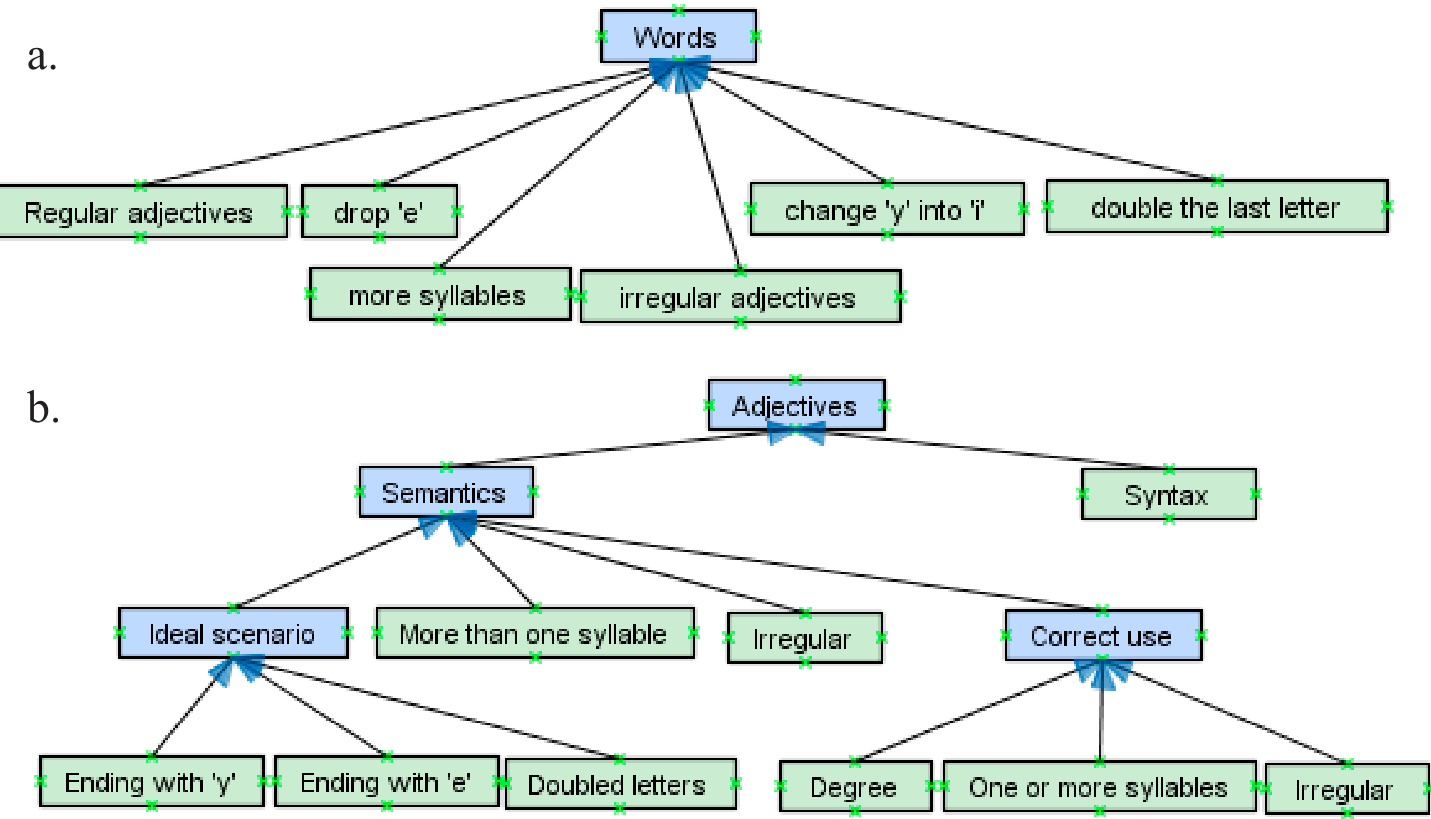 Figure 2: Comparison between a simple (left) and an enhanced (right) ontology for adjectives.
The Data Speaks
The results were telling. While nearly everyone could build a decent ontology (mean score 4.0/5.0), the students who actually used the ontology to organize their constraints (14 out of 17) performed significantly better.
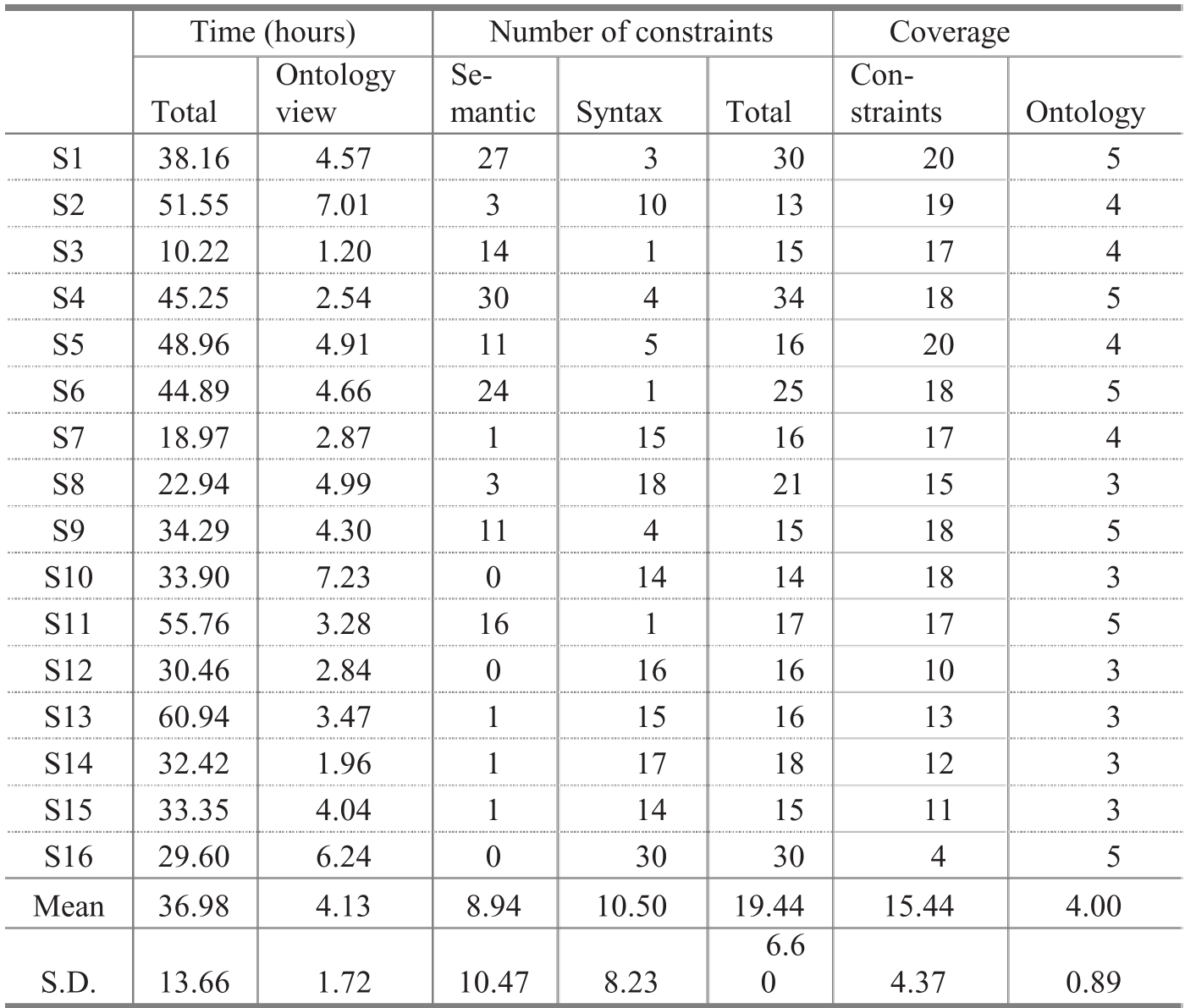 Table 1: User interaction data showing time spent and constraint coverage.
Key Outcome: There was a strong correlation (0.679) between the ontology score and the constraint score for those who aligned the two. Essentially, a better conceptual map led to better pedagogical rules.
Critical Analysis & Conclusion
Takeaway
The paper successfully demonstrates that ontologies are not just "extra work"—they are a high-leverage activity that improves the final product. Even in a simple domain like "English Adjectives," the structural clarity provided by an ontology prevented authors from missing edge cases in their student models.
Limitations
- Domain Simplicity: Adjectives are relatively easy to model. Whether this scales to highly complex, non-hierarchical domains like Quantum Physics remains to be seen.
- Automation Gap: The paper primarily evaluates the manual assistance provided by ontologies. The full "automatic induction" via machine learning remains a "future work" promise in this specific report.
Future Outlook
This work lays the groundwork for "Low-Code" ITS development. By moving the focus from "writing constraints" (coding) to "mapping domains" (modeling), we can empower teachers and domain experts—who aren't programmers—to build sophisticated digital tutors.