
Social Media Behind the Wheel: Quantitative Assessment of Driver Distraction
Assessment of Driver Distraction Caused by Social Networking Activities Using the Smartphone: A Driving Simulator Study
This study investigates the impact of social networking activities (Facebook and Instagram) on driving performance using a high-fidelity driving simulator. By mimicking real-world secondary tasks like scrolling and taking selfies, the research quantifies the resulting safety degradation across car-following and pedestrian crossing scenarios.
TL;DR
The "smartphone" is no longer just a communication device; it is a portal to social networking that demands high tactile and visual engagement. This study by D’Amico et al. proves that social networking while driving significantly degrades safety margins, increasing crash rates in illegal pedestrian scenarios by tenfold and nearly tripling brake reaction times.
Background: Why "Texting" Research Isn't Enough
For years, road safety literature focused on two primary culprits: Talking and Texting. However, the modern driver's behavior has evolved. Checking a Facebook feed or posting an Instagram Story involves a complex mix of scrolling, cognitive processing of visual stimuli, and the physical coordination of taking a photograph—a "Secondary Task" (ST) that far exceeds the complexity of a simple voice call. This study fills the gap by treating social media as a distinct, multi-layered threat to road safety.
Methodology: The Simulation Framework
To safely measure "danger," the researchers utilized a fixed-base driving simulator at Roma Tre University.
1. The Subjects
51 young drivers (ages 20–35) were selected, representing the demographic most likely to use social media. Following rigorous statistical filtering (Chauvenet criterion), 44 drivers' data were analyzed.
2. Task Complexity
The study defined two distinct distraction levels:
- Facebook (Low Complexity): Scrolling, liking, and sharing existing posts.
- Instagram (High Complexity): Capturing a selfie and uploading it as a "Story."
3. Hazard Scenarios
Drivers encountered three specific challenges designed to test their situational awareness:
- Car-Following (CF): Reaching a vehicle that suddenly brakes.
- Legal Pedestrian Crossing (LPC): A pedestrian crossing at a marked sign.
- Illegal Pedestrian Crossing (IPC): A pedestrian suddenly entering the road where not permitted.
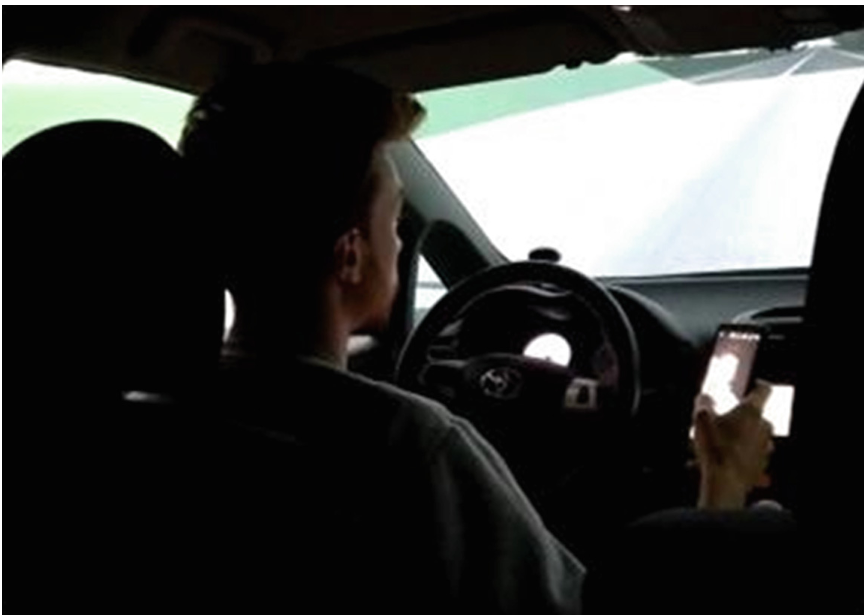 Figure 1: The fixed-base driving simulator setup used to collect kinematic data.
Methodology Deep Dive: The Cost of a "Selfie"
The study’s core finding lies in the Kinematic Decay of driving performance. When drivers are distracted by High-Complexity tasks (Instagram), their "Safety Buffer" evaporates.
- Reaction Time (RT): In the Car-Following scenario, the baseline reaction time was 1.32 seconds. Under the influence of Instagram, this skyrocketed to 3.92 seconds. In highway speeds, those extra 2.6 seconds represent dozens of meters of travel without any braking response.
- Lateral Position (LPav): Distracted drivers tended to drift towards the right (shoulder) of the road significantly more than baseline drivers, indicating a loss of lane-keeping control.
Results: A Catastrophic Safety Gap
The most chilling data comes from collision statistics. In the "Illegal Pedestrian Crossing" (IPC) event—which requires the highest level of vigilance—the results were stark:
| Condition | Accident Rate (IPC) |
|---|---|
| Baseline | 5% |
| 55% | |
| 34% |
Wait—why was Facebook more dangerous than Instagram in IPC? The authors noted a "compensation" effect. Drivers performing the high-complexity Instagram task often slowed down significantly because they knew they were distracted, whereas Facebook users maintained higher speeds while scrolling, leading to more high-impact crashes when a hazard appeared unexpectedly.
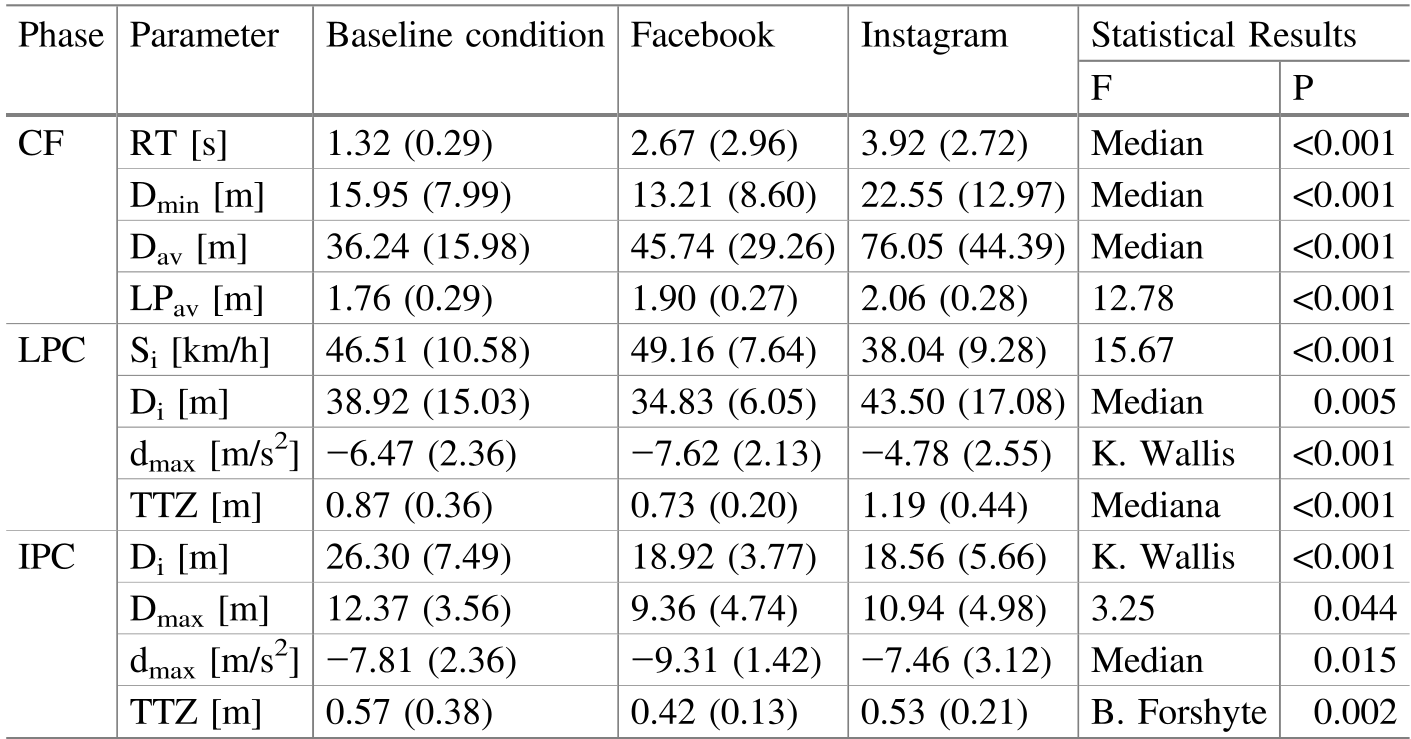 Table 1: Quantitative analysis of driving parameters showing significant p-values (<0.001) for Reaction Time and Deceleration.
Critical Insight & Conclusion
This research demonstrates that social networking is not a monolithic distraction. It represents a triple threat:
- Visual Distraction: Eyes off the road to look at the screen.
- Manual Distraction: Hands off the wheel to scroll or take photos.
- Cognitive Distraction: The brain processes social feedback instead of road hazards.
The Takeaway: The "compensatory behavior" (slowing down) observed in the Instagram group is insufficient to mitigate the risk of sudden hazards like a pedestrian. As we move toward more autonomous features in cars, the temptation to engage in these "high complexity" social tasks will only grow, making the development of robust Driver Monitoring Systems (DMS) a critical priority for the automotive industry.
Limitations: The study used a fixed-base simulator (no motion), which may slightly underestimate the physical difficulty of using a phone while experiencing real-world G-forces. Future work should explore these dynamics in varying weather and lighting conditions.