
DTCMS: Socializing the Streets to Solve Urban Gridlock
DTCMS: Dynamic traffic congestion management in Social Internet of Vehicles (SIoV)
The paper proposes DTCMS (Dynamic Traffic Congestion Management in SIoV), a novel traffic scheduling algorithm that optimizes vehicle throughput at intersections by leveraging social relationships in a Social Internet of Vehicles (SIoV) paradigm. By integrating social features—such as priority and group relationships—the method dynamically adjusts signal timing to maximize flow rate while minimizing delays.
TL;DR
Researchers have developed DTCMS, a dynamic traffic management system that treats vehicles not just as metal boxes, but as "social entities." By using the Social Internet of Vehicles (SIoV) framework, the algorithm analyzes relationships between cars, infrastructure, and drivers to boost traffic throughput and slash wait times by over 60%.
Background: Beyond the Green Light
Urban congestion isn't just a nuisance; it’s a massive economic and environmental drain. Standard traffic lights are "blind"—they operate on rigid timers or simple loop detectors. The Social Internet of Vehicles (SIoV) introduces a paradigm shift: what if your car could "talk" to the traffic light about its mission? Is it an ambulance? A bus carrying 50 people? Or a commuter who needs to change lanes?
DTCMS positions itself as a SOTA solution that bridges the gap between raw data (telemetry) and human-centric needs (driving experience).
The Problem: The High Cost of "Dumb" Traffic
Current SOTA methods (like ATCA or DTMF) suffer from three main flaws:
- Lack of Priority: They often treat all vehicles equally, ignoring the urgent need for emergency or high-capacity transport.
- Static Assumptions: They struggle with irregular traffic patterns at complex 6-way intersections.
- Disconnected Data: They don't account for the "social" context of driving, such as driver intent or cooperative lane-changing.
Methodology: The Social Fabric of Traffic
The core of DTCMS is the integration of Social Relationship Features into the traffic flow equation. The authors define 10 unique relationships, such as:
- Priority Object (PROR): For emergency vehicles.
- Group Relationship (GROR): For vehicles traveling the same route.
- Lane Relationship (LOR): To assist in smooth lane changes without causing a "ripple effect" of braking.
The Five-Phase Algorithm
DTCMS operates through a sophisticated pipeline:
- Social-Weighted Flow Count: It calculates a flow count that isn't just about density, but identifies the "social weight" of the queue.
- Drift Attribute Analysis: It maps lanes to specific movement types (left, straight, diagonal) using real-time V2I data.
- Conflict-Free Matrix: It builds a condition matrix to identify which lanes can go "Green" simultaneously without colliding.
- Throughput Maximization: It selects the matrix that moves the most "socially valuable" traffic first.
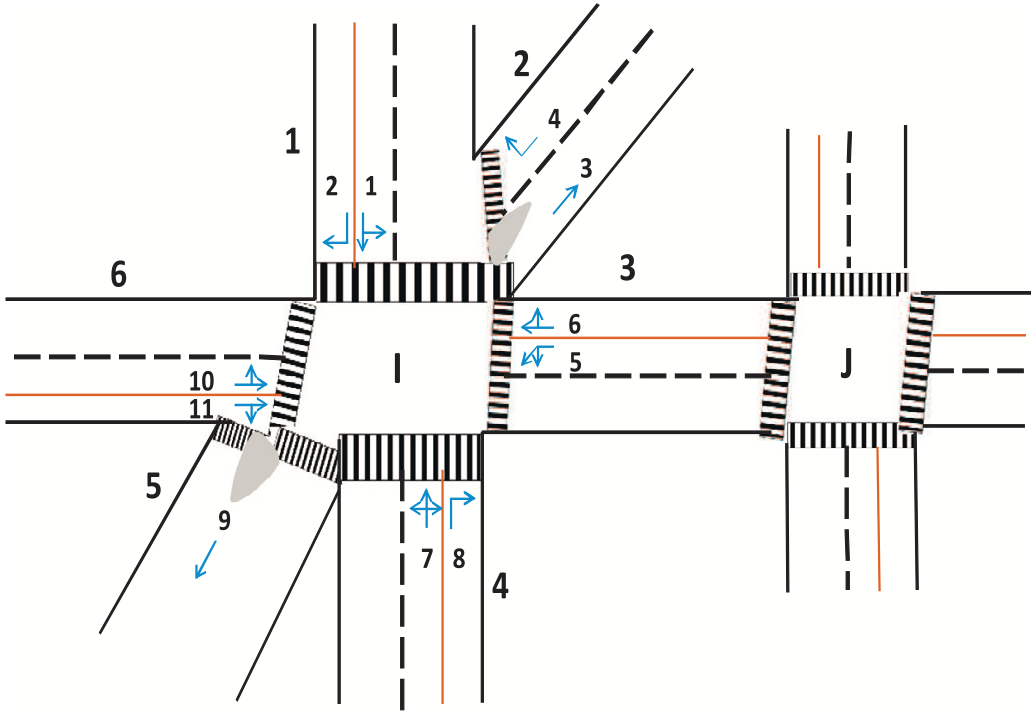 Figure 1: The multi-intersection road network model where V2V and V2I communications form the backbone of the social ecosystem.
Experiments & Results: Crushing the Baseline
The authors tested DTCMS in SUMO (Simulation of Urban Mobility) using a digital twin of Washington D.C.’s Dupont Circle.
Key Breakthroughs:
- Throughput: DTCMS maintains high flow even as the inter-arrival rate of vehicles increases, effectively preventing the "saturation" that kills traditional systems.
- Waiting Time: Compared to the Adaptive Traffic Control Algorithm (ATCA), DTCMS reduced average waiting time by 55% to 65%.
- Service Rate: The system consistently clears over 80% of the network demand, whereas baselines dropped to 49-60% under peak load.
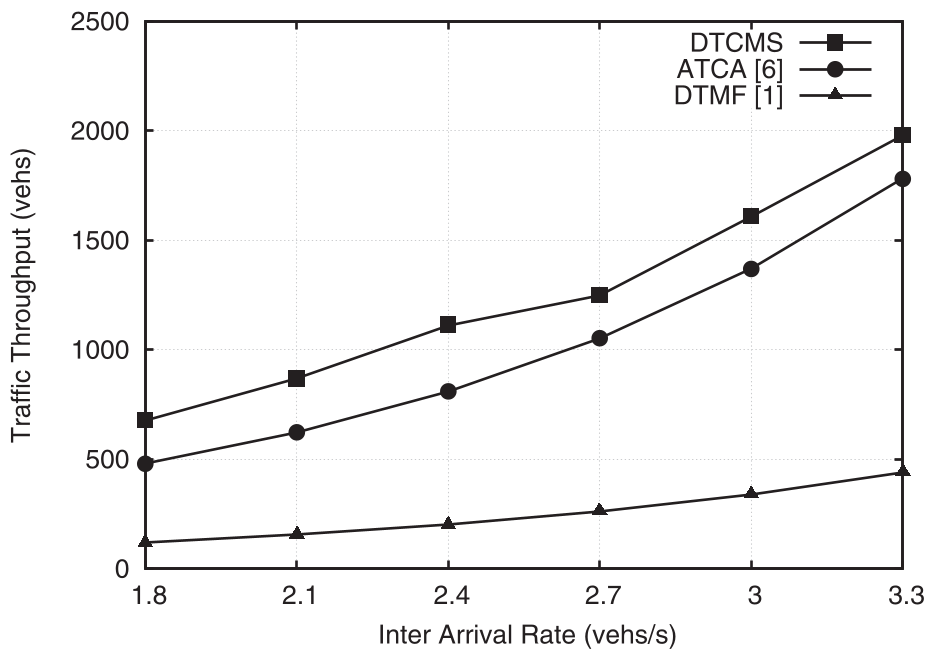 Figure 2: Performance comparison across six metrics. Note the significant gap in average waiting time (Part c) between DTCMS and baseline methods.
Critical Insight & Future Outlook
The genius of DTCMS lies in its scalability. By assigning numerical weights to "Social Types" (Type 1 to Type 4), it converts subjective human needs into a mathematical optimization problem that a microprocessor can solve in milliseconds.
Limitations: The current model assumes 100% vehicle connectivity. In the real world, the mix of "smart" and "legacy" vehicles remains a hurdle.
Future Work: The authors aim to integrate Fog Computing to handle the massive data overhead and move from single-intersection optimization to city-wide "green waves" that synchronize thousands of social vehicles.
Conclusion
DTCMS proves that the "Social" in SIoV isn't just a buzzword—it's a critical operational parameter. By understanding who is in the lane rather than just what is in the lane, we can turn the chaos of urban traffic into a choreographed dance.