
Beyond the Wristband: Active Dual-Frequency RFID in Pediatric Intensive Care
Dual-Frequency Active RFID Solution for Tracking Patients in a Children's Hospital. Design Method, Test Procedure, Risk Analysis, and Technical Solution A tracking device that performs active patient identification in a pediatric intensive care unit is found to have distinct advantages over passive devices
This paper presents a custom dual-frequency active RFID solution for real-time patient tracking and identification in Pediatric Intensive Care Units (ICU). By utilizing a multi-layered design methodology and a specialized architecture (2.45 GHz for activation / 433 MHz for communication), it achieves high spatial resolution for critical bedside monitoring.
TL;DR
In the high-stakes environment of a Pediatric Intensive Care Unit (ICU), a misidentified patient can lead to catastrophic clinical errors. This paper introduces a custom Active RFID system that replaces passive tracking with a sophisticated three-component architecture (Illuminator, Baby Tag, and Cradle Tag) using dual frequencies. The result? A 59% reduction in clinical risk and a system capable of 20cm-precision tracking.
The Identification Crisis in Pediatrics
The motivation for this research is rooted in a sobering reality: infants and critically ill children cannot identify themselves. Prior work relied on paper or plastic wristbands which are easily damaged, unreadable during emergencies, or detached during procedures. Traditional passive RFID systems fail because they require manual proximity scanning—an "extra step" that busy medical staff often skip during high-pressure situations.
Methodology: The Dual-Frequency Architecture
The authors moved away from "off-the-shelf" solutions to build a system based on specialized hardware interactions. The core innovation lies in the frequency split:
- 2.45 GHz (Short Range): Used by "Illuminators" to define a specific spatial footprint (e.g., a single bed).
- 433 MHz (Medium Range): Used for robust communication between tags and the hospital network, ensuring signals penetrate clinical obstacles better than higher frequencies.
Hardware Hierarchy
- Illuminator: Fixed to the ceiling beam, creating a "cone" of coverage over the bed.
- BABY_TAG: A miniaturized, battery-powered unit attached to the infant's foot (to avoid interference with IV drips on wrists).
- CRADLE_TAG: Acts as a bridge, linking the specific baby to the specific bed and the wider hospital LAN.
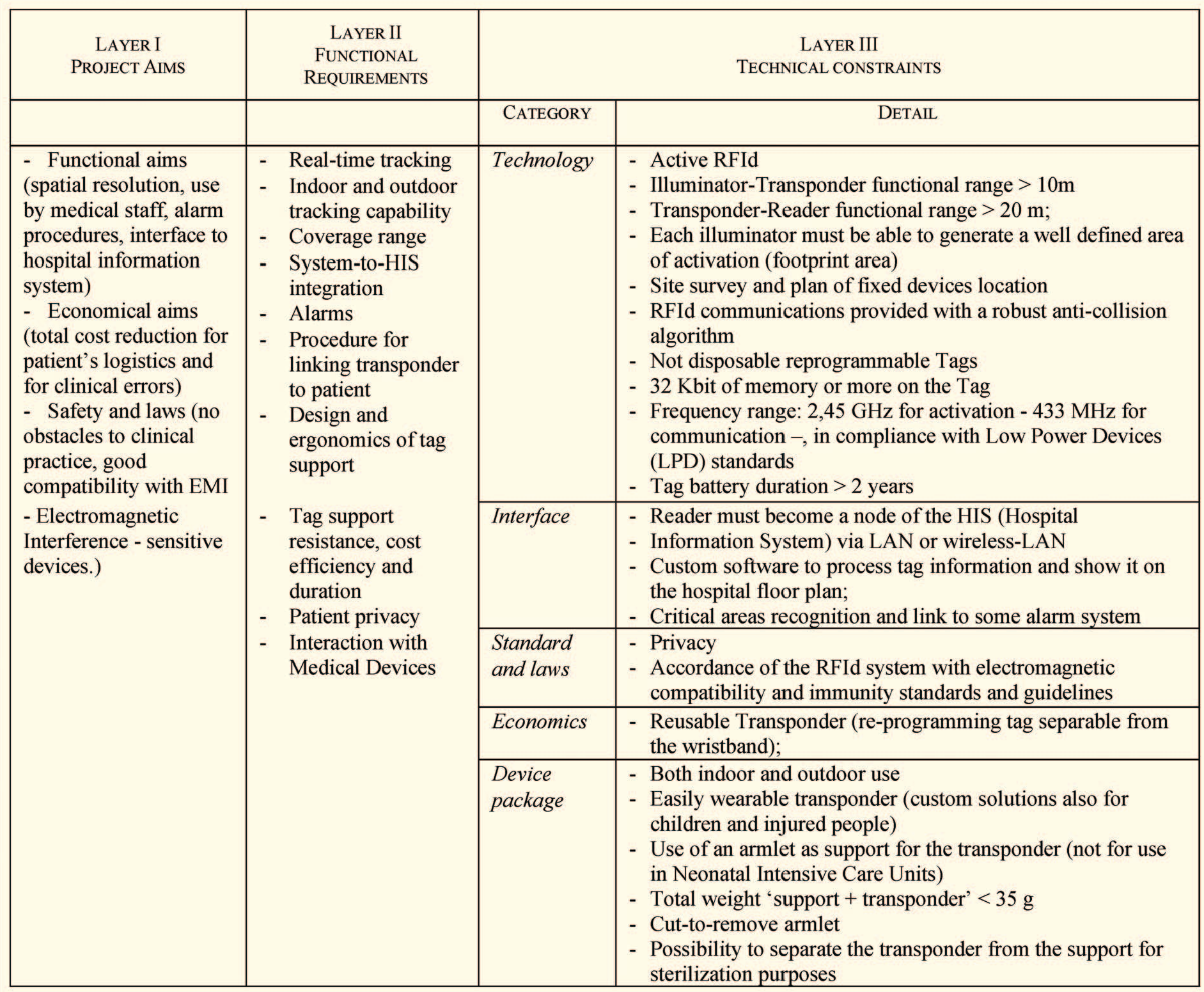 Figure 1: The four-layer design methodology used to align hospital management goals with technical constraints.
Clinical Risk Analysis (FMEA)
The researchers didn't just build hardware; they performed a Failure Mode and Effects Analysis (FMEA). They broke down hospital activities—admission, drug administration, surgery, and discharge—and calculated a Risk Priority Number (RPN) for each.
By introducing the active RFID system, the "Detectability" of errors improved significantly because the system alerts staff automatically if a patient is moved or if a mismatch occurs between the patient and their medical record.
Results & Performance
In the pilot study conducted at Meyer Children’s Hospital, the system's impact was quantifiable.
- Overall Risk Reduction: The total RPN dropped from 3200 to 1312.
- Diagnostics Tracking: The risk of misidentification during transfers to diagnostics (X-rays, etc.) dropped to zero.
- Spatial Selectivity: The custom 8-patch planar array antennas allowed the system to discriminate between beds only 4 meters apart, even in "noisy" electromagnetic environments.
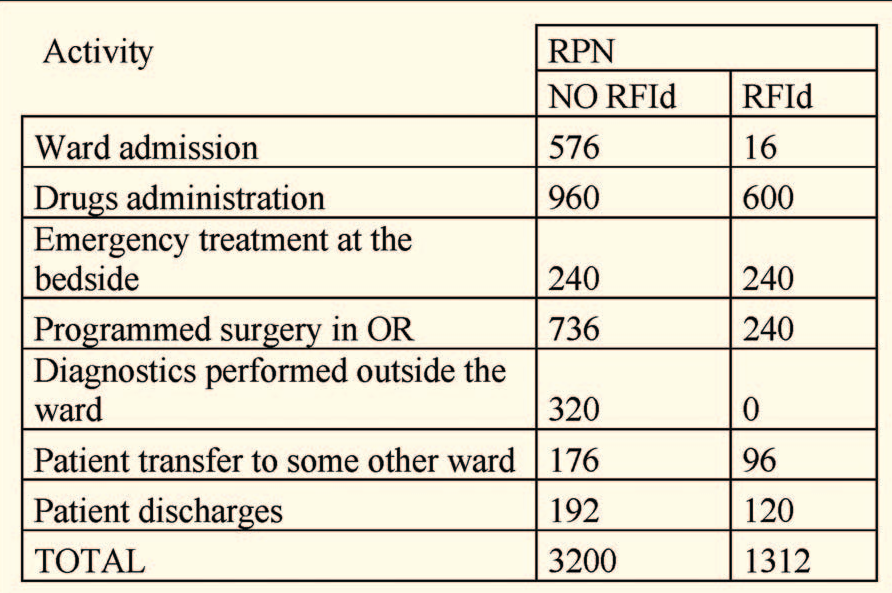 Figure 2: Drastic reduction in risk scores across clinical activities post-RFID implementation.
Critical Insight & Future Outlook
The most intriguing takeaway is the placement of the tag. In an ICU, every limb is a potential site for a cannula or monitor. Working with medical staff, the team determined the sole of the foot was the only viable location, highlighting that medical technology is as much about human factors and ergonomics as it is about signal processing.
Limitations: The authors acknowledge that high-density metal environments (prevalent in hospitals) cause rebounds. While their dual-frequency approach mitigates this, they suggest Ultra-Wideband (UWB) might be the next frontier for even higher precision.
Conclusion
This work demonstrates that "Smart Hospitals" require more than just software; they require a deep integration of hardware that respects the physical constraints of clinical practice. By moving from passive to active tracking, we move from reactive identification to proactive safety.