
DISR: Beyond Friendships — Leveraging Dual Social Influence for Precision Recommendation
Dual influence embedded social recommendation
This paper proposes DISR (Dual Influence embedded Social Recommendation), a framework that integrates social influence diffusion into matrix factorization. By combining Global Influential Models (GIM) and Local Influential Models (LIM) through regularization, the system achieves state-of-the-art accuracy in rating prediction and Top-N recommendation.
TL;DR
In the world of social recommendation, being "similar" to a friend isn't the same as being "influenced" by an expert. This paper introduces DISR, a matrix factorization framework that incorporates Dual Social Influence. By simulating how influence spreads globally (Web Celebrities) and locally (Community Stars), the model significantly outpaces traditional collaborative filtering and link-based social recommenders.
Background: The Latent Power of Influence
Most social recommender systems operate on a simple logic: if you and I are friends, we probably like the same things. This is the Homophily Principle. However, real-world human behavior is more complex. We are often influenced by people we don't know personally—tech gurus, travel experts, or famous critics.
The authors identify a critical gap: existing models use similarity but ignore influence diffusion. Influence is directional and can reach through indirect paths, making it a far more potent signal for decision-making than mere connectivity.
Methodology: The Global and the Local
The core innovation of DISR is the decomposition of social influence into two distinct layers, formulated as optimization problems:
- Global Influential Model (GIM): Targets the "Web Celebrities." It seeks a set of nodes that maximizes the expected number of activated nodes across the entire network.
- Local Influential Model (LIM): Targets the "Community Stars." For a specific user , it identifies which individuals have the highest probability of affecting their personal choices.
The Diffusion Simulation
To calculate these, the authors use the Independent Cascade Model. Since finding the optimal set is NP-hard and calculating exact spread is #P-hard, they utilize Monte-Carlo simulations and Greedy Algorithms to find 63%-approximate solutions.
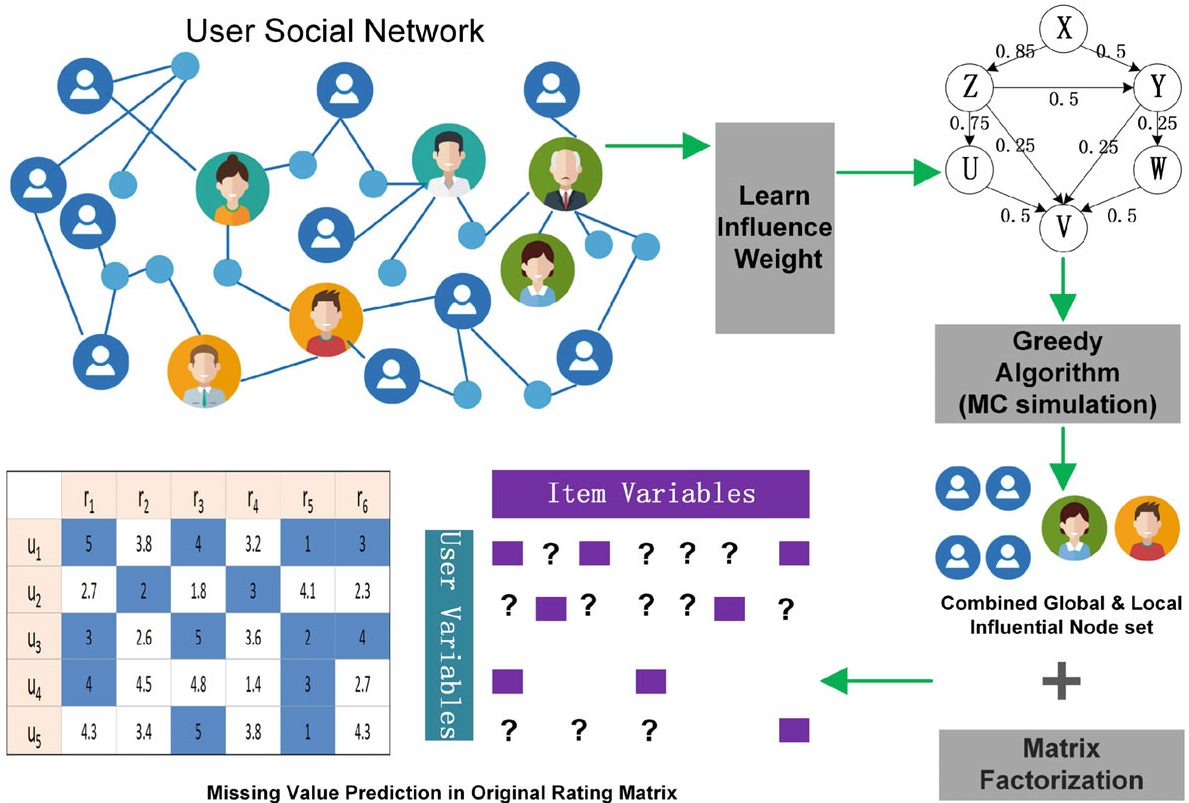 Figure 1: The DISR Framework—From influence weight learning to dual-influence regularization.
The Objective Function
The influence data is then "embedded" into a Matrix Factorization (MF) model. The objective function doesn't just minimize the rating error; it adds a dual-influence regularization term:
This forces the latent representation of a user () to be closer to their influential sources (), weighted by the strength of that influence ().
Experiments: Breaking SOTA
The authors tested DISR on two datasets: Mafengwo (Travel) and Douban (Movies).
1. Rating Accuracy
DISR consistently outperformed competitors like SocialMF, SRPCC, and LOCABAL. The reduction in MAE and RMSE was not marginal; it was a substantial leap over models that only consider local friendship or simple similarity.
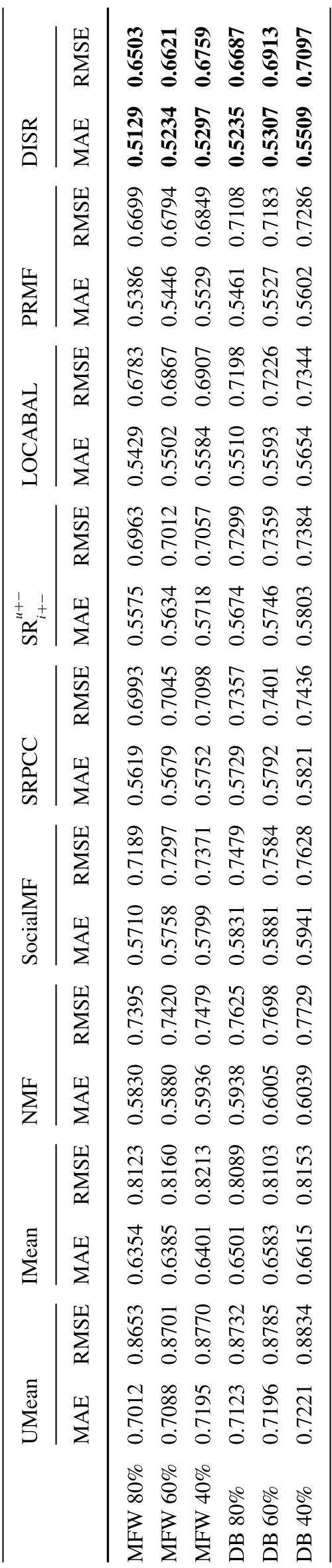 Table 1: Comparison of DISR against baselines. Note the significant drop in MAE/RMSE.
2. Top-N Recommendation
The true test of a recommender is its "Top-N" performance. In the Douban dataset, DISR showed a 0.357 probability of ranking a user's favorite item at the very first position—this is roughly 3.5 times better than SRPCC.
 Figure 2: Performance on Top-K recommendation tasks. DISR (the top curve) shows the highest cumulative rank distribution.
Critical Insights & Takeaways
- Local > Global?: The ablation study revealed that the Local Influential Model (DISRL) contributed more to the error reduction than the Global version (DISRG). This suggests that while celebrities matter, the "Community Stars" closer to our niche interests are the primary drivers of our tastes.
- The Power of Dual Modeling: Neither global nor local modeling alone reached the performance of the combined DISR, proving that human preference is a hybrid of general trends and community specialized influence.
- Efficiency: Despite the complexity of Monte-Carlo simulations, DISR remains computationally competitive, significantly faster than more exhaustive models like PRMF.
Conclusion
DISR marks a shift from "Static Social Graphs" to "Dynamic Influence Diffusion." By treating social networks as active channels of information propagation rather than just lists of friends, it provides a much sharper lens for predicting what a user will value next. Future directions include exploring temporal evolution—how your "influencers" change over time.