
Approach or Avoid? The Dualistic Power of Envy in Social Media
Approach or avoid? The dualistic effects of envy on social media users’ behavioral intention
This paper investigates the "dualistic effects" of envy on Social Networking Site (SNS) users by distinguishing between benign and malicious envy. Utilizing social comparison theory, the authors model how tie strength and focus of attention influence emotions, subsequently driving both approach behaviors (positive brand attitude) and avoidance behaviors (SNS exhaustion and discontinuance).
TL;DR
Envy on social media isn't just a "green-eyed monster"—it's a complex driver of consumer behavior. New research reveals that while benign envy can make you want to buy the brands your friends use, malicious envy can lead you to hate those same brands and quit social media platforms altogether. The "closeness" of your friend (tie strength) is the primary fuel for these emotional fires.
The Psychological Tension of the News Feed
In the era of curated "highlight reels" on Instagram and Facebook, social comparison is inevitable. Most academic work has painted envy with a broad brush, viewing it as a singular negative force that damages well-being. However, this study argues that envy is a dualistic emotion with a "bright side" and a "dark side."
The researchers identify a critical triadic interaction between the user, the brand (the object of envy), and the platform (the facilitator). The core problem addressed is: How do these comparisons translate into actual behavioral intentions—either approaching the brand or avoiding the site?
Methodology: The 2x2 Framework
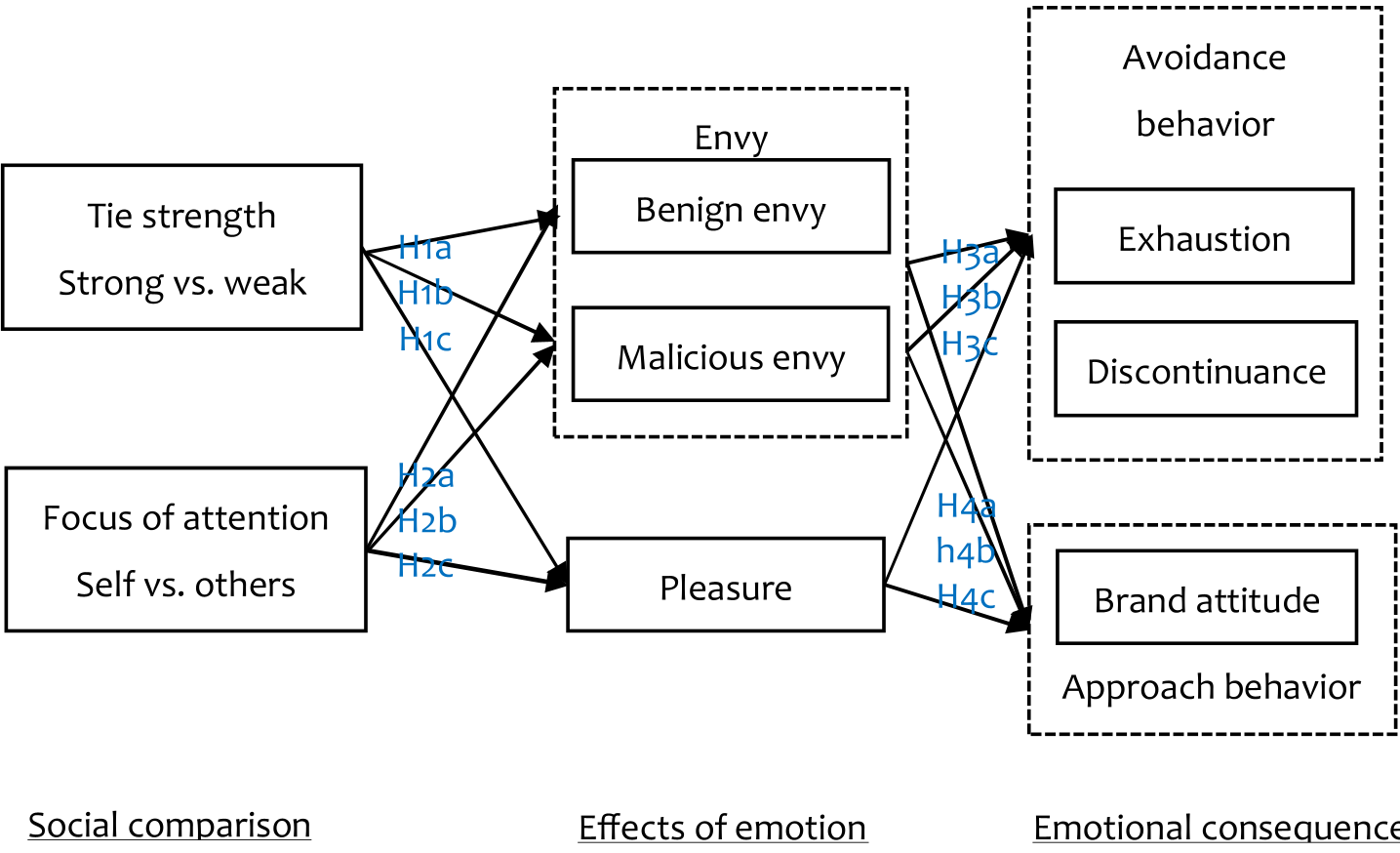
The authors used an experimental design to manipulate two "forces" of social comparison:
- Tie Strength: Comparing yourself to a close friend vs. a distant acquaintance.
- Focus of Attention: Focusing on your own potential (Self-focus) vs. focusing on the other person’s advantage (Other-focus).
Deep Dive: Why "Who" You Envy Matters
The most striking finding is the role of Tie Strength. We don't just feel more "pleasure" for our close friends; we also feel significantly more envy toward them.
- Benign Envy (The Level-Up Instinct): When you see a close friend with a new iPhone X, you are more likely to feel inspired to attain one yourself. This "benign" form of envy acts as a motivational bridge to a positive brand attitude.
- Malicious Envy (The Pull-Down Instinct): Conversely, the same close-tie relationship can trigger a desire to "damage" the target’s advantage to protect one's own self-esteem.
The Behavioral "Slingshot" Effect
The study uses PLS-SEM to map these emotions to behavior:
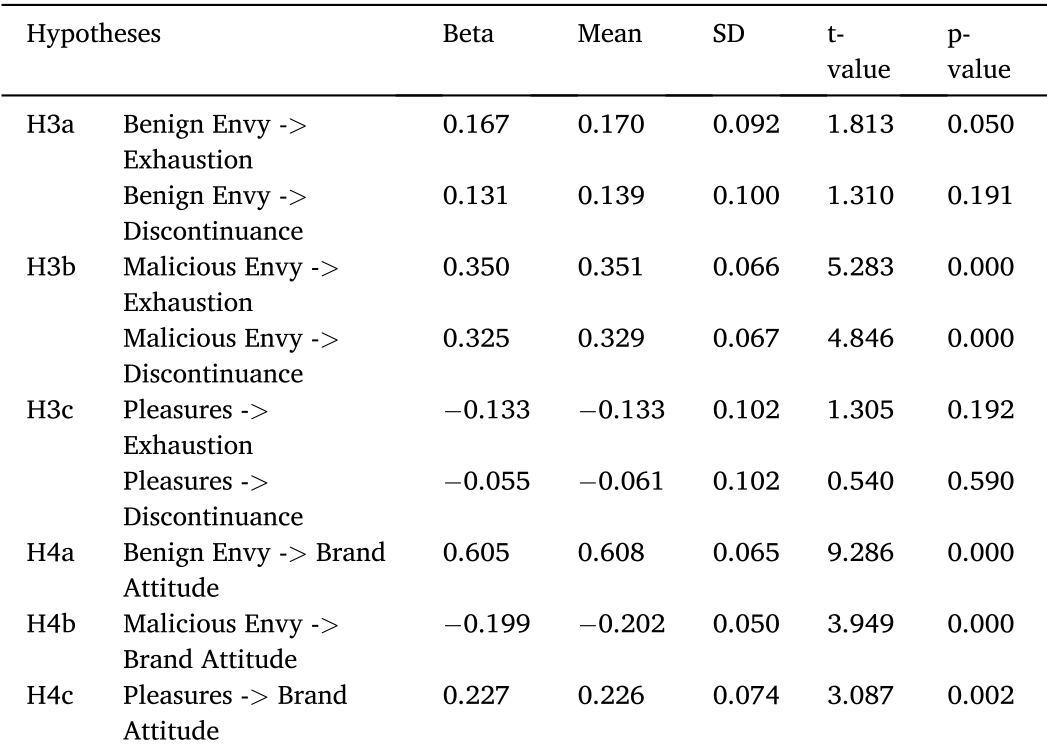
| Emotion | Effect on Brand Attitude (Approach) | Effect on SNS Exhaustion | Effect on Discontinuance (Avoidance) |
|---|---|---|---|
| Benign Envy | Positive (+0.605) | Moderate (+0.167) | None |
| Malicious Envy | Negative (-0.199) | High (+0.350) | High (+0.325) |
| Pleasure | Positive (+0.227) | None | None |
Structural Insights: Exhaustion vs. Discontinuance
The researchers make a brilliant distinction between two types of avoidance:
- Exhaustion: Feeling drained but staying on the platform (psychological avoidance).
- Discontinuance: Deactivating or reducing use (behavioral avoidance).
The data shows that benignly envious users stay, even if they feel a bit tired. They use the platform as a "guidebook" for self-improvement. Maliciously envious users leave. They view the platform as a source of pain that must be terminated.
Strategic Takeaways for the Digital Economy
- For Brand Managers: Encouraging "show-off" user-generated content (UGC) is a gamble. It can create an "envy premium" (making your product more desirable), but if it triggers malicious envy, it can actually damage your brand's reputation among the viewer segments.
- For Platform Providers: Algorithms should be wary of content that triggers "Other-focused" attention or excessive social comparison between strong ties, as this is the primary driver of user churn (discontinuance).
Conclusion
This paper shifts the narrative of social media research from "social media is bad for you" to a more nuanced "how social comparisons drive specific market behaviors." The takeaway is clear: Envy is a powerful economic engine, but like any high-performance engine, it can overheat and lead to a total system shutdown if not managed carefully.
Limitations: The study relied on a Western sample (MTurk). Cultural nuances—such as the "Xiànmù" concept in Chinese culture—might yield different dualistic balances where admiration plays a stronger role than malice.