
Personality 2.0: Are Social Media Profiles Masks or Mirrors?
DuD • Datenschutz und Datensicherheit 7 | 2010 459 SCHWERPUNKT
This study investigates the accuracy of personality judgments derived from Online Social Network (OSNs) profiles such as Facebook and StudiVZ. By comparing observer ratings against self-reports and peer-ratings of the "Big Five" traits, the research identifies that OSN profiles reflect the "Extended Real-Life" rather than an idealized virtual identity.
TL;DR
Contrary to the popular belief that social media is a hall of mirrors filled with "idealized selves," a pivotal study by Stopfer, Back, and Egloff demonstrates that Online Social Networks (OSNs) are actually highly accurate reflections of our real-world personalities. Using the "Big Five" framework, the researchers found that strangers can judge your core traits—especially Extraversion and Openness—with surprising accuracy just by looking at your profile.
The Mirror vs. The Mask: The Core Conflict
For years, two competing theories dominated the psychology of the internet:
- Idealized Virtual-Identity Hypothesis: Asserts that users "airbrush" their personalities to appear safer, smarter, or more social than they really are.
- Extended Real-Life Hypothesis: Asserts that OSNs are simply an extension of our physical social space, bounded by real-world accountability (e.g., friends who know you in reality).
The study aimed to settle this debate: Is your Facebook profile a mask you wear, or a mirror reflecting your true self?
Methodology: Testing Authenticity
The researchers recruited 236 participants from Germany and the US. They established a baseline for each participant's "True Personality" through self-reports and ratings from close friends. They also captured the participants' "Ideal Self"—how they wish they were.
Unacquainted observers then rated these profiles based on the Big Five Traits:
- Openness: Creativity and Curiosity.
- Conscientiousness: Organization and Reliability.
- Extraversion: Sociability and Energy.
- Agreeableness: Compassion and Cooperation.
- Neuroticism: Anxiety and Stress Vulnerability.
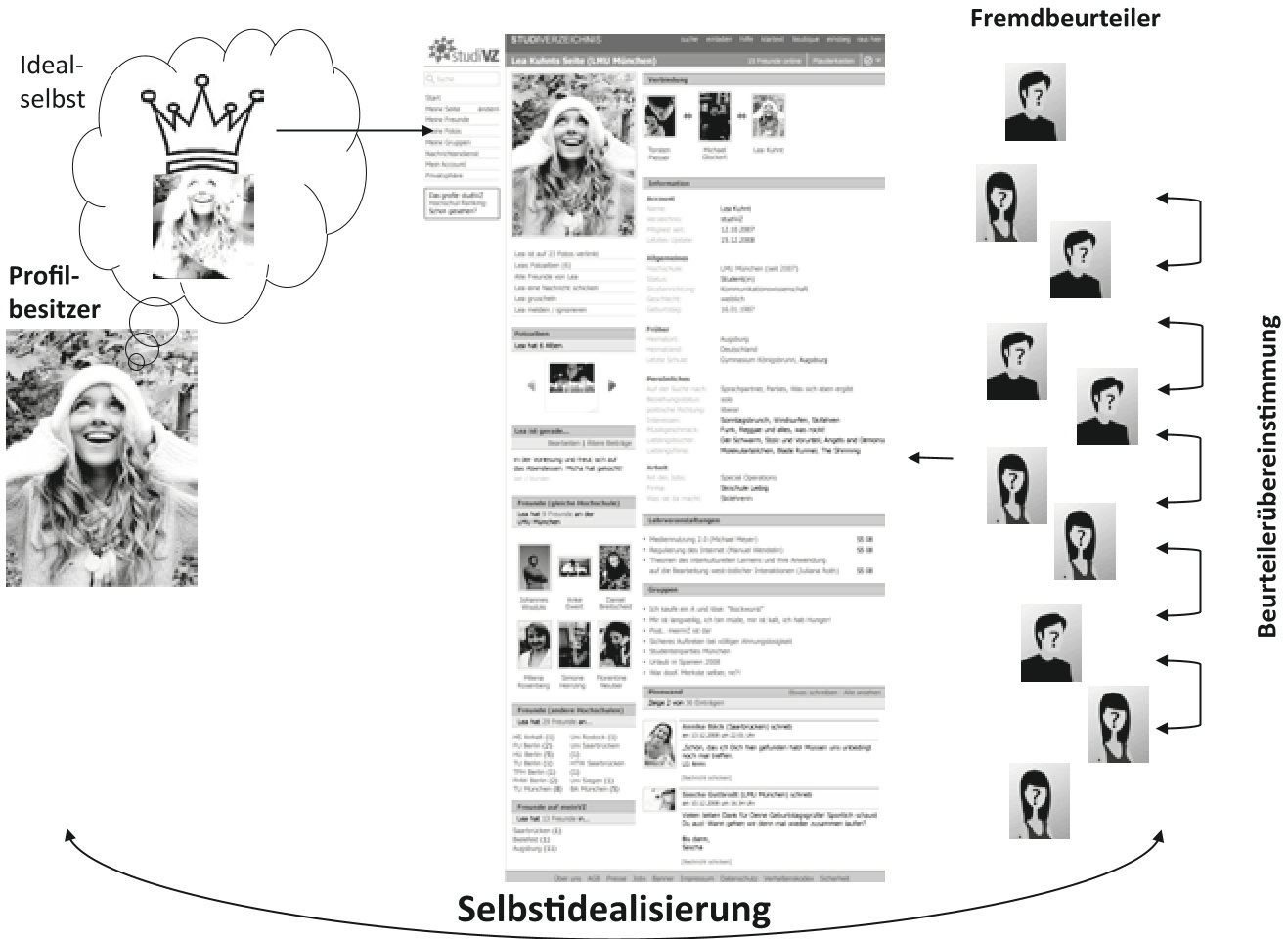 Figure 1: Comparison between the Idealized Virtual-Identity (a) and Extended Real-Life (b) models.
Key Results: The End of the Digital Mask
The findings were conclusive. Observer ratings correlated significantly with the subjects' actual personalities, but showed no correlation with their idealized selves.
1. Accuracy Varies by Trait
Not all traits are equally visible. Extraversion and Openness were the easiest for strangers to spot. This makes sense: a wall full of photos and wide "friend" lists are clear markers of sociability, while "About Me" texts and shared interests reveal intellectual curiosity.
2. The Persistence of Neuroticism
Neuroticism was the hardest to judge. This aligns with offline research; internal emotional instability is difficult to detect through static cues, whether it’s a messy bedroom or a digital profile.
3. Quantitative Evidence
The data in the table below shows the clear "Accuracy" scores (Column 2) versus the lack of "Self-Idealization" (Column 3).
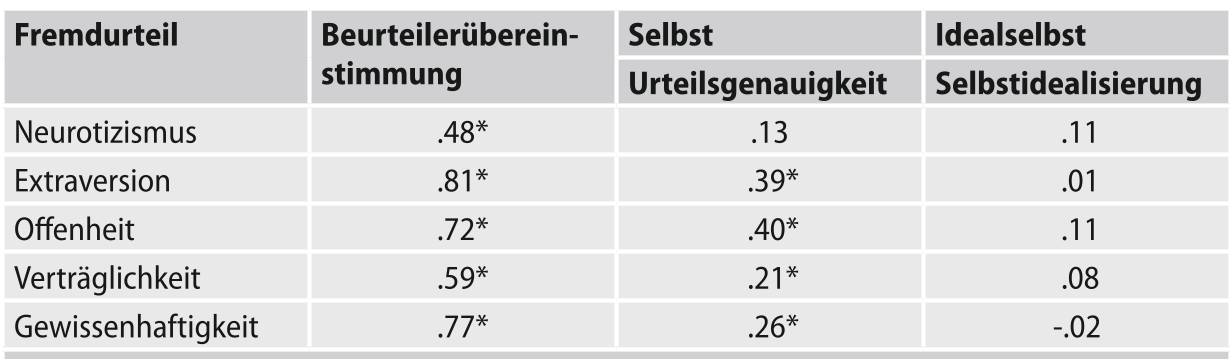 Table 1: Accuracy of observer judgments and their lack of correlation with idealized self-images.
Why Can't We Successfully Fake It?
The authors suggest two main reasons why the "Extended Real-Life Hypothesis" wins:
- Social Verification: Because we interact with "real" friends online, they act as a corrective force. If you post a profile claiming to be an adventurous skydiver when you are a homebody, your real-life friends will notice the discrepancy.
- Uncontrollable Cues: While you can choose your profile picture, you cannot easily control wall posts from others, your list of group memberships, or the subtle linguistic patterns in your text—all of which act as "behavioral residues" of your true self.
Critical Insight & Future Outlook
This work highlights a profound trade-off. While OSNs offer a powerful platform for self-expression and social interaction, they also function as a massive, public psychometric test.
The Takeaway: You are more transparent than you think. In an era where HR departments and marketing firms analyze digital footprints, it is vital to remember that your digital "mask" is far thinner than it appears. Future research will likely look into how AI-driven analysis (rather than human observers) might exploit these transparent traits for targeted influence.
Conclusion
Social media isn't an escape from reality; it is an expansion of it. Whether it's through your music taste, your email address, or your Facebook photos, your personality "leaks" into the digital world with remarkable consistency.