
Decoding the Echo of Emotion: How Speech Duration Shapes Our Neural Response
Investigating Duration Effects of Emotional Speech Stimuli in a Tonal Language by Using Event-Related Potentials
This study investigates the duration effects of emotional speech in Mandarin Chinese using Event-Related Potentials (ERPs). By analyzing short, medium, and long stimuli, the authors demonstrate that shorter stimuli (0.5–1.0s) more effectively elicit distinct ERP components (N100, P200, N300) for different emotions.
TL;DR
Does the length of a sentence change how your brain "feels" the emotion behind it? This research dives into the neural mechanics of Mandarin Chinese—a tonal language—to reveal that short, punchy emotional stimuli trigger much stronger and more distinct brain activity (ERPs) than longer ones. By analyzing N100, P200, and N300 components, the study provides a roadmap of how we process vocal emotions over time.
Background: The Clock is Ticking on Emotion
In social interaction, perceiving emotion in speech is an adaptive necessity. While we know that how we say something (prosody) matters, the duration of that signal has been an overlooked variable in neuroscience. In a tonal language like Mandarin, where pitch determines meaning, the temporal dynamics are even more complex. The authors suspected that a shorter pulse of emotion might be "more concentrated," leading to clearer neural signatures compared to a long, drawn-out sentence.
Methodology: Precision in Sound and Brainwaves
To capture these fleeting neural moments, the team used emotional clips from radio dramas, ensuring high emotional intensity. They faced a technical hurdle: ERPs require perfect alignment of stimulus onsets.
The Preprocessing Breakthrough
They applied a Double-threshold Endpoint Detection Algorithm to remove silence and standardize word spacing. This ensured that the brain's response was locked exactly to the start of the vocalization, rather than a gap of dead air.
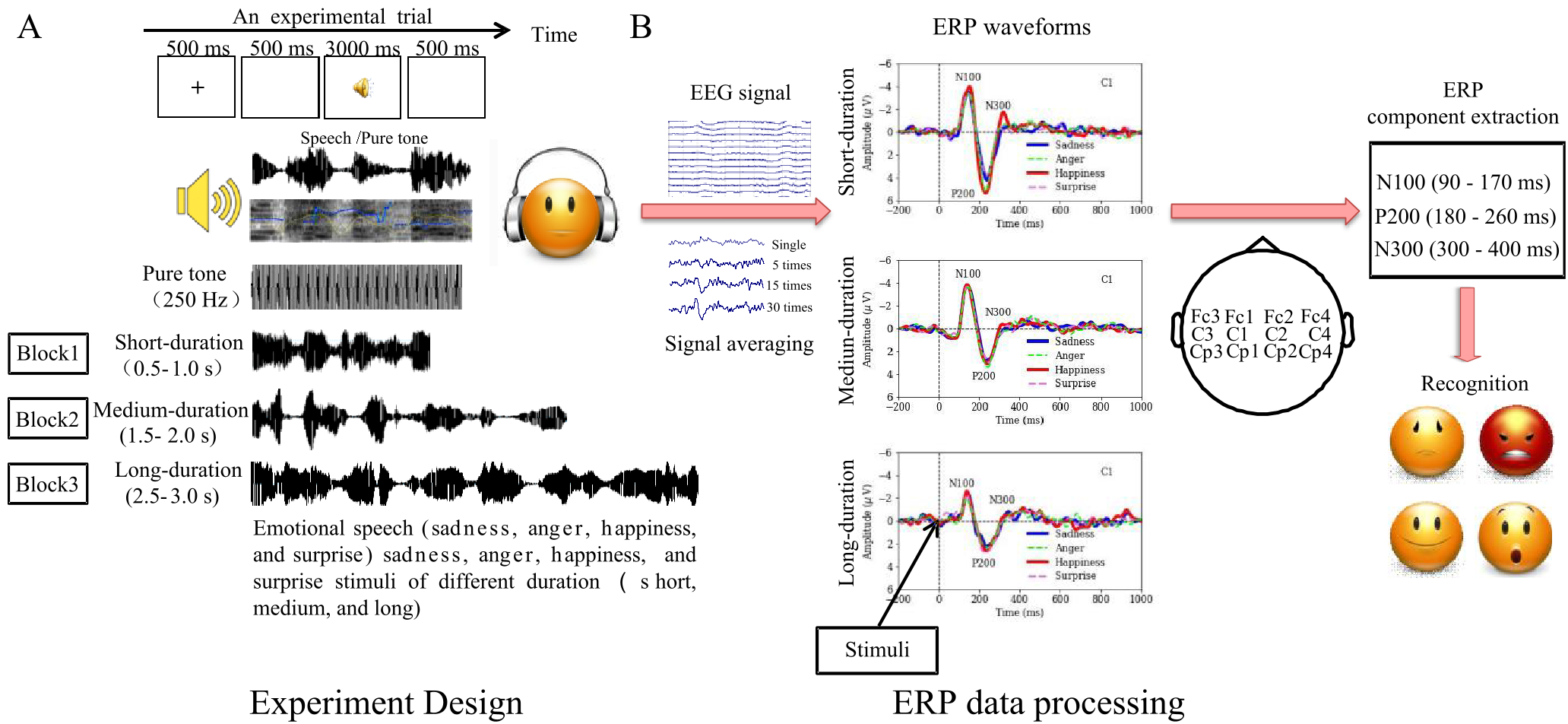
The study categorized stimuli into:
- Short: 0.5 – 1.0 seconds
- Medium: 1.5 – 2.0 seconds
- Long: 2.5 – 3.0 seconds
Neural Stages: The Three-Act Play of Emotional Processing
The brain processes vocal emotion in a hierarchy, reflected in three specific ERP components:
- N100 (Sensory Processing): Occurring around 100ms, this reflects the brain's initial "capture" of the sound. The study found N100 was most negative for "Happiness" specifically in short bursts.
- P200 (Salience Detection): This is where the brain identifies that a sound is emotionally "important."
- N300 (Integration): The final stage, where semantics and prosody are fused to understand the full context.
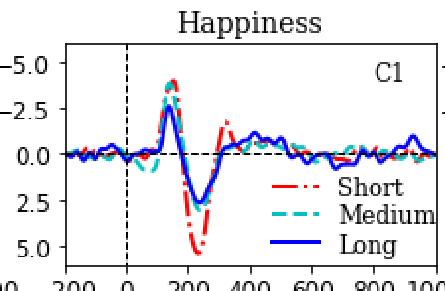
Key Insights: Why "Short" is "Strong"
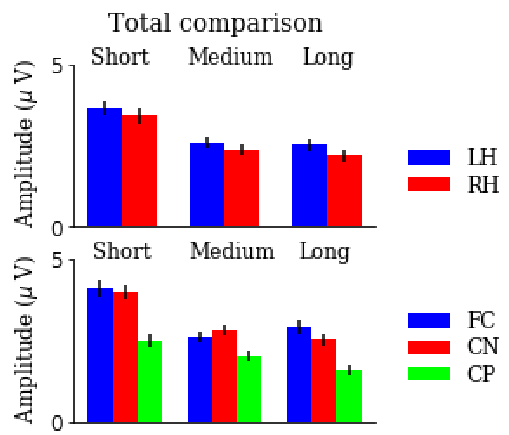
The most striking finding was the negative correlation between duration and amplitude.
- Emotional Separation: In short-duration speech, the brain showed vastly different responses for happiness vs. sadness. In long-duration speech, these neural differences began to blur.
- Hemispheric Bias: The study confirmed that while the right hemisphere is often linked to "emotion," the left hemisphere showed higher activity during the P200 stage for medium and long durations, suggesting it takes over the heavy lifting of processing intelligible, tonal semantic content.
Critical Analysis & Conclusion
This research highlights that our neural "emotion detectors" are most efficient when the signal is brief. As duration increases, the "concentration" of emotional information drops, making it harder for the brain to maintain a high-intensity salience response (P200).
Limitations: The study focused on acted emotions from radio plays and a tonal language (Mandarin). Whether these findings hold for "natural" (un-acted) speech or non-tonal languages like English remains a frontier for future research.
Final Takeaway: If you want to make an emotional impact—neural-wise—keep it brief. The brain's ability to distinguish between a "surprise" and "anger" peaks in the first second of hearing it.