
TPP-DA: Navigating the Fluid Dynamics of Social Media Topic Propagation
Dynamic Analysis of User-Role and Topic-Influence for Topic Propagation in Social Networks
This paper proposes TPP-DA (Topic Propagation Prediction based on Dynamic Analysis), a method that predicts how hot events spread in social networks by dynamically modeling user-roles and topic-influences over time. TPP-DA integrates these dynamic factors into a weighted probability model, achieving a 33% reduction in average error rate compared to static baseline models.
TL;DR
Information on social media doesn't just spread; it evolves. TPP-DA is a novel prediction framework that abandons the "frozen snapshot" view of social networks. By dynamically modeling how user expertise shifts and how topics compete for "heat," it predicts event diffusion with a 33% higher accuracy than previous state-of-the-art static models.
Background: Why Static Models Fail
In the world of social media, a user might be an "expert" on the US Elections in November but a "passive consumer" of smog data in January. Most traditional models, like Linear Threshold (LT) or Independent Cascade (IC), often treat user relationships and influence as fixed constants. This neglects the temporal volatility of human attention and the competitive nature of trending topics.
Methodology: The Core Mechanics
The TPP-DA (Topic Propagation Prediction based on Dynamic Analysis) framework operates on three pillars:
1. Dynamic User-Role Analysis
Instead of a fixed score, user roles are recalculated using a Lagrange interpolation polynomial. This allows the model to "predict" a user's future influence based on their trajectory across four dimensions:
- Expert-factor: Knowledge depth in a topic.
- Leader-factor: Social structural influence (PageRank-based).
- Social-factor: Strength of mutual ties.
- Similarity-factor: Overlap in subject preferences.
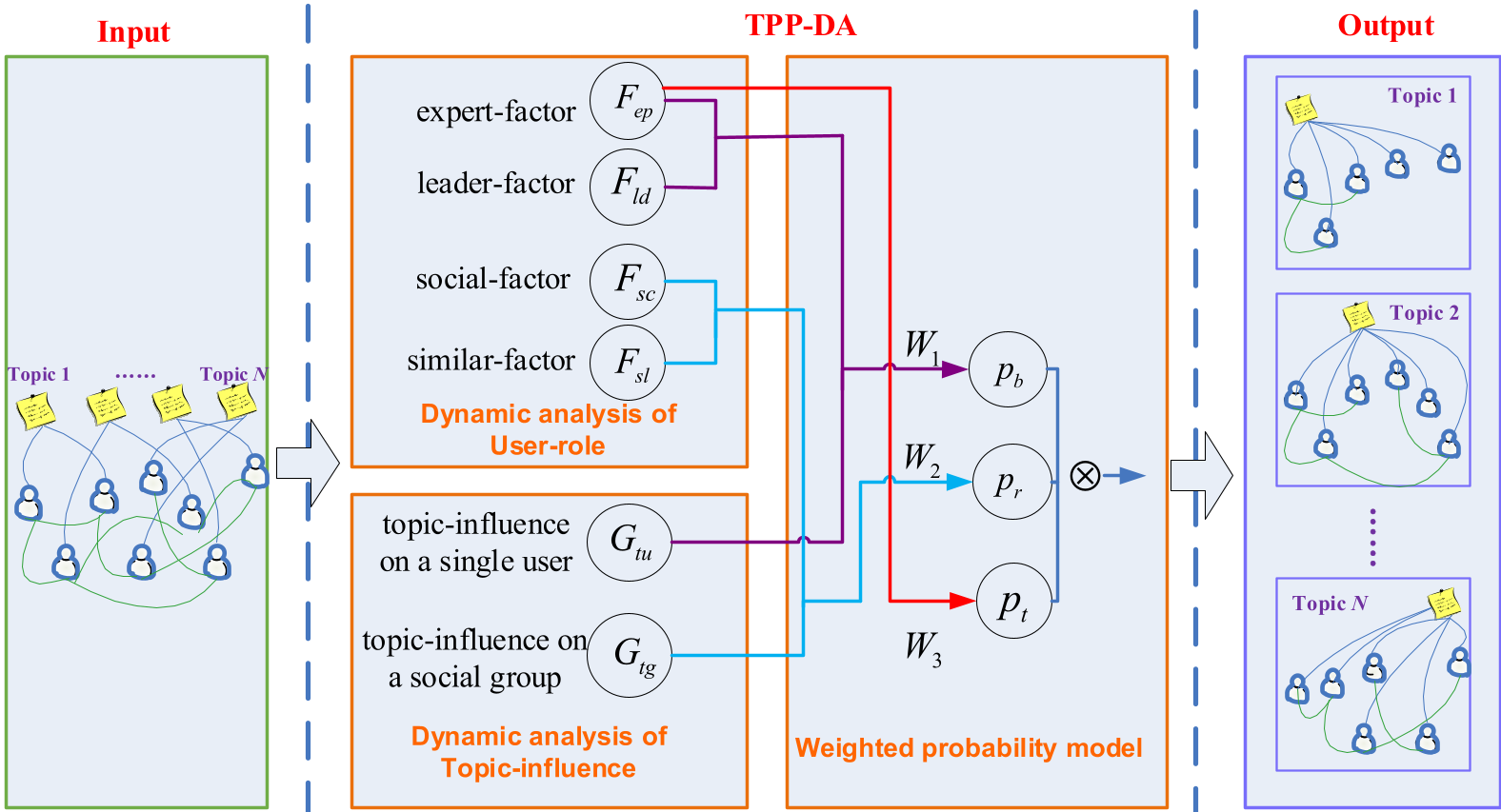 Figure 1: The TPP-DA Framework showing the extraction of dynamic factors into the probability model.
2. Topic-Influence & Heat
The paper introduces "Topic Heat" ( and ), measuring influence on both a single user and a social group. This acknowledges that topics compete for a finite resource: user attention.
3. The Weighted Probability Model
The final prediction is a product of three specific probabilities:
- Behavior Probability: Historical engagement frequency.
- Relationship Probability: Peer pressure from friends.
- Time Probability: The natural decay of interest after a "peak" moment.
Proving the Point: Experimental Evidence
The authors tested TPP-DA against Sina Weibo and Twitter datasets, covering hot topics like "Elon Musk" and "COVID-19."
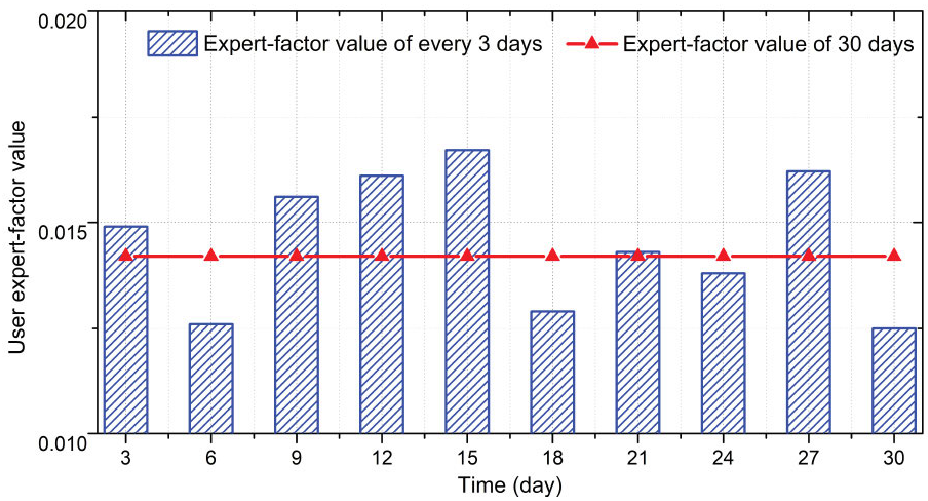 Figure 2: Empirical evidence showing how the "Expert-factor" fluctuates wildly over 30 days, justifying the need for dynamic analysis.
Key Results:
- Error Reduction: The average error rate dropped from ~15% in static models to below 10% in TPP-DA.
- Robustness: The model effectively handled "multi-peak" propagation, where a topic goes viral once, dies down, and resurges.
- Accuracy: Achieved an R-squared () value of up to 0.974, indicating a near-perfect fit for real-world diffusion data.
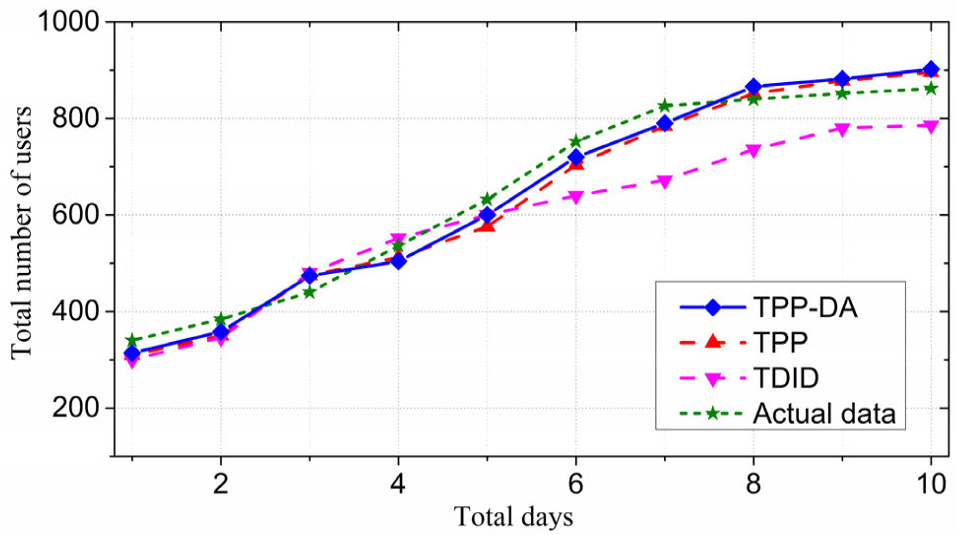 Figure 3: Comparative MAE and RMSE across different methods. TPP-DA consistently presents the lowest error margins.
Critical Insight & Future Outlook
The success of TPP-DA lies in its Inductive Bias: the assumption that nothing in social media is permanent. While the model relies on mathematical interpolation (Lagrange), the authors note that the next frontier is Deep Learning.
Limitations: The model is computationally intensive ( for role training) due to the iterative nature of dynamic updates. Future iterations will likely need to explore graph-embedding shortcuts to maintain real-time prediction capabilities as network sizes scale to the millions.
Conclusion
TPP-DA represents a significant step toward "living" social network models. By treating user influence and topic heat as moving targets, it provides a much more realistic mirror of our digital social behavior.