
PNECP: Solving the "Selfishness" Problem in Opportunistic Social Networks via Hybrid Matrix Factorization
Predicted encounter probability based on dynamic programming proposed probability algorithm in opportunistic social network
The paper introduces PNECP, a novel probabilistic routing method for opportunistic social networks that predicts node encounter and forwarding cooperation probabilities. By utilizing a hybrid matrix factorization approach, it integrates historical encounters, social relationships, and forwarding records to identify optimal relay nodes.
TL;DR
In the world of Opportunistic Social Networks (OSNs), data travels via a "store-carry-forward" mechanism. However, human nodes are inherently selfish and mobile. The PNECP (Predict the probability of Encounter and Cooperation) algorithm tackles this by predicting meeting probabilities using a hybrid matrix factorization model that accounts for social ties and forwarding willingness, achieving SOTA performance in delivery rates and latency.
Background: The Social Gap in Mobile Networks
Traditional routing protocols like PROPHET rely heavily on historical encounter frequency. If node A met node B frequently in the past, it’s assumed they will meet again. But this method has a glaring blind spot: it ignores sociality and selfishness. Just because two nodes meet doesn't mean they are willing to cooperate. Furthermore, new nodes (the "cold-start" problem) have no history, leaving the network blind to their potential as relays.
Methodology: The Power of Hybrid Information
The core innovation of PNECP is its treatment of routing as a prediction problem rather than a simple lookup table. it builds a multi-dimensional view of the network through three key lenses:
- Encounter Matrix (): Captures the raw probability of physical proximity.
- Social Relationship Matrix (): Maps the "social distance." The intuition is that nodes with strong social ties are likely to share a circle of friends, influencing future encounters.
- Forwarding Probability Matrix (): Quantifies a node's "altruism" based on how often it has successfully forwarded messages for others in the past.
The Matrix Factorization Core
The authors use probabilistic matrix factorization to derive latent feature vectors for each node. By decomposing these sparse matrices, the model can predict the missing values—essentially "guessing" if two nodes will meet and cooperate even if they have never spoken before.
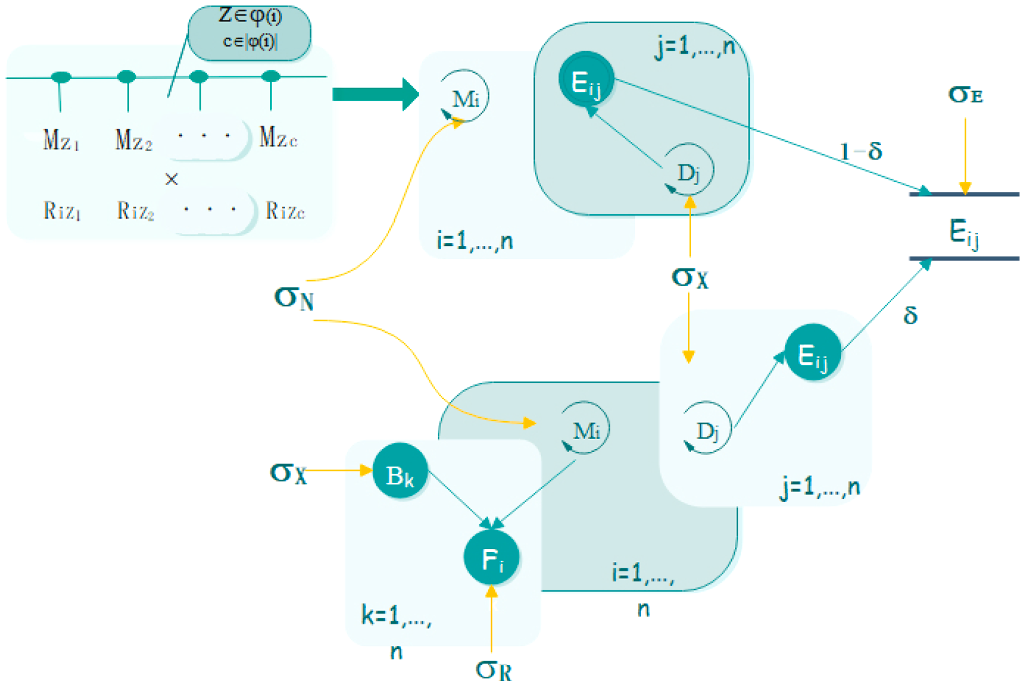 Figure 1: The architecture of the PNECP prediction model, showing the fusion of social and encounter graphs into a compact latent representation.
The algorithm optimizes the following objective function using gradient descent to minimize prediction error: This mathematical rigor ensures that the "social trust" isn't just a heuristic but a statistically grounded weight in the routing decision.
Experimental Validation
Using OMNet++, the researchers tested PNECP against seasoned protocols like GAP and RPRS.
1. Delivery Rate and TTL
As the Time-to-Live (TTL) of a message increases, PNECP consistently maintains a lead. This is because it doesn't just flood the network; it strategically places messages on nodes that are socially incentivized to deliver them.
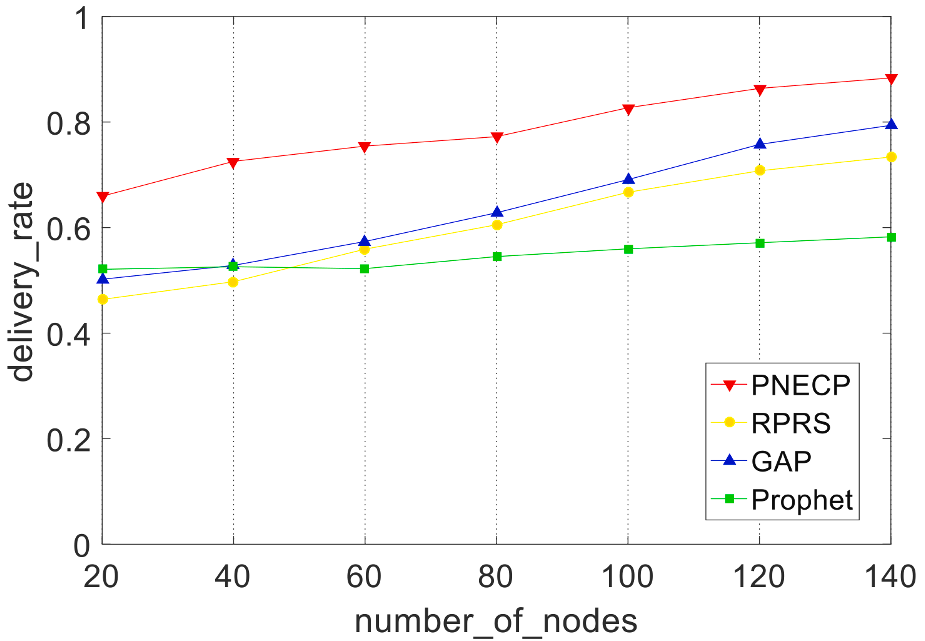 Figure 2: PNECP shows a superior delivery rate as node density increases compared to PROPHET and GAP.
2. Latency and Overhead
A common trade-off in OSNs is that higher delivery rates usually mean higher overhead (more message copies). PNECP breaks this trend. By filtering out "selfish" nodes—those with low forwarding probabilities—the network avoids wasting resources on dead-end relays, resulting in lower latency and fewer redundant copies.
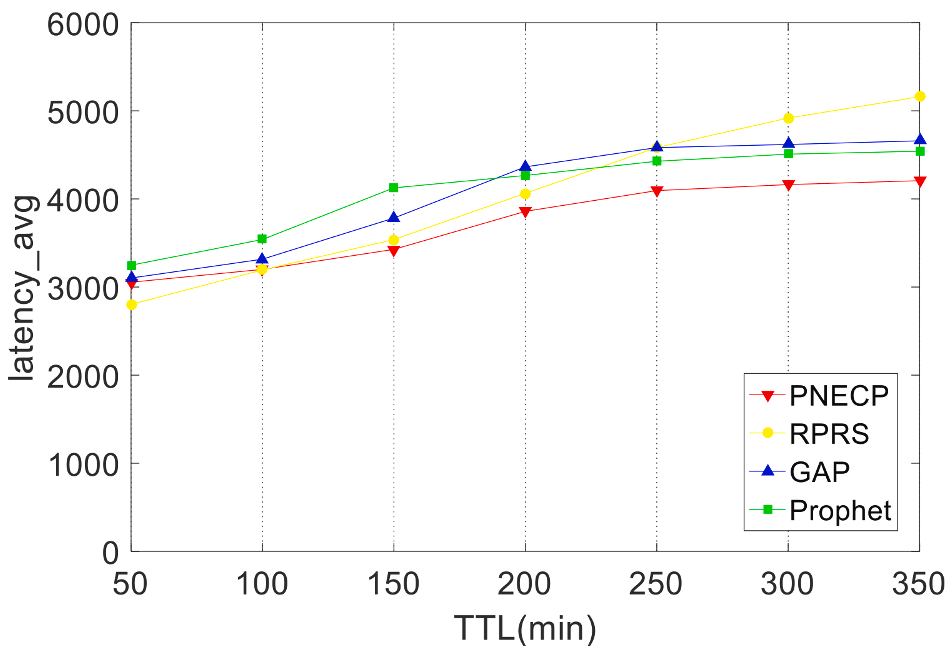 Figure 3: Impact of node count on transport latency, demonstrating PNECP's efficiency in finding the shortest social path.
Critical Insight: Why it Works
The "Secret Sauce" of this paper is the Trade-off Analysis. The authors didn't just propose a static model; they analyzed the temporal dynamics () and delivery intervals (). They found that updating the matrix every 105 minutes and setting a 13-minute transmission interval created the perfect equilibrium between "fresh information" and "network congestion."
Conclusion & Future Outlook
PNECP proves that social awareness is not just a "bonus" feature for mobile networks—it is a requirement for efficiency. By formalizing trust and cooperation into a matrix factorization framework, the authors provide a scalable solution for 5G/6G environments where peer-to-peer data sharing is critical.
Future Work: The authors point toward exploring massive data processing and even faster matrix update cycles to accommodate the high-velocity data of future mobile ecosystems.