
DSNL: Scaling Dynamic Social Networks through Latent Space Drift
Dynamic Social Network Analysis using Latent Space Models
The paper introduces the Dynamic Social Network in Latent space (DSNL) model, which extends static latent space models to track evolving relationships by embedding entities into a p-dimensional Euclidean space. Through a combination of time-variant Multidimensional Scaling (MDS) and conjugate gradient optimization, it achieves near-linear O(n log n) scalability while reaching SOTA performance on link prediction tasks.
TL;DR
Social networks are never static; friendships evolve, circles shift, and collaborations drift. This paper presents DSNL, a framework that maps entities into a Euclidean latent space where their movement tracks social evolution. By innovating on Multidimensional Scaling (MDS) and utilizing KD-trees for gradient updates, the authors achieve nearly linear scaling (O(n log n)), allowing them to model networks with over 11,000 entities—a significant leap over previous quadratic-time approaches.
Problem & Motivation: The Drift of Social Bonds
Current social network analysis often hits a wall when dealing with temporal dynamics. Most models assume a static snapshot, but in reality:
- Drift: People move between "neighborhoods" of interest.
- Scalability: As the number of entities grows, the cost of computing pairwise interactions becomes prohibitive.
- Sparsity: Most people aren't connected to most other people, yet the math often treats the network as a dense matrix.
The authors' intuition was simple: If we represent people as points in space, we can assume that while they can move, massive jumps are unlikely (Markov assumption). They sought to answer: How do we track these movements without computing every possible interaction?
Methodology: The Two-Stage Rocket
The paper proposes a sophisticated two-step learning process to keep computation tractable.
Stage 1: Time-Variant MDS (The Global Guess)
Instead of starting from scratch (random initialization), the authors use a modified version of Multidimensional Scaling (MDS). They introduce a "forgetting factor" that penalizes positions from moving too far from their previous timestep's configuration.
Mathematically, they solve for the rotation-invariant alignment using a Procrustean transform, ensuring the latent space doesn't just spin wildly between timesteps. To maintain speed, they exploit the fact that the distance matrix is "mostly constant" beyond a few hops, allowing the use of iterative Power Methods in time.
Stage 2: Non-Linear Refinement (The Local Polish)
Once the global structure is set, a Conjugate Gradient (CG) search refines the positions based on a probabilistic model.
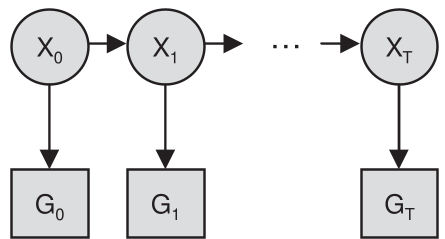 Figure 1: The Markovian structure where latent positions depend on both current links and former positions .
The "secret sauce" here is the Biquadratic Kernel. By defining an interaction radius for each entity, the gradient for entities outside this radius becomes zero. This allows the use of KD-trees to retrieve only relevant neighbors, slashing the update complexity from to .
Experiments & Results
The authors validated DSNL against 12 years of NIPS co-authorship data and synthetic benchmarks.
SOTA Performance
DSNL consistently outperformed "MDS without time" and simple counting models. In the NIPS dataset, it accurately predicted the "collision" of researchers (like Vapnik and Burges) in latent space before they officially co-published, simply because their neighbors were moving closer together.
| Method | n=320 (AUC) | n=1280 (AUC) |
|---|---|---|
| DSNL (Proposed) | 0.83 | 0.79 |
| MDS (No Time) | 0.71 | 0.70 |
| Simple Counting | 0.70 | 0.69 |
Efficiency & Speed
Efficiency was the headline result. By using MDS initialization, the model converged twice as fast as random initialization and reached a higher log-likelihood.
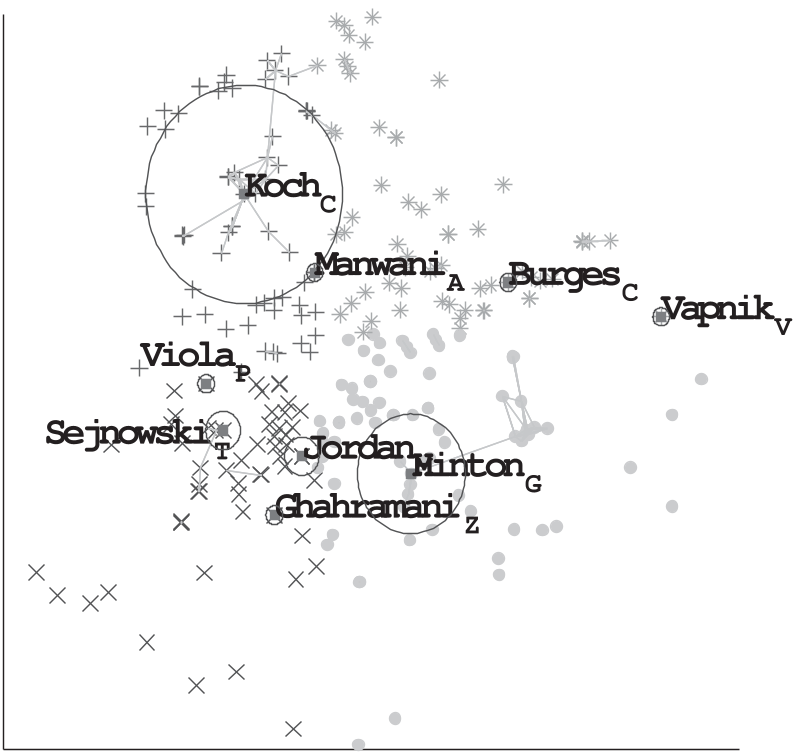 Figure 2: Performance vs. Number of Entities, showing the sub-quadratic, nearly linear scaling achieved via KD-trees.
Critical Analysis & Takeaways
Key Insight: The paper brilliantly bridges the gap between global spectral methods (MDS) and local probabilistic models (CG). By using Stage 1 for the "big picture" and Stage 2 for "local precision," it avoids the local minima that plague many latent space models.
Limitations:
- The model assumes a Euclidean space; however, many social networks exhibit hierarchical (hyperbolic) structures that Euclidean space struggles to represent without high dimensions.
- The radius is determined by degree, which might be too simplistic for entities that are "social butterflies" but bridge very distant communities.
Future Outlook: This work lays the foundation for real-time recommendation engines. Integrating this with modern Graph Neural Networks could allow the "latent space" to be non-Euclidean, potentially capturing even more complex social hierarchies.