
DER3: Smart Crowdsourcing for Regression via Multi-Armed Bandits
Dynamic estimation of worker reliability in crowdsourcing for regression tasks: Making it work
The paper introduces DER3 (Dynamic Estimation of Rater Reliability for Regression), a novel framework using Multi-Armed Bandit (MAB) algorithms to identify and prioritize reliable workers in crowdsourcing environments. It specifically targets regression tasks—such as emotion recognition—achieving high-accuracy labels while minimizing crowd costs and latency.
TL;DR
Collecting high-quality continuous data (regression) from crowdsourcing is notoriously expensive and prone to noise. DER3 (Dynamic Estimation of Rater Reliability for Regression) solves this by treating workers like "slot machine arms" in a Multi-Armed Bandit (MAB) setup. It learns who the experts are on-the-fly, rejects noisy participants, and works even when workers come and go at unpredictable times—all without knowing the "true" answers beforehand.
The Problem: The High Cost of "Crowd Noise"
Supervised machine learning relies on human labels. However, in regression tasks—like rating the intensity of an emotion or the similarity between images—human error is high. Traditional solutions involve:
- Over-sampling: Asking dozens of people to rate the same thing (Exorbitantly expensive).
- Static EM (Expectation-Maximization): Collecting all data first and then cleaning it (Wasteful of budget on bad raters).
- Gold Standards: Using pre-labeled "test" questions (Hard to create for subjective tasks).
Modern crowdsourcing needs a dynamic solution that fires "bots" and "spammers" early, but most existing dynamic models assume workers are standing by 24/7—a luxury you don't have on platforms like Amazon Mechanical Turk.
Methodology: The Bandit Approach to Reliability
The authors propose that rater selection is essentially an Exploration vs. Exploitation problem. Do you give a task to a new, unknown worker (Exploration) or to a worker you know is good (Exploitation)?
1. The Reward Function
Since there is no "gold standard," the reward for "pulling an arm" (hiring a worker) is calculated by how much that worker agrees with the current consensus: The closer a worker is to the group average, the higher their reliability score grows.
2. The DER3 Workflow
The process handles Intermittent Availability:
- Exploration Phase: Accept the first few ratings for every instance to establish a baseline.
- Exploitation Phase: When a worker becomes available, check their history. If their reliability is lower than the average reliability of those who already rated the item, reject them.
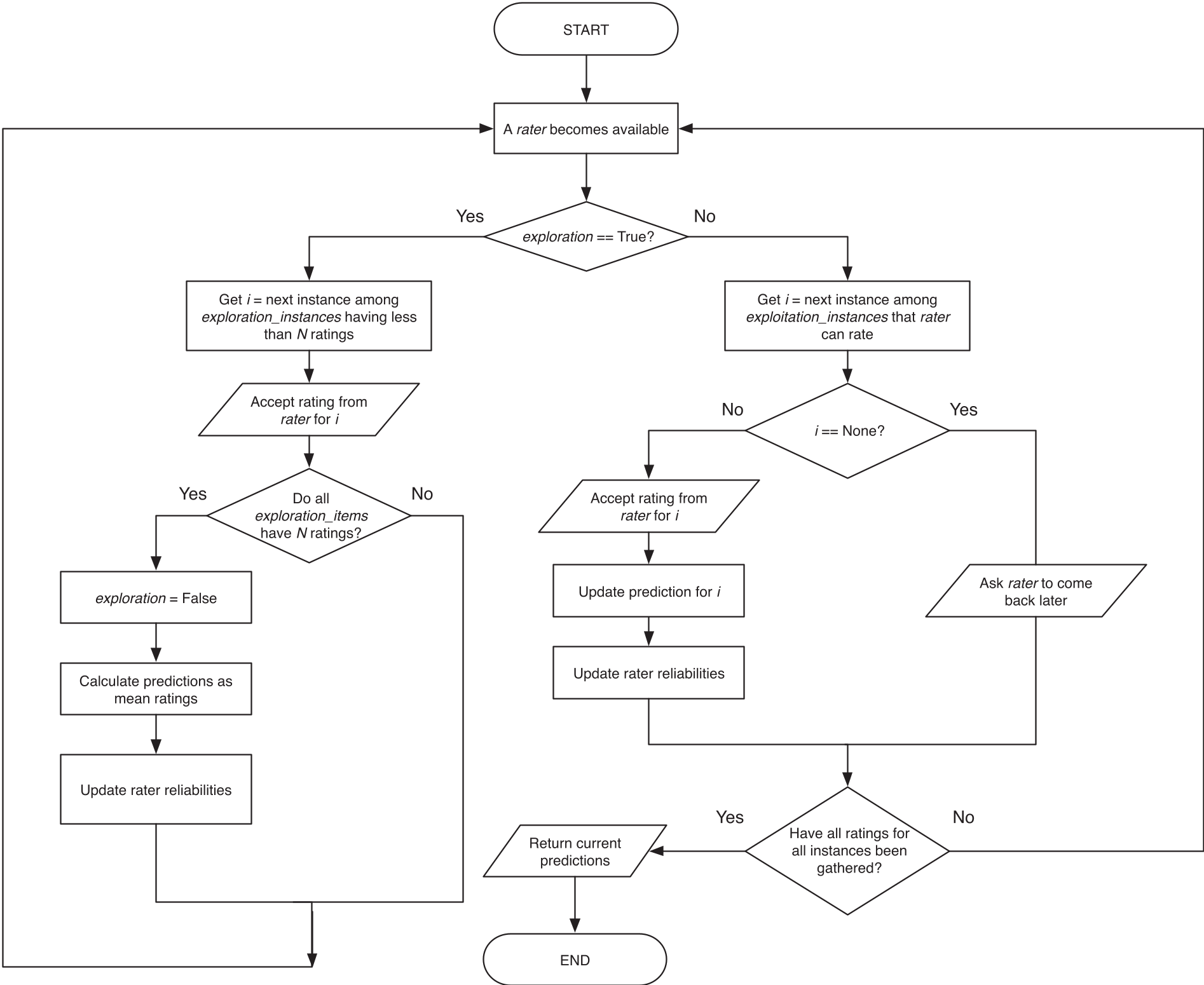 Figure 1: The DER3 logic for deciding whether to accept a worker's contribution.
Experiments: More Than Just Average Error
The authors tested DER3 across diverse datasets:
- VAM: Emotional speech (Activation, Power, Evaluation).
- BoredomVideos: User boredom levels.
- ImageWordSimilarity: Semantic similarity.
Key Breakthrough: Precision in the Extremes
While "Average Absolute Error" showed modest gains, the real value appeared in Confusion Matrices. In emotion recognition, identifying the "majority" (neutral) is easy. Identified the "minority" (extreme anger or happiness) is where performance usually tanks.
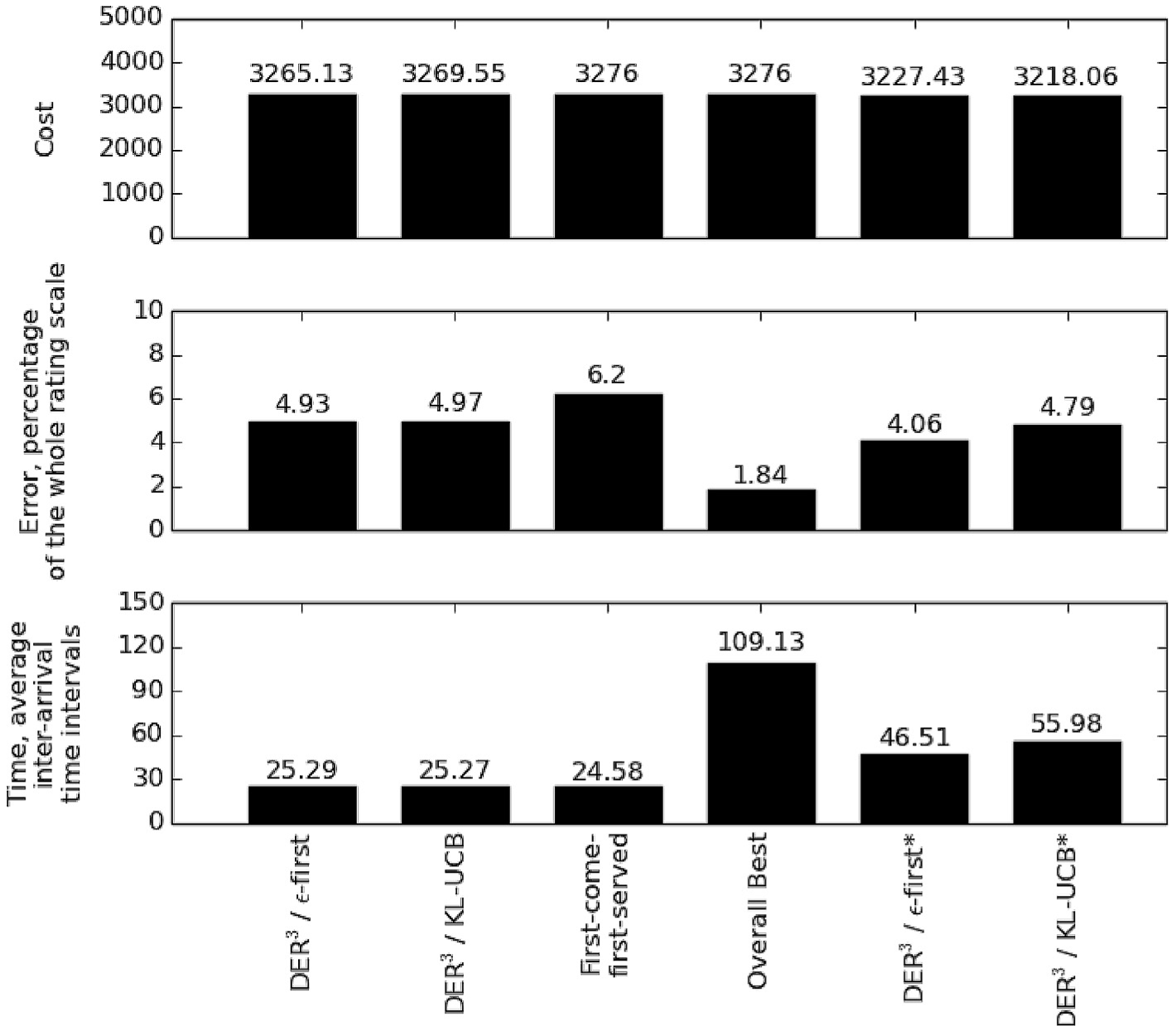 Figure 2: Performance comparison across algorithms. Notice how MAB methods (Blue/Green) maintain lower error than random baselines.
By filtering out noisy workers using -first MAB strategies, the system improved the accuracy of detecting extreme emotions by over 40% (from 36% accuracy to 79% accuracy for the most active speech segments).
Critical Insight & Practical Value
The genius of DER3 isn't just in the math—it's in the real-world constraints. By acknowledging that workers arrive intermittently, the authors moved MAB from a theoretical curiosities to a practical crowdsourcing tool.
The Takeaway: If you are building a dataset for regression (e.g., LLM preference ranking, audio quality scoring), don't just average everyone's scores. Use an MAB-based filter like DER3 to identify your "super-raters" dynamically. It’s faster, cheaper, and fundamentally more accurate for the "long tail" of your data.
Future Outlook
While DER3 is robust, it still relies on a fixed number of ratings per instance. The next step for the industry is dynamic budget allocation: stop asking for more ratings once a high-reliability rater has confirmed the value, and spend that money exploring more difficult, controversial items instead.