
DYNAMO: Scaling Marine Crowdsourcing via Native Android Integration
DYNAMO: Distributed Leisure Yacht-Carried Sensor-Network for Atmosphere and Marine Data Crowdsourcing Applications
DYNAMO is a distributed sensor infrastructure designed for marine data crowdsourcing using leisure vessels as mobile IoT nodes. It features a customized Android distribution with an embedded SignalK-compliant C/C++ daemon to enable high-performance, real-time data acquisition and cloud synchronization.
TL;DR
DYNAMO turns leisure yachts into a massive, distributed sensor network for oceanographic and atmospheric monitoring. By replacing standard Android Java services with a high-performance C/C++ Linux daemon, this research achieves the reliability of dedicated marine hardware on consumer-grade mobile devices, paving the way for high-resolution "Internet of Floating Things" applications.
Background & Motivation
Most of the human population lives near coastal areas, yet these regions are among the most sensitive to climate change. Monitoring the marine environment is historically the domain of expensive scientific buoys or large commercial vessels.
The authors previously attempted to address this with FairWind, an Android app. However, they hit a "wall": the Android operating system treats data-heavy nautical services as background tasks. When memory gets tight or the Garbage Collector (GC) runs, critical data streams from wind sensors or GPS can be dropped. DYNAMO was born from the need to move beyond "app-level" constraints into "system-level" reliability.
Methodology: Moving to the Native Level
The core innovation of DYNAMO is the DYNAMO Daemon. Instead of running within the Dalvik/ART virtual machine, it operates as a native Linux process.
1. The DYNAMO Daemon Architecture
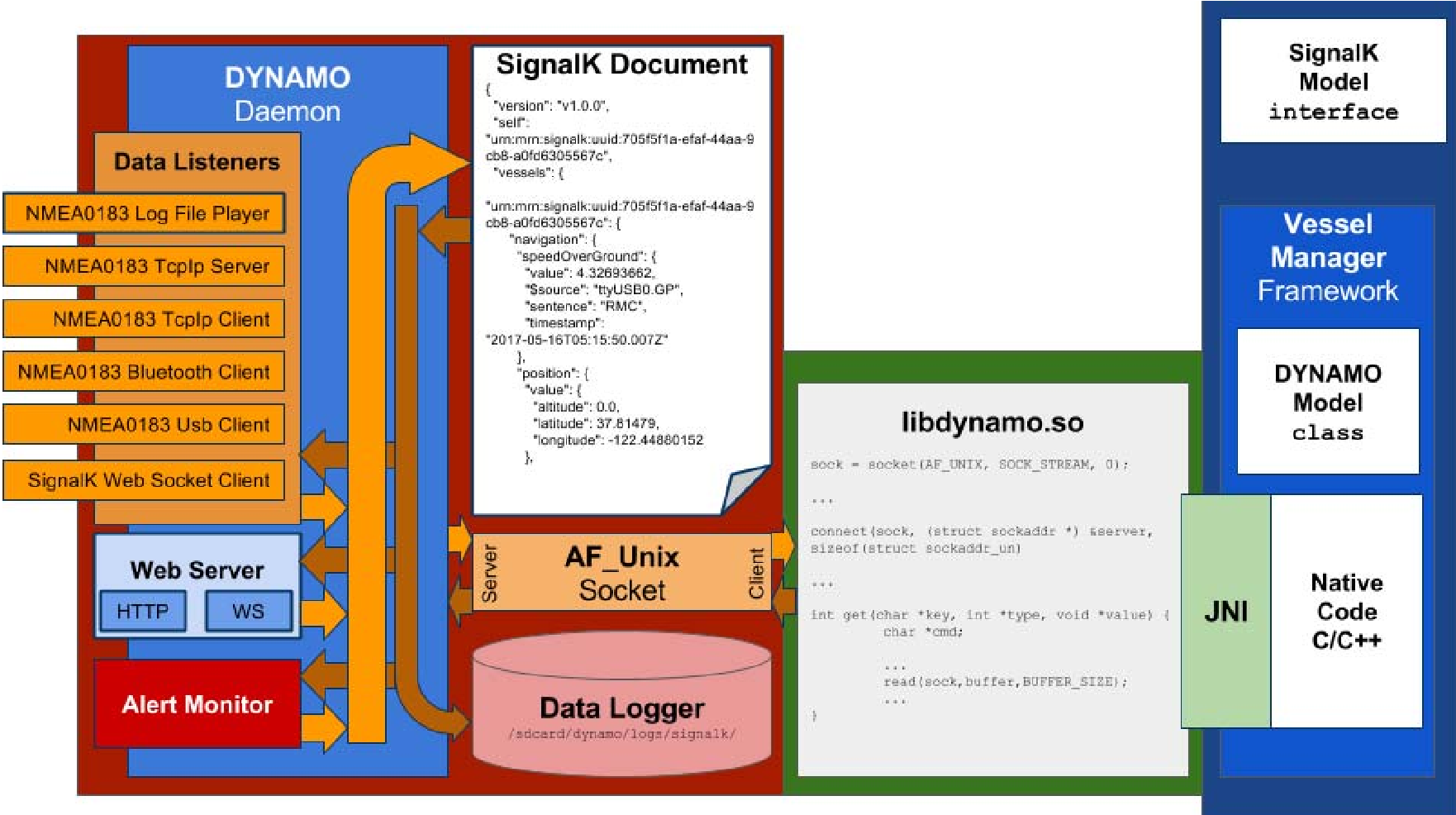
The architecture is split into four functional blocks integrated via a C++ shared library (libdynamo.so):
- Data Listeners: Support diverse protocols (NMEA0183, NMEA2000, SeaTalk) over TCP, UDP, or USB.
- SignalK Server: Uses a JSON-based open standard specifically designed for marine data.
- The Alert Monitor: Real-time evaluation of sensor thresholds.
- Data Logger: Efficiently parcels data for upload to the cloud when connectivity (Cellular/Wi-Fi) becomes available.
2. The Vessel Manager Bridge
To ensure developers can still build standard Android "Boat Apps," the authors created a Vessel Manager Framework. It uses JNI (Java Native Interface) and POSIX AF UNIX sockets to bridge the high-performance native daemon with the user-friendly Java application layer.
Experimental Results
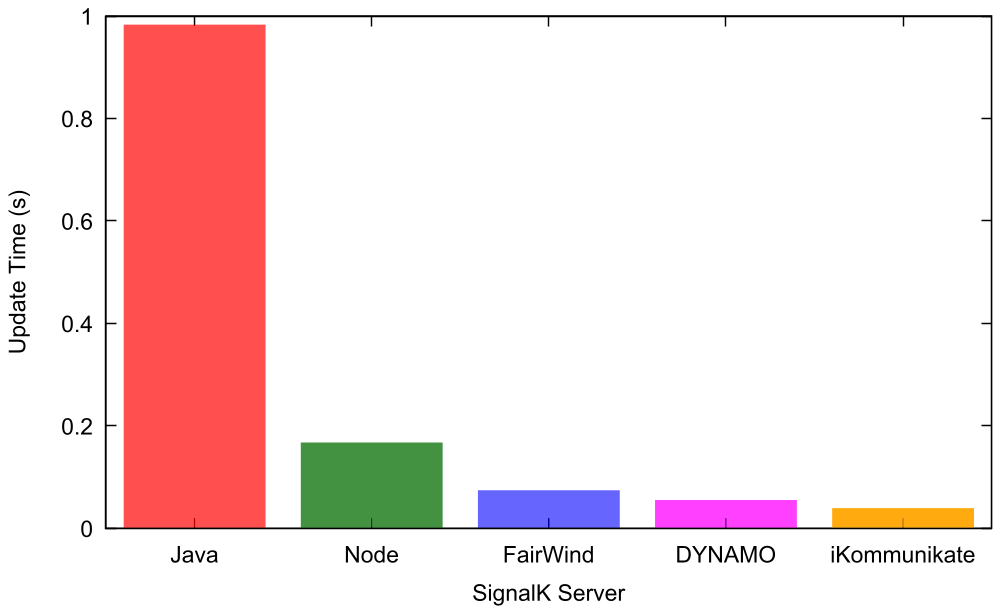
The researchers compared DYNAMO against several industry standards, including SignalK Node.js and Java implementations, and iKommunicate (specialized ARM-based hardware).
Performance Benchmarking
DYNAMO drastically outperformed the previous Java-based FairWind app. In HTTP/GET response tests, DYNAMO's latency remained low and stable even as the request frequency skyrocketed, matching the performance of dedicated hardware.
Scalability in the Wild
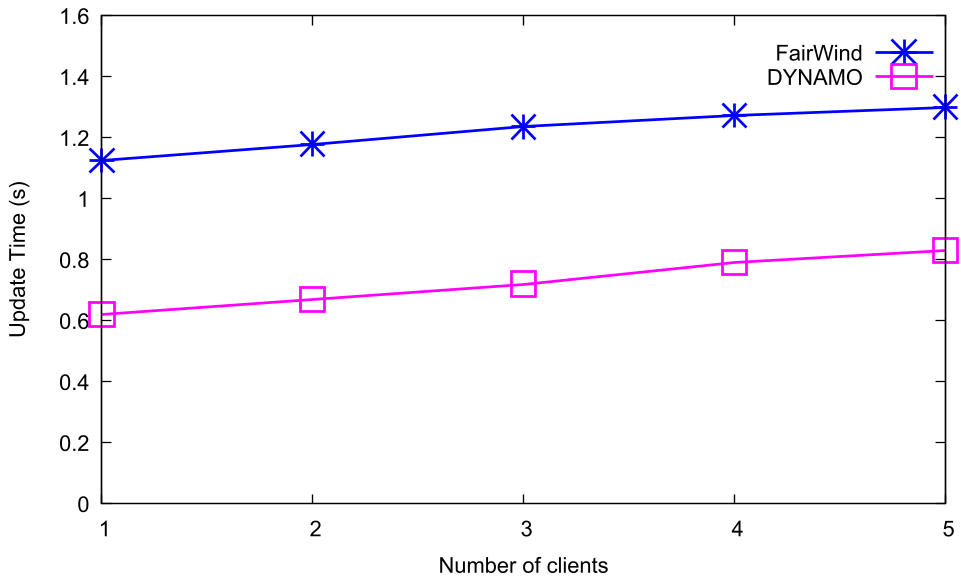
The system was tested for "Subscription" efficiency—where clients only receive updates for specific data points (e.g., just wind speed). While the old Java implementation struggled with multiple clients, DYNAMO’s native implementation handled multiple concurrent connections with negligible latency increases.
Critical Insight & Future Outlook
The success of DYNAMO demonstrates a crucial design pattern for the "Internet of Things" on mobile platforms: Don't trust the app layer for critical infrastructure. By treating the boat's sensor network as a system-level service, DYNAMO makes data crowdsourcing transparent and resilient for the user.
Limitations: The current prototype requires a customized Android distribution, which may limit immediate mass adoption. However, as 5G connectivity reaches coastal zones, this architecture provides a blueprint for real-time edge computing where even "leisure" devices contribute to global climate science.
Future Work: The authors plan to explore GPGPU offloading to handle more complex on-board computations, potentially allowing vessels to process raw sonar or environmental imagery before it even hits the cloud.