
InSiKids: Bridging the Gap Between Child Psychology and IT Security Through Game Metaphors
E-Learning of IT Security Threats: A Game Prototype for Children
The paper introduces "InSiKids," an e-learning game prototype designed to teach IT security threats to primary school children (ages 7-9). Using the XNA Game Studio, the authors developed three metaphor-based mini-games focusing on viruses, social network privacy, and chatting with strangers to bridge the gap between abstract technical risks and children's daily experiences.
TL;DR
In an era where 60% of primary school children navigate the internet, the gap between technical security threats and a child's understanding is a critical vulnerability. InSiKids is a game prototype that translates abstract concepts like "malicious code" into "icon-eating monsters," using 2D gaming and metaphors to turn IT security into an engaging, age-appropriate learning experience.
Background Positioning
This work sits at the intersection of HCI (Human-Computer Interaction) and Educational Psychology. Rather than proposing a new technical protocol, the authors address the "UX gap" in security education. It is an application-focused study that validates how game design can serve as a translator for complex technical risks.
Problem & Motivation: The Failure of Technical Literalism
Adults understand a "virus" as executable code. A child sees nothing. Previous work, such as parental time limits or dry school lectures, fails because:
- Abstract Nature: IT threats are invisible and intangible.
- Cognitive Load: Young children (7-9) struggle with long texts and complex logic.
- Lack of Engagement: Information-heavy websites don't compete with the "instant reward" nature of modern gaming consoles like the Nintendo DS.
The authors’ insight is simple: Utilize the world of fantasy. If a child cannot see a virus, give it a face—a monster that eats their beloved desktop icons.
Methodology: The Architecture of a Metaphor
The prototype, built on Microsoft's XNA Game Studio 4.0, focuses on three specific mini-game modules. Each uses 2D sprites to ensure the visual environment is non-distracting and easy to navigate.
1. The Social Network Game (Visual Novel)
To teach privacy, the game uses a birthday party metaphor. A "conscience" mechanic (angel and devil) guides the player through the risks of sharing personal data.
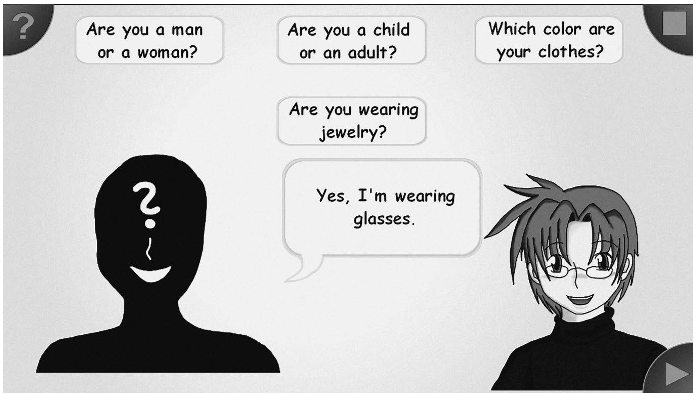 Fig 1: The Social Network game uses situational avatars to represent internal decision-making.
2. The Virus Game (Action Metaphor)
Malicious code is visualized as monsters attacking desktop icons. The "How" is critical here: the game teaches that while you can "spray" (antivirus) the monsters, the only definitive solution is a system shutdown/restart, teaching the limits of software-based defense.
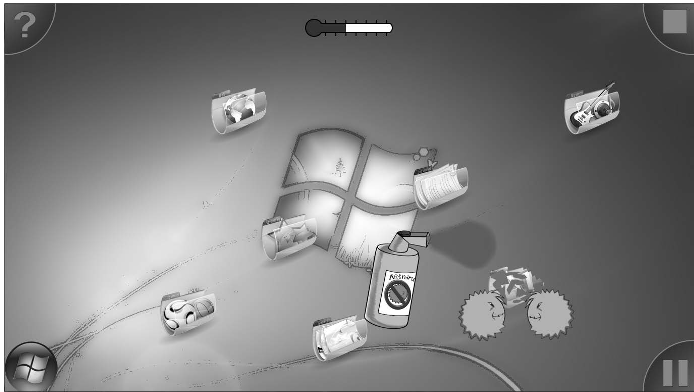 Fig 2: Transforming "malicious code" into visible threats that eat game assets.
Experiments & Results: Do Metaphors Stick?
The researchers conducted a usability study with 36 children in a trilingual primary school. Key observations include:
- Gender Differences: Girls outperformed boys in the social network module (Cohen’s d = 0.73), likely due to higher baseline usage of social media and better verbal comprehension.
- Engagement: The use of "Hero Certificates" and physical medals significantly boosted motivation.
- Comprehension: The "Virus" game scores were variant but showed that children understood the concept of "threat and reaction" better in a gamified context than through textual warnings.
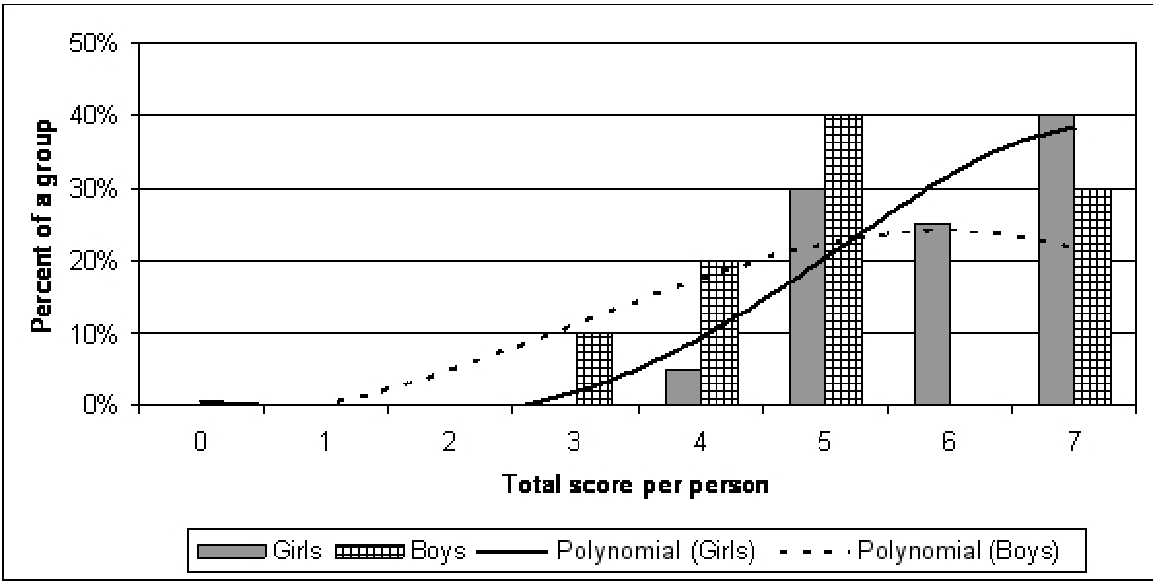 Fig 3: Data distribution indicating stronger knowledge retention in the social network module.
Critical Analysis & Conclusion
Takeaway
The success of InSiKids demonstrates that "Inductive Bias" in educational software should favor simplicity over technical detail for the 7-9 age group. Metaphors act as the bridge between the unknown (IT security) and the known (social interactions/predators).
Limitations
- Small Sample Size: With only 30 valid data sets, the results are "tendencies" rather than statistical certainties.
- Learning vs. Knowledge: The study did not include a pre-test, meaning it measured what the children knew after playing, not necessarily how much they improved from their baseline.
Future Work
The authors propose moving beyond the XNA framework to include sound effects (multidimensional stimuli) and gold/silver/bronze medal systems to lengthen the "gameplay loop." The next step in this research branch is to explore if these metaphors translate correctly as children transition into the more complex, less-moderated world of teenage social media.