
Predictive Analytics in Healthcare: Taming the Diabetes Epidemic with Machine Learning
Diabetes Prediction in Healthcare at Early Stage Using Machine Learning Approach
This paper presents a machine learning-based diagnostic framework for early-stage diabetes prediction. Utilizing a real-world dataset from the Khulna Diabetes Center, the authors evaluate Logistic Regression, XGBoost, and Random Forest, identifying Logistic Regression as the top performer for this specific clinical context.
TL;DR
Diabetes is often dubbed the "silent killer" due to its gradual onset and devastating long-term complications. This research explores the power of machine learning—specifically Logistic Regression, XGBoost, and Random Forest—to predict diabetes at an early stage. Using a targeted dataset of 289 clinical instances, the study reveals that even classic statistical models like Logistic Regression can achieve an impressive 88% accuracy, potentially serving as a vital digital triaging tool for clinicians.
The Growing Burden of Hyperglycemia
The global prevalence of diabetes is skyrocketing, with estimates suggesting that 1 in 10 individuals will be affected by 2040. The challenge lies in the nature of the disease: by the time clinical symptoms are obvious, internal damage to the kidneys, nerves, and cardiovascular system may already be irreversible. Traditional diagnostic workflows can be slow; however, data mining offers a pathway to "predictive diagnostics"—identifying high-risk patients before the critical threshold is reached.
Methodology: From Clinical Data to Binary Classification
The authors followed a rigorous system architecture to ensure the reliability of their predictions. The process moved from raw data collection at the Khulna Diabetes Center to feature engineering and model evaluation.
1. The Dataset
The study utilized 13 distinct features, including continuous variables like BMI, Fasting Blood Sugar (FBS), and Blood Pressure, as well as nominal variables like Urine Color and Gender.
2. Architectural Framework
The system follows a standard yet effective ML pipeline: Data Pre-processing -> Feature Correlation -> Model Training -> Performance Analysis.
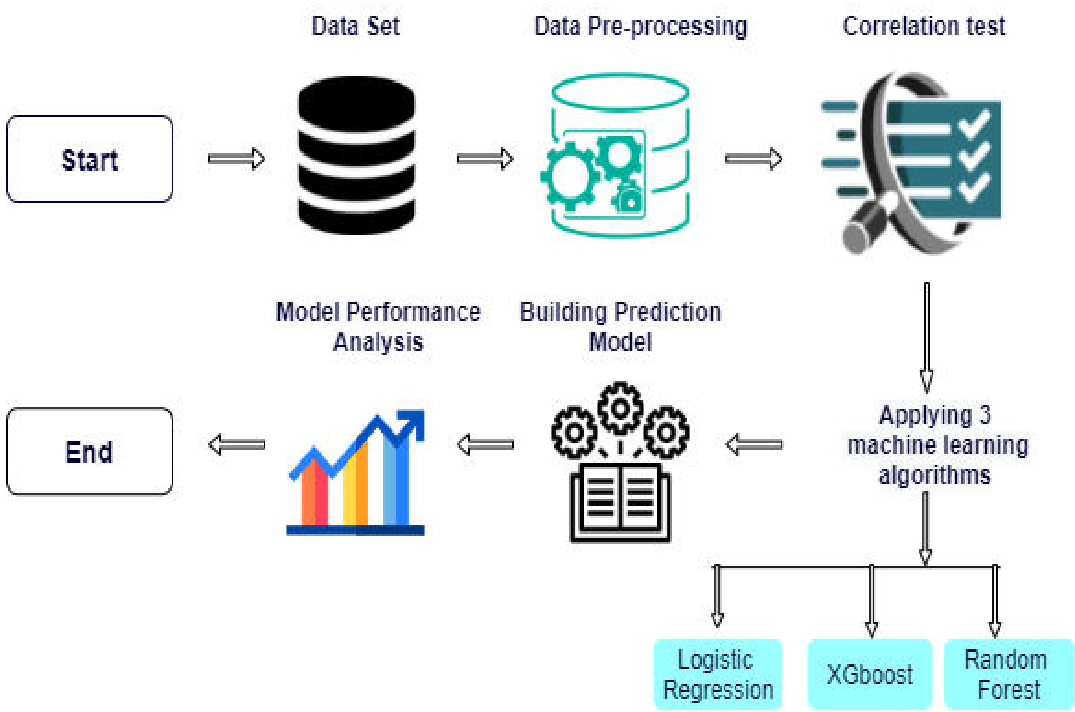 Figure 1: The end-to-end workflow for diabetes prediction, from data acquisition to evaluation.
The Core Contenders: Why These Models?
The study pits three heavyweights of the supervised learning world against each other:
- Logistic Regression: Chosen for its efficiency in binary classification and its roots in the sigmoid function, making it ideal for clinical probability estimation.
- XGBoost (Extreme Gradient Boosting): A high-performance ensemble method known for parallelization and its ability to prevent overfitting through automatic regularization.
- Random Forest: A robust ensemble of decision trees that uses bagging and feature randomness to handle diverse medical inputs without the need for extensive pruning.
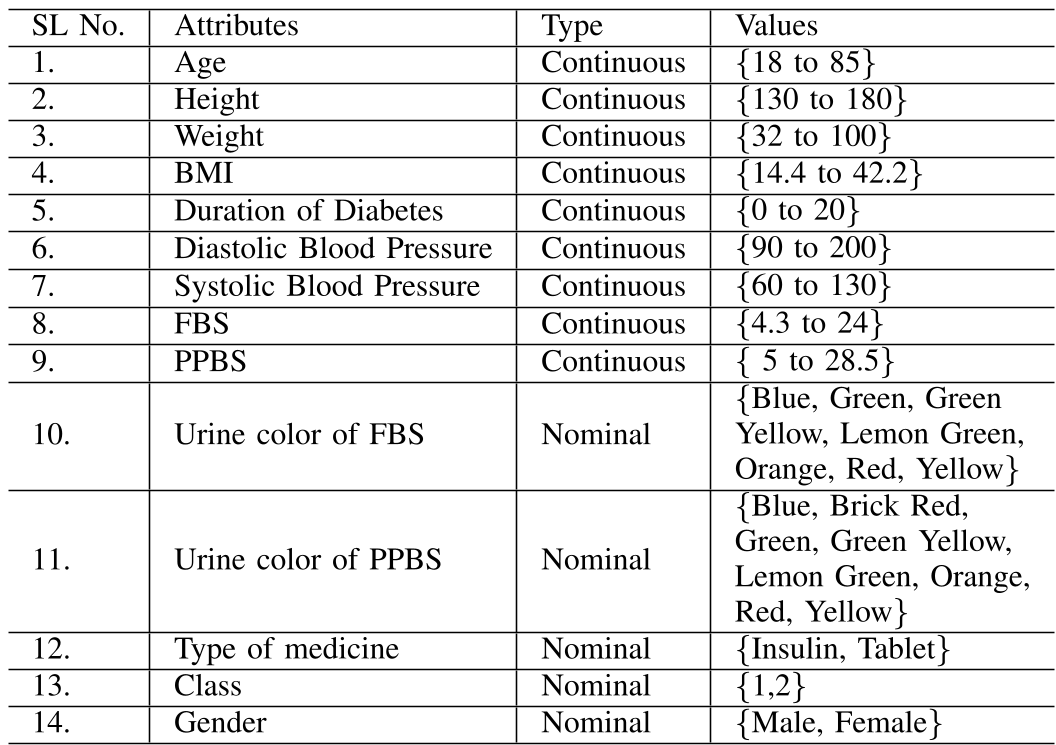 Table 1: Description of the clinical attributes used to train the models.
Results: Simplicity Often Wins
Conventional wisdom suggests that complex boosting algorithms like XGBoost always win. However, in this healthcare context, Logistic Regression took the lead.
| Algorithm | Accuracy | Precision | Recall | F1-Score |
|---|---|---|---|---|
| Logistic Regression | 88% | 0.81 | 0.95 | 0.88 |
| XGBoost | 86.36% | 0.82 | 0.93 | 0.87 |
| Random Forest | 86.36% | 0.80 | 0.98 | 0.88 |
While Random Forest exhibited a higher Recall (98%)—meaning it missed very few actual diabetic cases (low False Negatives)—Logistic Regression provided a more balanced performance across all metrics. The ROC curves further validate these results, showing strong Area Under the Curve (AUC) characteristics for all three models.
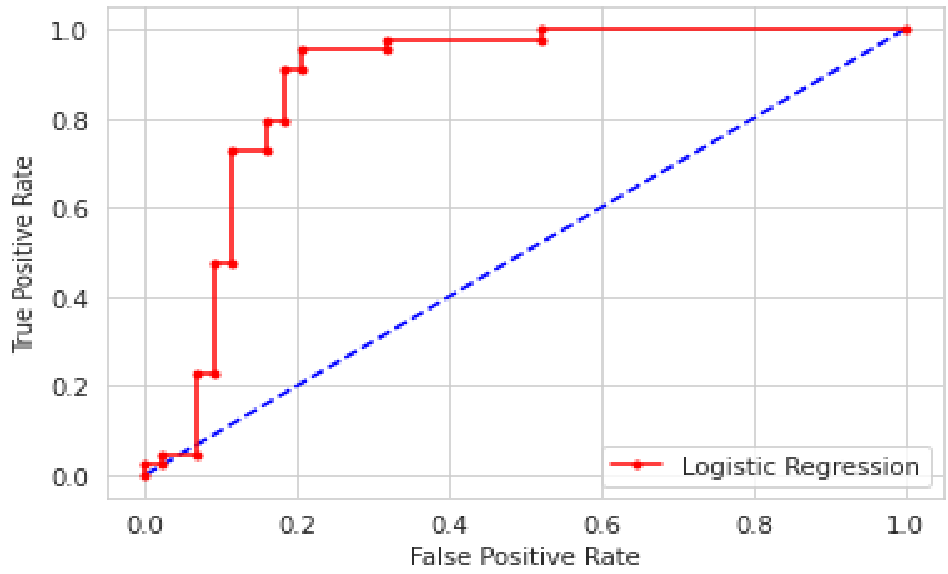 Figure 2: The ROC Curve for Logistic Regression, demonstrating its superior diagnostic threshold.
Critical Insights & Future Outlook
The primary takeaway is the viability of computer-aided systems in early intervention. However, as the authors honestly note, the dataset size (289 instances) is a limitation.
Key Insights:
- Inductive Bias Matters: In small-sample clinical settings, the linear assumptions of Logistic Regression may act as a helpful regularizer, preventing the "memorization" that more complex models might fall into.
- High Recall is Vital: In medical screening, a high Recall (as seen in Random Forest at 0.98) is often more important than Precision, as the cost of missing a sick patient (False Negative) is much higher than the cost of a false alarm.
Future Work: The authors aim to transition this research into a real-world application—an Expert System that not only predicts the disease but also provides lifestyle and medication suggestions, potentially bridging the gap between data science and patient care in underserved regions.
Conclusion
This work underscores that Machine Learning isn't just for tech giants; it is a critical tool for local healthcare centers. By leveraging 13 simple clinical features, practitioners can deploy models that provide life-saving early warnings with high statistical confidence.