
XCS for Intrusion Detection: Why Evolution Needs a "Pause" Button
The Role of Early Stopping and Population Size in XCS for Intrusion Detection
This paper investigates the necessity of early stopping and optimal population sizing for XCS (specifically XCSR for continuous values) in the context of Intrusion Detection (ID). By evaluating three stopping criteria on the KDD Cup 99 dataset, the authors demonstrate that XCS is susceptible to overfitting and that early stopping significantly improves generalization.
TL;DR
Is more training always better for evolutionary systems? This paper challenges the long-held belief that Evolutionary Computation (EC) is immune to overfitting. By testing XCSR (XCS for continuous values) on the KDD Cup 99 Intrusion Detection dataset, the authors prove that "Early Stopping"—a staple in Deep Learning—is crucial for maximizing generalization. They also identify a "sweet spot" for population size, proving that massive rule sets aren't always necessary for high performance.
Background Positioning
In the landscape of Machine Learning, XCS (eXtended Classifier System) sits at the intersection of Reinforcement Learning and Genetic Algorithms. While most early XCS research focused on synthetic "binary multiplexer" problems where overfitting was rare, this work pivots to the messy, real-world domain of Intrusion Detection (ID).
The Overfitting Myth in EC
The academic consensus once suggested that EC methods naturally resist overfitting because of their population-based diversity. However, in Intrusion Detection, where test sets often contain attack patterns unseen during training (e.g., attackers evolving to bypass firewalls), over-training on specific training samples can be fatal.
The authors identify two major gaps:
- Arbitrary Termination: Most XCS implementations simply run for a fixed generations.
- Generalization Limits: Without a validation-based stopping mechanism, the "optimal" rule set for the training data reflects noise rather than the underlying security threats.
Methodology: Tuning XCSR for Security
The authors don't just apply XCSR; they refine it for the KDD Cup 99 dataset.
1. Handling the "No-Match" Problem
In testing, if no rule matches a network packet, the authors introduced a Distance Metric. Instead of a random guess, the system calculates the shortest distance from the input to a classifier's bounds :
2. Strategic Stopping
They compared three methods to decide when to stop the Genetic Algorithm:
- Max on Validation: Accuracy on a separate 10-fold cross-validation set.
- Max on Training: The peak performance during the training phase.
- Last Generation: The status quo (stopping at the very end).
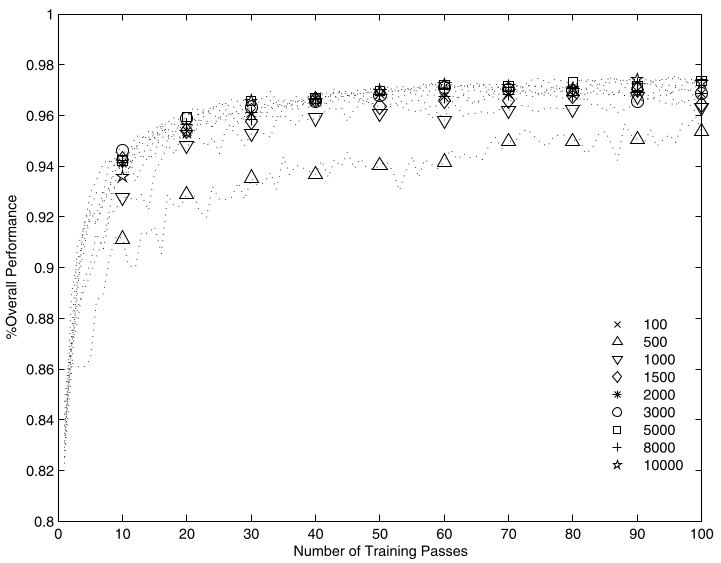 Figure 1: Performance curves showing the divergence between Training and Validation accuracy—a classic hallmark of overfitting.
Experimental Insights
The results from the FTP-only subset (29 features) revealed several critical findings:
Table 2: The Superiority of Early Stopping
The experiments showed that stopping at the peak of Validation Accuracy consistently yielded higher test scores than letting the GA run to its final generation.
| Population | Max Validation | Last Generation |
|---|---|---|
| 1000 | 0.376 | 0.327 |
| 5000 | 0.398 | 0.350 |
| 10000 | 0.401 | 0.365 |
Note: While 40% overall seems low, the individual class accuracies for "Normal" and "DOS" traffic were frequently above 95%. The overall average was dragged down by the notoriously difficult R2L class.
The Population Trade-off
A significant contribution of this paper is the analysis of Population Size (). In XCS, larger populations (e.g., ) increase computational cost exponentially.
- Finding: Performance for was nearly identical to .
- Implication: For real-time intrusion detection, researchers can "trade off" a tiny bit of accuracy for massive gains in inference speed.
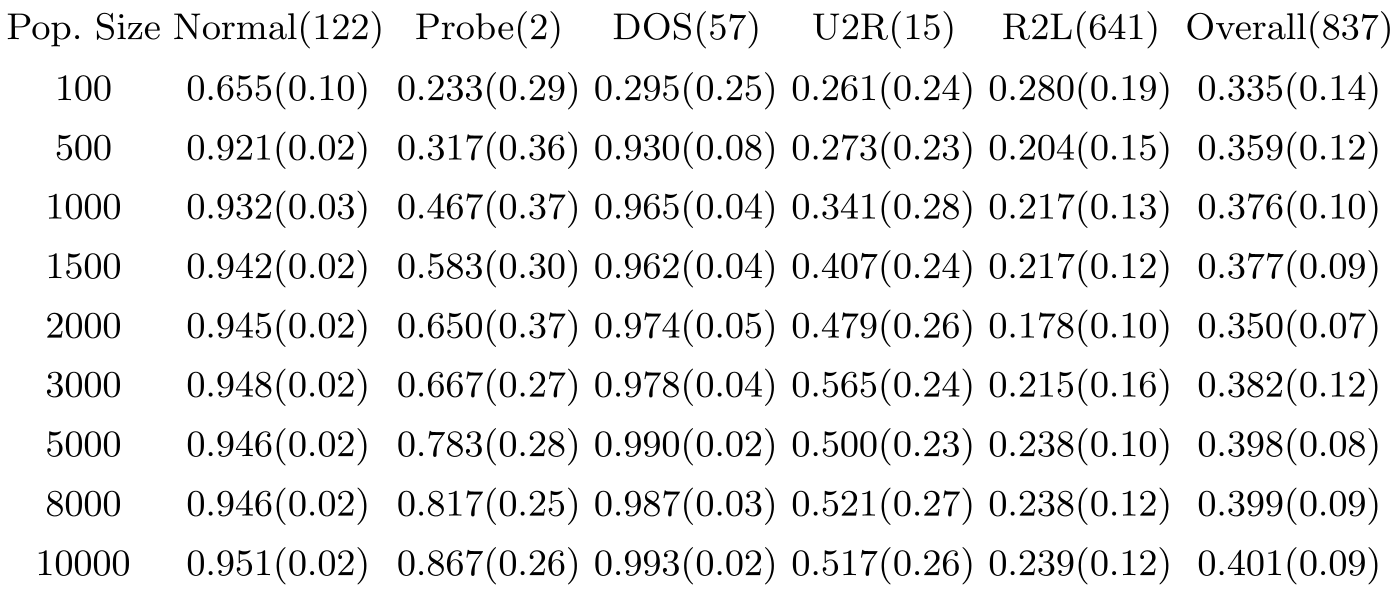 Table 3: Individual class performance. Note the high accuracy in "Normal" and "Probe" categories versus the struggle with "R2L".
Critical Analysis & Conclusion
Takeaway
This paper serves as a wake-up call for the Evolutionary Computation community. It proves that overfitting is a universal ML phenomenon that does not spare rule-based evolutionary systems. By using validation-based early stopping and optimized population sizes, XCSR becomes a more viable candidate for high-speed network security.
Limitations
The overall accuracy (0.401) highlights the struggle of XCS with unbalanced datasets. In the test set, the R2L class was the majority, but it was a minority in the training set. Future work must address how XCS manages "class-imbalance" beyond simple fitness rewards.
Future Outlook
The authors suggest that future heuristics should focus on reducing computational time even further, potentially allowing XCS to act as a real-time monitor in live network environments rather than just an offline data miner.