
ECHOS: Bridging the Communication Gap for Nonverbal Autism through Caregiver AI
The ECHOS Platform to Enhance Communication for Nonverbal Children with Autism: A Case Study
This paper introduces ECHOS (Enhancing Communication using Holistic Observations and Sensing), a translational platform designed to interpret non-traditional vocalizations of minimally verbal individuals with Autism (mvASD). Utilizing an 8-month longitudinal case study, the researchers transitioned from complex physiological sensing to a scalable, audio-centric approach that leverages caregiver "live-labeling" to train personalized machine learning models.
TL;DR
Communication for minimally verbal individuals with Autism Spectrum Disorder (mvASD) is often "hidden" in unique vocalizations that generic AI and standard AAC devices fail to catch. The ECHOS platform (MIT Media Lab) moves away from intrusive laboratory sensors toward an audio-centric, "Oak Tree" design approach. By empowering caregivers to label idiosyncratic sounds in real-time, the project builds a personalized bridge between nonverbal individuals and the community.
The "Lost" End of the Spectrum
Roughly 34% of the 2.1 million individuals with ASD in the US are minimally verbal. These individuals don't use traditional words; instead, they communicate through a complex repertoire of hums, squeals, and "babbling" sounds.
The tragic irony? Primary caregivers understand these sounds perfectly, but the outside world—teachers, doctors, and peers—is often deaf to them. Current assistive tech is either too physically demanding or requires a "vocabulary" that doesn't exist for these users.
Methodology: From "Bio-Sensors" to "Bio-Acoustics"
The researchers initially attempted a high-tech "bio-suit" approach (Phase 1), covering a child in E4 wristbands, ECG chest patches, and ankle sensors.
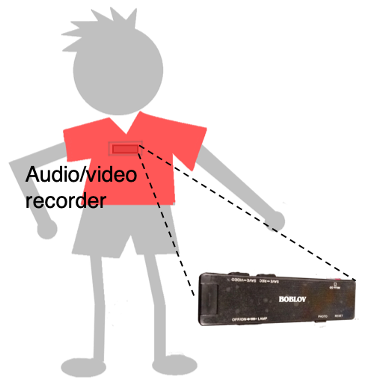 Figure 1: The transition from intrusive adhesives (A) to a simple t-shirt pocket audio recorder (B).
The Pivot
The ECHOS team discovered two critical technical hurdles:
- Sensor Fatigue: Gelled electrodes left irritating residues and were expensive ($1700+), making them impossible to scale for home use.
- The Labeling Bottleneck: It took researchers 6 hours to label just 1 hour of video. Post-hoc labeling lost the "intent" that only a parent could feel in the moment.
The solution was a Live-Labeling App. By treating the caregiver as the "Expert in the Loop," the app captures the intent (e.g., "Request," "Protest," "Joy") exactly when it happens, creating a high-fidelity dataset for Machine Learning.
Architecting the "Oak Tree" Design
The team describes their process as an Oak Tree: deep roots in community interviews, a strong trunk of iterative testing with one family, and branches reaching out to the broader mvASD community.
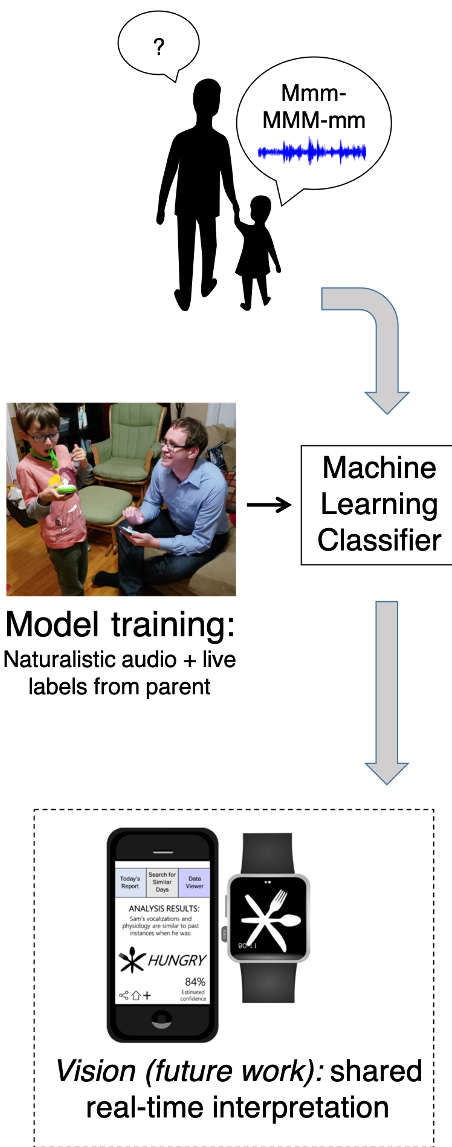 Figure 2: The ECHOS participatory design philosophy emphasizes deep community roots.
Can AI Learn the Language of "Self-Talk"?
Using Zero-Shot Transfer Learning (ZSL), the team tested if models trained on a massive generic dataset (Google's AudioSet) could understand a specific child's vocalizations.
The Results:
- Laughter & Negative Affect: ~70% accuracy. The AI could distinguish a happy squeal from a cry.
- Specific Self-Talk: Failed (Near chance).
The Insight: Generic datasets are great for universal emotions, but for the "dialects" of nonverbal autism, we need Personalized ML. Each child has a unique acoustic manifold.
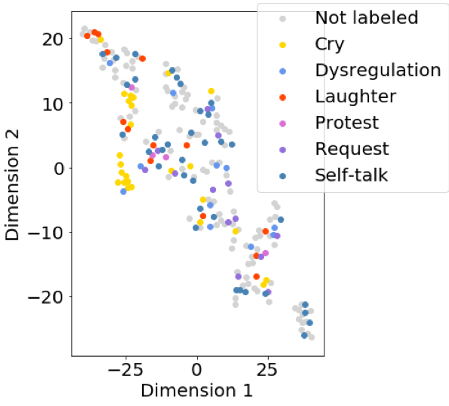 Figure 3: t-SNE visualization showing how different vocalizations (Cry, Self-talk) cluster in the feature space.
Future Horizon: Building a Human-AI Translator
The ECHOS project demonstrates that the future of accessibility is not "one-size-fits-all." By combining low-cost hardware (a $40 recorder) with the sophisticated "human sensors" (the parents), we can build models that act as real-time translators.
Key Challenges Remaining:
- Synchronization: Latency between a child's sound and a parent's tap on the app.
- Privacy: Ensuring that first-person audio/video stay under the family’s control.
Ultimately, ECHOS isn't just about training better algorithms; it's about acknowledging the expertise of caregivers and using technology to amplify a voice that has been unheard for too long.