
The Business of Free: Decoding the Economic Engine of Open Source
14133_The Economic Motivation of Open Source Software Stakeholder Perspectives.
This paper explores the economic motivations driving different stakeholders (system integrators, vendors, and developers) within the open source software (OSS) ecosystem. It distinguishes between "Community" and "Commercial" OSS while detailing how OSS serves as a strategic business tool to maximize profits and career capital.
TL;DR
Open Source Software (OSS) is often viewed through the lens of altruism, but Dirk Riehle's seminal analysis reveals it as a cold, calculated economic strategy. By shifting the IT value stack, OSS allows system integrators to eliminate license fees, enables minor vendors to disrupt market leaders, and provides developers with a portable "meritocratic" resume that commands premium salaries.
Background: Beyond the Hobbyist Lifestyle
In the early days, OSS was seen as a lifestyle choice for developers. However, as it matured, it became a cornerstone of business strategy. This paper categorizes OSS into two distinct flavors:
- Community Open Source: Governed by a diverse group of volunteers (e.g., Apache).
- Commercial Open Source: Owned and directed by a single for-profit entity (e.g., MySQL).
1. System Integrators: The Biggest Winners
For large solution providers, OSS is a "strategic weapon." In a traditional IT stack (Hardware + Software + Services), every dollar spent on a software license is a dollar that cannot be spent on the integrator's services.
Breaking the Demand Curve
By replacing expensive proprietary software with OSS, integrators can:
- Increase Margins: Capture the budget previously reserved for licenses.
- Expand the Market: Lower the total solution price, making it accessible to a new tier of price-sensitive customers.
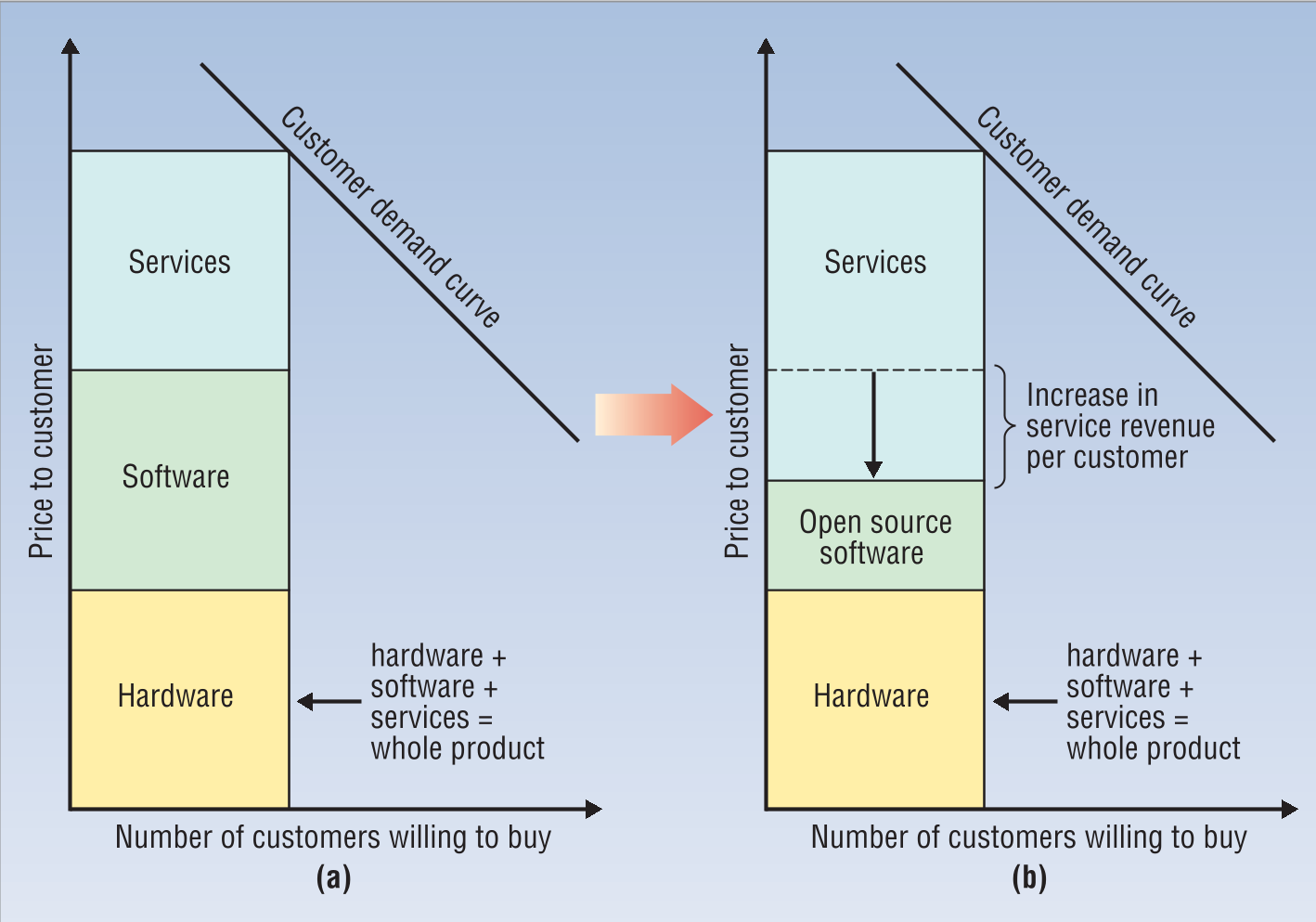 Figure 1: By lowering software costs, integrators can maintain prices while significantly increasing their service revenue share.
2. The Software Vendor’s Dilemma: Disrupt or be Disrupted
Proprietary vendors (the "800-pound gorillas") set prices based on profit maximization, not cost. OSS breaks this by removing entry barriers.
If a vendor realizes they cannot win a market as an "also-ran" proprietary player, their best move is to open source their product. This disrupts the leader’s monopoly and gives the smaller vendor a second chance to dominate the service and support market.
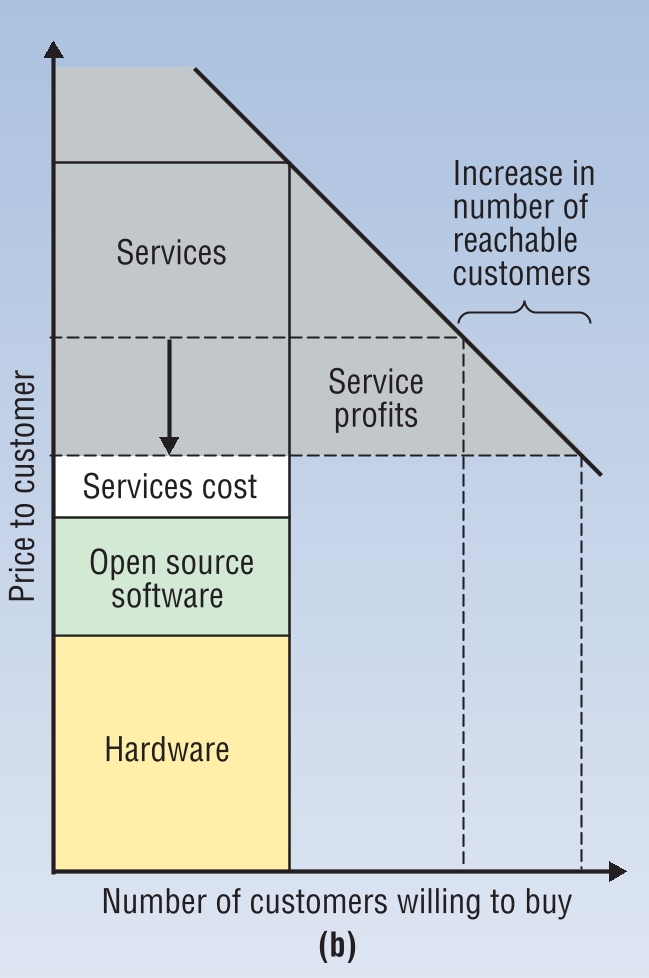 Figure 2: Moving from closed to open source shifts the competitive landscape from license-hoarding to service-excellence.
3. The Developer's Perspective: The "Committer" as a Free Agent
Why do developers work on OSS on company time? Because an employee’s rank in an OSS project—specifically reaching Committer status—is a highly liquid asset.
The Power of Meritocracy
In OSS, you don't get promoted by a boss; you are promoted by the community based on your code. This creates a "portable reputation."
- Committers can align company strategy with the project.
- Committers solve bugs faster, providing better ROI for their employers.
- Committers have immense bargaining power; they can leave and take their reputation with them, effectively acting as "free agents."
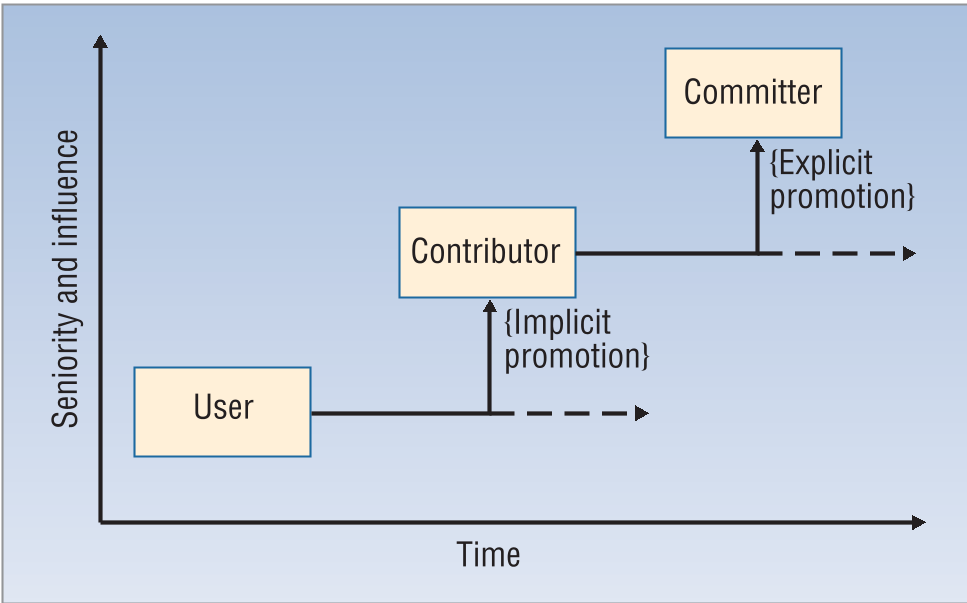 Figure 3: The progression from User to Contributor to Committer is the path to technical and financial sovereignty.
Critical Insight: The Shift in Labor Economics
OSS makes hiring and firing easier because the labor pool is familiar with the source code before they even interview. This increases competition for standard roles but places a high premium on the "inner circle" of project leads.
Conclusion
Dirk Riehle’s analysis reminds us that the "free" in Free Software isn't just about price—it's about the freedom to reshape market economics. System integrators use it to squeeze competitors, vendors use it to survive market dominance, and developers use it to bypass traditional corporate hierarchies. As we look at today’s AI and Cloud landscape, these 2006 insights remain the foundational "rules of the game."