
Edge AI in the Orchards: Delivering Real-Time Frost Prediction via Localized LSTM
Performance evaluation of edge-computing platforms for the prediction of low temperatures in agriculture using deep learning
The paper evaluates the performance of edge computing platforms for frost prediction in smart agriculture. It proposes an optimized LSTM (Long Short-Term Memory) model deployed on the Nvidia Jetson AGX Xavier to enable localized, real-time temperature forecasting without relying on unstable rural cloud connectivity.
TL;DR
Researchers have successfully bridged the gap between heavy Deep Learning and resource-constrained IoT. By deploying an optimized LSTM model on the Nvidia Jetson AGX Xavier, they achieved highly accurate frost predictions (R² > 0.99) entirely at the "Edge," eliminating the dependency on unreliable rural cloud connections.
Background Positioning: This work is a critical feasibility study in the AIoT (Artificial Intelligence of Things) domain, demonstrating that "Edge Training"—not just inference—is now a viable reality for smart agriculture.
The "Cloud-Rural" Conflict: Why Standard AI Fails Farmers
In Mediterranean agriculture, a single frost event can cause millions of euros in losses. While Deep Learning (specifically LSTMs) can predict these drops with surgical precision, they typically require "Cloud Horsepower."
In the real world, rural farms suffer from:
- Connectivity Gaps: Low bandwidth or frequent GPRS/LoRa outages.
- Latency Sensitive Deadlines: Farmers need a 2-4 hour warning to activate windmills or heaters.
- Dynamic Environments: Weather patterns shift; a model trained six months ago is useless today. Continuous retraining is required.
Methodology: Bringing the GPU to the Field
The authors moved away from the centralized "Cloud-only" model to a decentralized Edge Computing architecture.
1. The Model Architecture
The core of the system is a Long Short-Term Memory (LSTM) network. LSTMs are uniquely suited for this task because temperature data is a non-linear time series with long-term dependencies.
- Input: Temperature, Humidity, and Wind Speed sampled every 10 minutes.
- Optimization: Use of the
cuDNNLSTMprimitive to exploit GPU acceleration. - Workflow: Data is collected via LoRa/GPRS nodes, pre-processed locally, and fed into the Jetson Xavier.
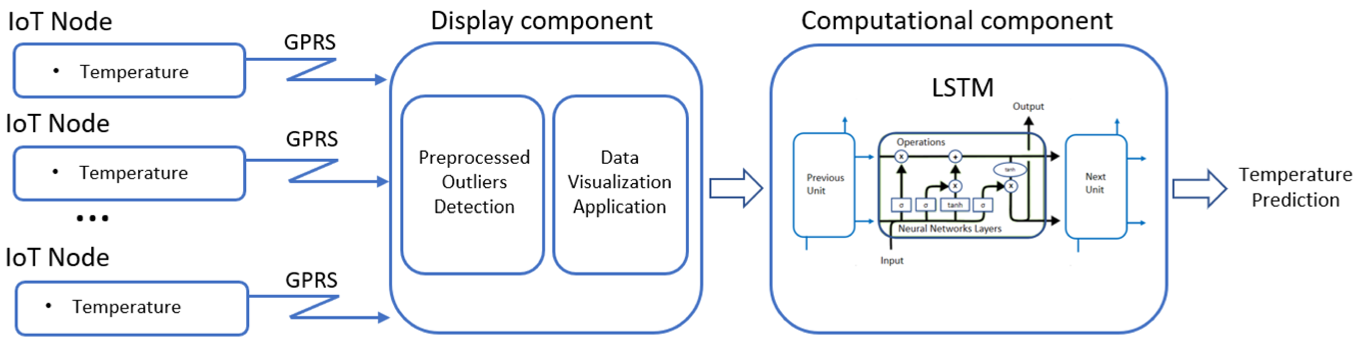 Figure 1: Comparison between centralized Cloud (a) and local Edge (b) computing models.
Experimental Results: Performance meets Power
The study compared a high-end server (Nvidia GTX 1080 Ti) against the edge-native Jetson AGX Xavier.
Key Performance Insights:
- Hardware Efficiency: The Jetson Xavier GPU implementation provided a 1.6x speedup over its own CPU-only mode while maintaining a strict power budget (~10W).
- The 5-Hour Threshold: Training the model with a 3-month dataset took roughly 5 hours on the edge device. Since frost typically occurs at night and training can happen during the warmest part of the day, this window is perfectly acceptable for an autonomous system.
- Inference Speed: Inference (making a prediction) takes only 0.3 seconds on the edge, far outstripping the 10-minute sensor sampling interval.
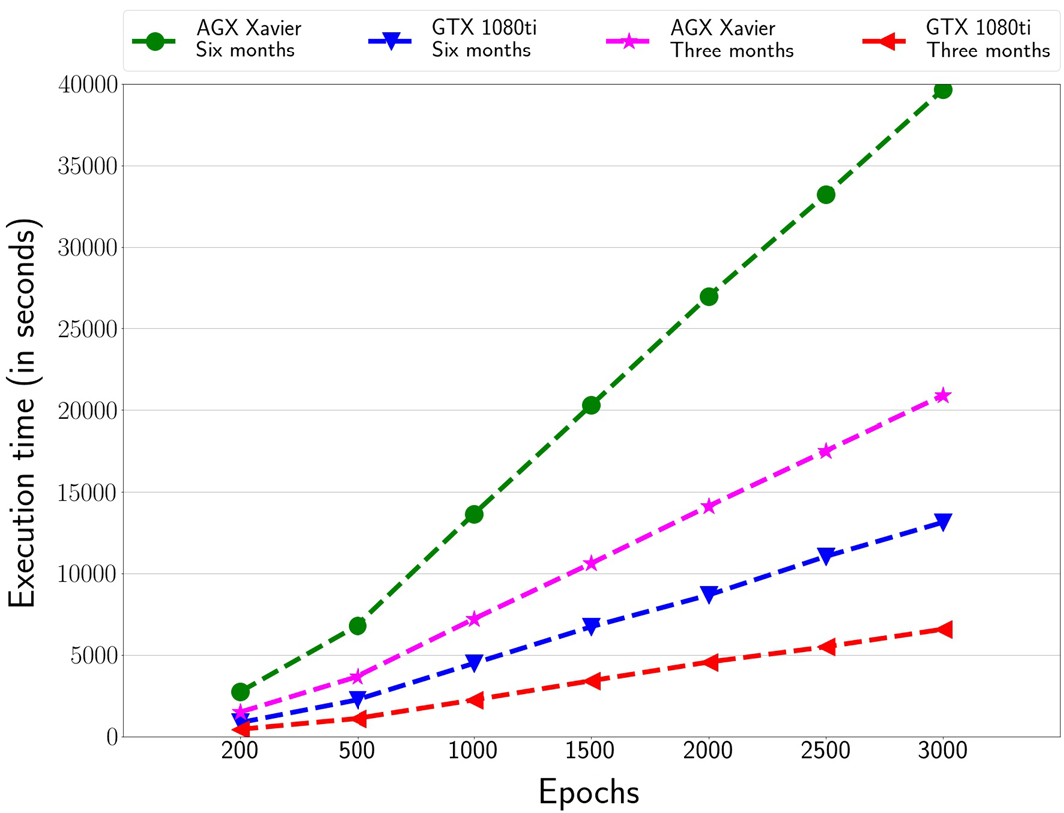 Figure 2: Training time scalability. While the cloud (Heterolistic) is faster, the Edge (Xavier) stays within practical time limits for daily retraining.
Quality Evaluation: No Compromise on Accuracy
Does the lower power of the edge device mean lower accuracy? No. The researchers found that using a 3-month sliding window for training yielded the best results:
- R² Score: 0.9936
- MAE (Mean Absolute Error): 0.41°C
- RMSE: 0.61°C
Interestingly, using longer datasets (12-18 months) actually decreased accuracy due to "seasonal noise"—the model became confused by summer temperatures when trying to predict winter frosts.
Critical Insight & Conclusion
Takeaway
The true innovation here isn't just "Running AI." It is the validation of Local Training. By proving that a Jetson Xavier can retrain an LSTM in under 5 hours with a sub-1°C error rate, the authors have provided a blueprint for Autonomous Decision Support Systems that can survive in the most isolated environments.
Limitations & Future Work
- Multivariate Expansion: Currently, the model focuses primarily on temperature. Integrating wind speed and humidity as primary LSTM features (Multivariate LSTM) could further tighten the error margin.
- Thermal Constraints: While the Jetson AGX is low-power, "Edge" in agriculture often means "Outdoor." Further research is needed on the physical durability/cooling of these units in summer heat while awaiting the winter frost.
Final Thought: This work marks the transition of Precision Agriculture from "Wait and See" (Monitoring) to "Predict and Act" (Autonomy), powered by the silicon at the edge.