
Beyond the Silos: Decoding the DNA of Programming Education through Data Mining
Educational data mining and learning analytics in programming: Literature review and case studies
This paper presents a comprehensive literature review (2005–2015) and longitudinal case studies on Educational Data Mining (EDM) and Learning Analytics (LA) in computer science education. It highlights a surge in automated data collection and introduces a novel "R.A.P" taxonomy to classify verification efforts including re-analysis, replication, and reproduction.
TL;DR
As the volume of educational data explodes, our understanding of how students actually learn to code remains fragmented. This seminal working group report from ITiCSE '15 surveys a decade of research, exposes the "replication crisis" in CS education, and proposes a roadmap for moving from anecdotal teaching to data-driven pedagogy.
Background: The Rise of the Machines (in the Classroom)
For years, Computer Science Education (CSEd) relied on instructor intuition. With the advent of web-based IDEs and automated grading (e.g., Web-CAT, CloudCoder), we can now track every keystroke, every failed compilation, and every midnight submission. While the number of publications in this field has skyrocketed, the authors argue we are still stuck in "single-institution silos," producing results that may not hold up across the street, let alone across the globe.
The Problem: Why Results Don't "Travel"
The core pain point identified is the lack of generalizability. Most EDM studies look at one course using one language (predominantly Java) in one specific IDE. When other researchers try to apply these findings elsewhere, they often fail.
The authors suggest this is due to:
- Hidden Confounders: Are students using "starter code"? Does that code compile?
- Methodological Isolation: Only 7% of surveyed papers were replication studies.
- Privacy Barriers: Ethical concerns prevent the sharing of the "raw fuel" (student logs) needed for validation.
Methodology: The R.A.P Taxonomy
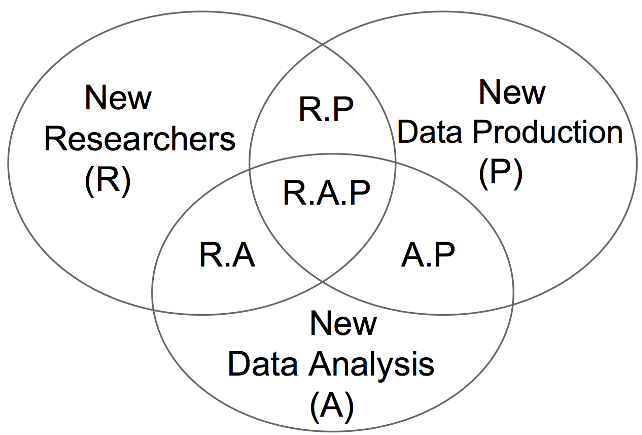
To solve the identity crisis of verification, the paper proposes a 3-dimensional classification:
- Researchers (R): Is the same team doing the work?
- Analysis (A): Are the same statistical methods used?
- Production (P): Is new data being generated?
This framework allows us to distinguish between a simple re-analysis (verifying math on the same data) and true reproduction (testing the same hypothesis with a different language, IDE, and team).
Case Study Focus: The Danger of "Small Details"
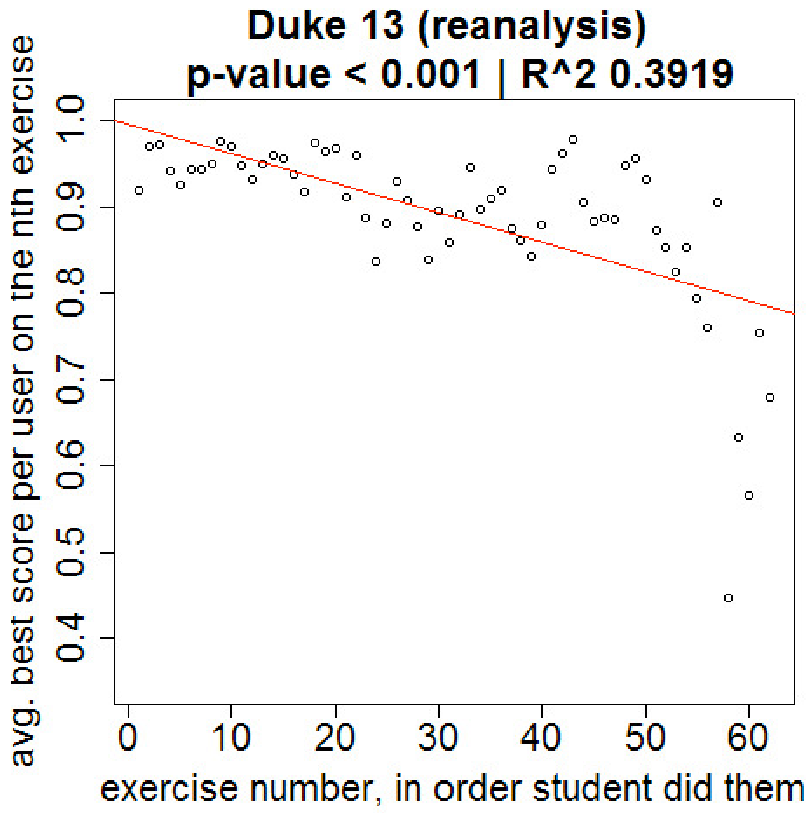
One of the most striking findings comes from the replication case study. A previous study (Spacco et al.) suggested that as students progress, they become better at submitting correctly compiling code.
However, when replicated on a different dataset (PCRS), the result was reversed: successful compilations decreased over time.
The "Aha!" Moment: It turned out the second dataset used instructor templates that already compiled. Students started with working code and broke it. The original study used "empty" templates that didn't compile, so students could only stay the same or improve. This demonstrates how a tiny pedagogical choice can completely invalidate a Learning Analytics model.
Deep Insight: From "What" to "Why"
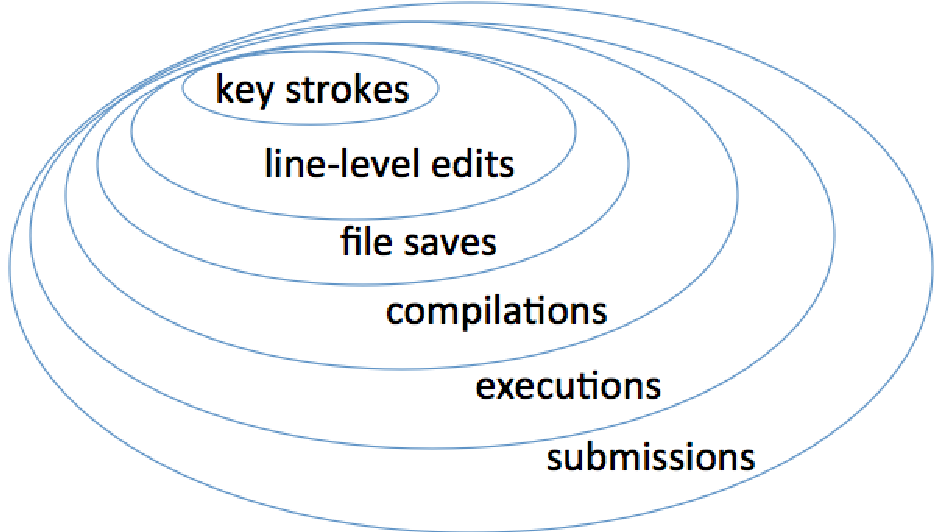
The paper advocates for a "Log-to-Insight" pipeline that respects the granularity of data. Whether we collect data at the Keystroke level or the Submission level, the goal must be to build a theory-driven model of learning.
Future Outlook: Five Grand Challenges
The report concludes with five goals for the next decade:
- Unified Databases: Building multi-national learning logs (e.g., the Blackbox project).
- Systematic Verification: Embracing the R.A.P taxonomy to de-silo research.
- Experimental Rigor: Moving from post-hoc analysis to controlled A/B testing in classrooms.
- Real-time Intervention: Using models to actually help at-risk students in the moment.
- Generalization: Grounding EDM in pedagogical theories rather than just "data fishing."
Conclusion
This work is a call to arms for the CSEd community. If we want our research to influence policy and product design, we must stop treating every classroom as a unique island and start building a robust, replicable science of how humans learn to talk to machines.