
FEEF: Beyond Massiveness — Solving the MOOC Dropout Crisis with ML-Driven Engagement
An Experience Using Educational Data Mining and Machine Learning Towards a Full Engagement Educational Framework
This paper introduces the Full Engagement Educational Framework (FEEF), an innovative system designed to combat high dropout rates in MOOCs. By integrating Educational Data Mining (EDM) and Machine Learning (ML), the authors developed a virtual assistant prototype that automates personalized feedback and student follow-up throughout the learner life-cycle.
TL;DR
The promise of "Massive" education often backfires due to a lack of personal connection. The Full Engagement Educational Framework (FEEF) introduced in this paper utilizes Educational Data Mining (EDM) to transform passive "lurkers" into active participants. By deploying a machine-learning-powered virtual assistant, the system provides automated, personalized feedback that targets students at every stage: from the moment they consider a course to long after they graduate.
The Problem: The "Lurker" Epidemic
Online education faces a paradox: accessibility is at an all-time high, but completion rates remain abysmally low. The authors identify a critical "pre-MOOC" gap—the time between enrollment and course start where interest often evaporates. Current LMS (Learning Management Systems) are largely reactive; they provide the content but fail to manage the learner life-cycle. Without an instructor personally nudging each of the 30,000+ students, those who fall behind a week in a self-paced course often never return.
Methodology: The EDM and Machine Learning Component
The core innovation is the integration of an intelligent feedback loop into the FEEF. Unlike traditional systems that treat all students as a single cohort, the proposed component segments learners dynamically:
- Segmentation Engine: Based on log data, students are categorized as Potential, New, Low-Activity, or Active Learners.
- Adaptive Intervention: The ML component decides the "next best action"—be it a motivational reminder, a short micro-lesson, or a high-value video highlight—to nudge the student to the next engagement level.
- Recursive Learning: The system records student responses to these inputs, using them to refine future interventions via a neural network (Deep Learning) approach.
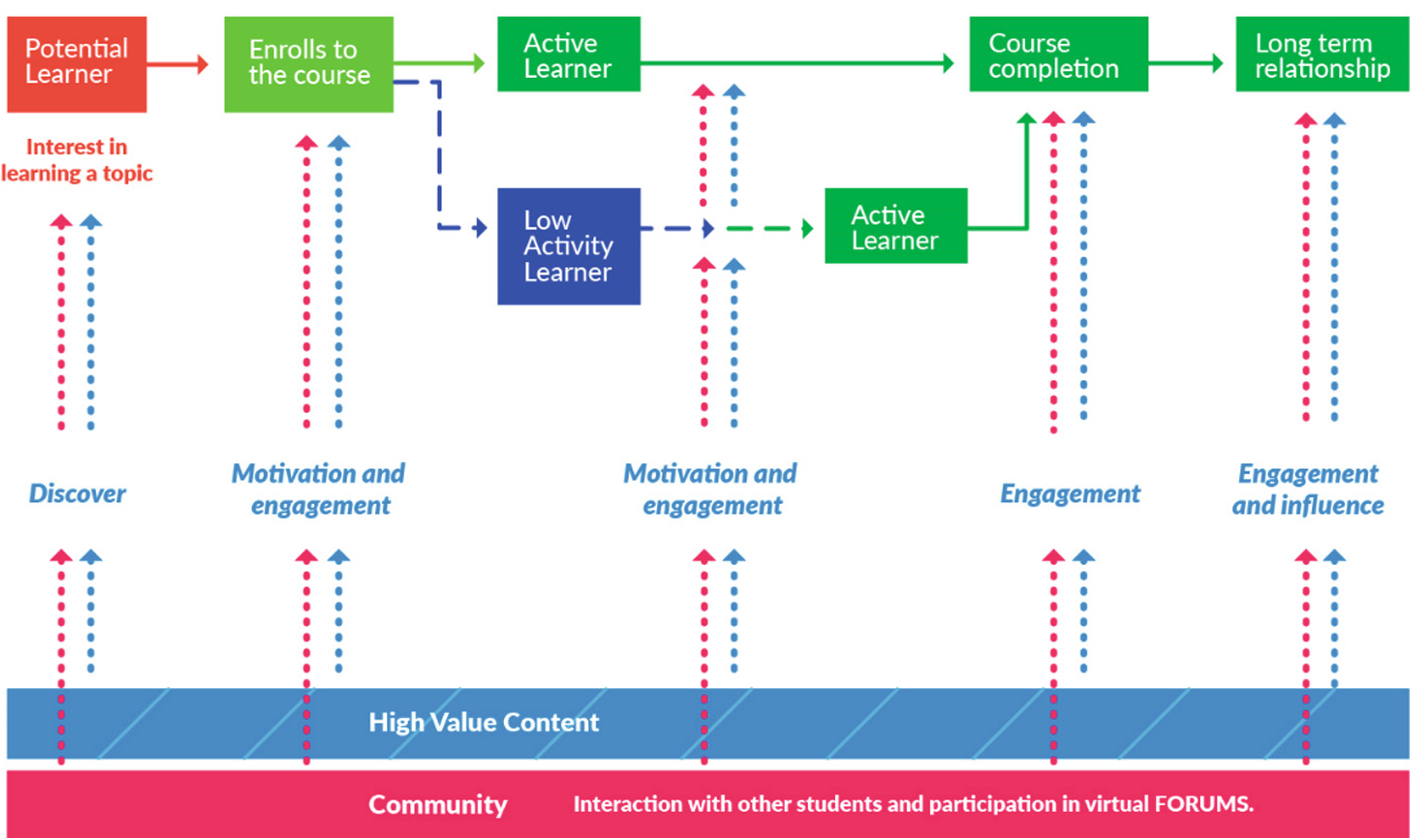 Figure 1: The framework's strategy for migrating learners from low activity to active participation.
Experiments: Real-World Validation
The framework was tested at scale through the "Professional Android Developer" MicroMasters on the edX platform, involving over 30,000 participants.
Key Metrics & Success:
- Community Building: Instead of isolated course forums, FEEF created an open community that persists post-MOOC.
- Content Reach: The project's blog reached a steady state of 50,000 viewers per week, with peaks exceeding 200,000.
- Engagement Quantified: Using the PTAT (People Talking About This) metric, the system sustained 10,000 monthly active story-creators (likes, shares, mentions), proving that the automated nudges were fostering genuine social engagement.
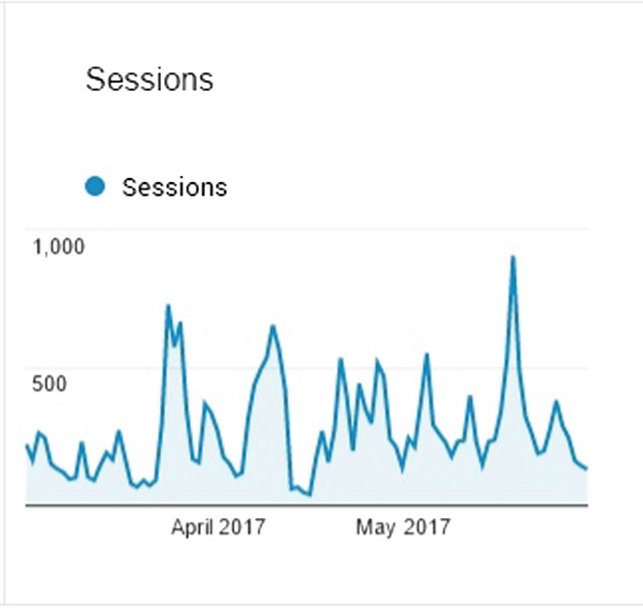 Figure 2: Analysis of distribution channels and session traffic during the validation phase.
Critical Insight: The "Full" in Full Engagement
The authors argue that education doesn't end with a certificate. The "Post-MOOC" phase is where long-term institutional value is created. By keeping discussion forums open and accessible without login barriers even after course completion, the framework turns former students into "Community Leaders" who assist new enrollments. This creates a self-sustaining ecosystem that reduces the burden on human TAs.
Conclusion and Future Outlook
The FEEF prototype demonstrates that Personalization at Scale is not just a marketing buzzword but a technical requirement for modern education. While this study validated the engagement metrics, the next frontier will be the further optimization of Deep Learning models to predict exactly when a student is about to lose interest, allowing for preemptive rather than reactive support.
Takeaway for Educators: Automation in MOOCs shouldn't just be about grading; it should be about replicating the human "reminder" that keeps a student motivated in a lonely digital environment.