
MITS: Bridging the Gap Between Distributed Theory and Physical Play
An educational tool for creating distributed physical games
This paper introduces the Modular Interactive Tiles System (MITS), a tangible educational tool designed to teach parallel and distributed processing through physical game development. The system consists of autonomous robotic modules that communicate locally via IR and globally via radio, enabling students to implement complex game logics like Cellular Automata and competitive "teleplay" across continents.
Executive Summary
TL;DR: This paper presents the Modular Interactive Tiles System (MITS), an educational platform that physicalizes the abstract world of parallel and distributed computing. By building games with these autonomous tiles, students move beyond "screen-only" coding to solve real-world decentralized problems like topology mapping, communication protocols, and multi-user interactivity.
Background: Published in the context of the physical gaming revolution (post-Wii/Kinect), this work positions itself not just as a toy, but as a pedagogical tool. It transitions distributed systems education from theoretical textbooks to a hands-on "Constructionist" environment where the code's behavior is as tangible as the tile itself.
The "Centralized" Bottleneck in Education
Most students learn parallel processing through virtual simulators or cloud clusters where the physical constraints are hidden. Traditional game consoles, while physical in interaction, are centralized—one brain controls all inputs. This hides the messy reality of distributed systems:
- How do nodes know their neighbors? (Topology)
- How do we prevent two nodes from acting at once? (Deadlock/Mutual Exclusion)
- How does a system scale when you physically snap on more pieces?
The authors argue that by making the representation physical, the cognitive load of these abstract concepts is reduced, allowing for deeper "Heuristic Exploration."
Methodology: The Anatomy of a Tile
Each MITS tile is a self-contained "computational atom." Unlike simple sensors, these tiles are fully autonomous robots.
Architectural Breakdown
- Processing: Each tile houses an ATmega 1280.
- Communication: Local 4-side IR for neighbor detection and "Token Passing"; XBee radio for global/Master communication.
- Sensing/Acting: Force-sensitive resistors (FSR) for touch and 8 RGB LEDs for visual feedback.
- Power: Internal Li-Io batteries, removing the need for restrictive wiring.
 Fig 1: The modular tiles are designed for rugged feet/hand interaction, supporting both floor and wall configurations.
The Power of Modularity
The "Jigsaw" design (Fig 3) is more than aesthetic; it ensures physical alignment for IR transceivers. This enables dynamic topology mapping—the software must "discover" the shape the user has built at runtime.
From Rules to Artificial Life: Game Models
The paper categorizes physical games into increasing levels of complexity:
- Open Loop/Random: Simple sequences (e.g., "Easy Game").
- Rule-Based: "American Football," where users "push" light toward an opponent's side by hitting tiles.
- AI & ALife: The most impressive implementation is Conway’s Game of Life. Each tile acts as a cell in the cellular automata, calculating its next state based on the IR signals from its neighbors.
- Physical Teleplay: Linking islands of tiles via the internet to allow a player in Denmark to compete against a player in South Africa.
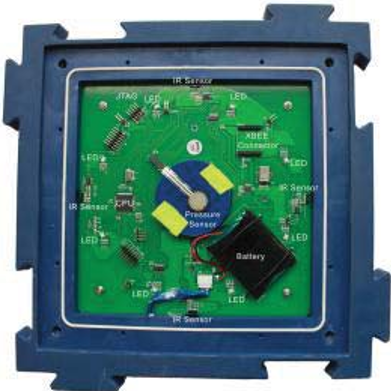 Fig 2: Users engaging in high-intensity physical activity, demonstrating the system's durability and interactive speed.
Global Impact & Results
The authors validated the system's robustness during the 2010 FIFA World Cup. By deploying MITS in drastically different environments—from high-tech Tokyo to orphanages in South Africa—they proved that:
- Reliability: Distributed IR communication held up under heavy multi-user stress.
- Social Playware: The system successfully mediated interaction across cultural boundaries through shared "High Scores" and global teleplay.
- Quantifiable Engagement: Over 1,000 users participated, showing that the "immediate feedback" (LEDs) and "layered feedback" (external sound/graphics) significantly increased "fun" and session length.
Critical Insight & Conclusion
The true value of MITS is Representational Determinism. By changing the problem from a line of C++ code to a physical block that a student must hold, rotate, and connect, the "mutual exclusion" problem becomes a tangible conflict they can see.
Limitations: While powerful, the system's reliance on battery power and specific IR alignment can be a hurdle for permanent installations. Future iterations could benefit from more robust mesh networking (like Thread or Zigbee) to handle even more complex "Islands Modeling."
Takeaway: MITS proves that the best way to teach the "Invisible" (Distributed Logic) is to make it "Visible" (Physical Tiles).