
From Correlation to Causality: Mastering Social Media Promotion via Propensity Score Matching
Effective Promotional Strategies Selection in Social Media: A Data-Driven Approach
This paper proposes a data-driven causal analysis framework using Propensity Score Matching (PSM) to select effective social media promotional strategies. By analyzing 194 million users and 5 million messages on Weibo, it identifies 17 strategies across content and context levels, achieving superior predictive accuracy for promotional effectiveness compared to correlation-based baselines.
TL;DR
In the high-stakes world of social media marketing, simply copying "what works" for others often fails due to hidden biases. This paper moves beyond simple correlation-based metrics to a causal analysis framework. By applying Propensity Score Matching (PSM) to a massive Weibo dataset, the researchers isolated the true impact of 17 different promotional strategies, revealing that success depends heavily on a promoter's initial popularity—a nuances previous "one-size-fits-all" predictive models missed.
The "Strategy Selection" Trap: Why Correlation Fails
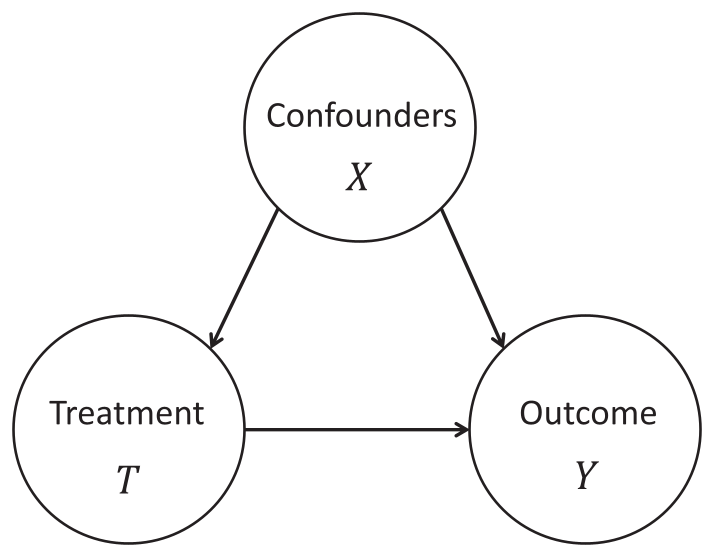
Most marketers look at a successful campaign and conclude: "They used five hashtags and posted at 8 PM, so I should too." However, this ignores the Selection Bias. If a celebrity (high popularity) uses five hashtags, the post goes viral because they are a celebrity, not necessarily because of the hashtags. In observational data, strategies are not assigned randomly. We cannot easily tell if the success was due to the Treatment (the strategy) or the Confounders (user popularity, message content, etc.).
Methodology: The PSM Surgical Knife
The authors propose a Propensity Score Matching (PSM) based algorithm to act as a "virtual randomized controlled trial."
- Propensity Scoring: For each promotion, they use Logistic Regression to calculate the probability (Propensity Score) that the promotion would adopt a specific strategy (e.g., Using Emoticons) based on its static features (like the promoter's follower count).
- Matching: They match a "treated" promotion (one that used the strategy) with an "untreated" one (one that didn't) that has a nearly identical Propensity Score.
- Causal Effect Estimation: By comparing these two matched groups, they calculate the Average Treatment Effect (ATE), effectively filtering out the "noise" of confounding variables.
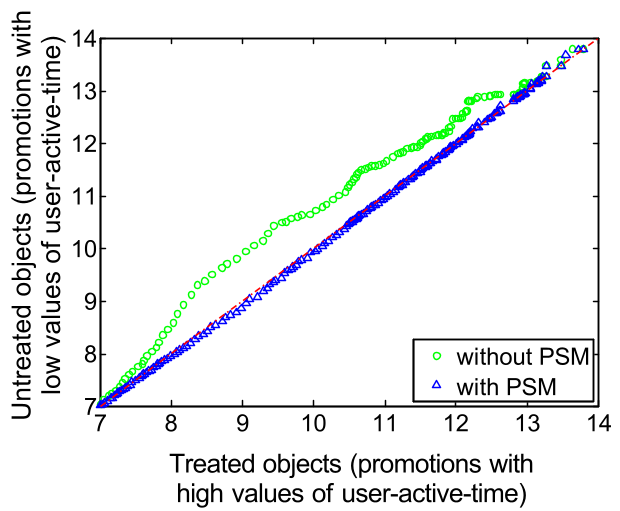 The Figure above (Q-Q Plots) shows how PSM (blue triangles) aligns the distributions of treated and untreated groups, significantly reducing the selection bias inherent in the raw data (green circles).
Key Insights: What Actually Works?
The study categorizes strategies into Context-level (When/Where) and Content-level (How/What). Their causal analysis yielded three major takeaways:
1. The Stability Trio
Three strategies were found to be universally effective:
- Topic Interest (Personalized Decoration): Matching the content to the specific interests of the target audience.
- User Active Time: Promoting during peak activity hours (e.g., 12 PM and 8 PM).
- Small Depth-in-Path: Promoting a message early before it has already propagated deep into the network (the "viral novelty" effect).
2. The Popularity Divergence
This is the paper's most critical "Academic Insight":
- Popular Promoters (>100k followers): Their success is driven by Context. They must focus on timing and intervals between posts.
- Ordinary Promoters (<100 followers): Their success is driven by Content. Since they lack the "social gravity" of a big account, they must rely on hashtags, mentions, emoticons, and longer, more engaging comments.
3. The Repeat Promotion Paradox
While repeating a promotion increases the total number of adoptions, the efficiency per post drops dramatically. Promoters must find the "zero-benefit" cliff where one more retweet actually damages their engagement-to-cost ratio.
Experimental Validation
The authors compared their PSM-ranked strategies against traditional feature selection methods like mRMR and MRel. The results clearly show that causal-based selection results in much lower error rates (RMSLE/MALE) when predicting how many people will actually retweet a promotion.
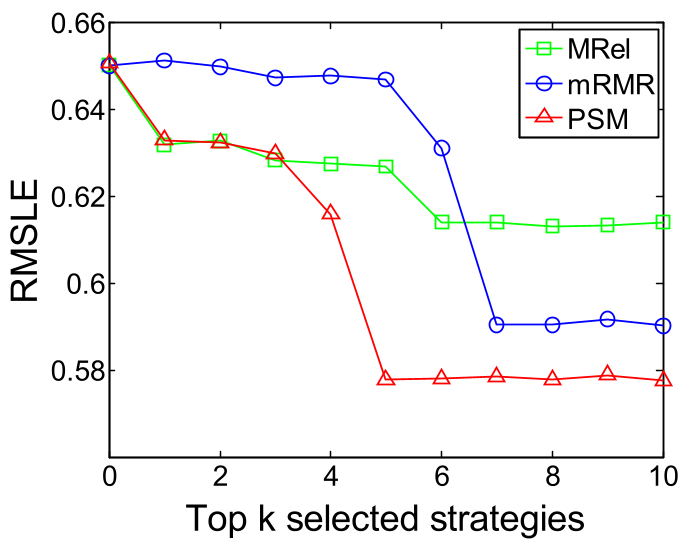 The PSM method converges to a lower error rate significantly faster than correlation-based methods, proving that the top-ranked causal features are the true drivers of effectiveness.
Conclusion
This work demonstrates that in the "noisy" world of social media, correlation is not causation. By using Propensity Score Matching, researchers can provide promoters with a scientifically-backed handbook for strategy. For ordinary users, the message is clear: focus on the craft of the content. For influencers, it's all about the timing.
Limitations: The study primarily focuses on binary treatments (using a strategy vs. not). Future work could explore the "dose-response" effect—e.g., how many hashtags are optimal, rather than just whether to use them.