
Beyond the Hype: Is the "Social Media Revolution" Truly New?
The Effects of (Social) Media on Revolutions – Perspectives from Egypt and the Arab Spring
This paper investigates the historical and technological role of media in political movements, specifically re-evaluating the "Social Media Revolution" label of the Arab Spring. By comparing 18th-century print media with modern platforms like Facebook and Twitter, it identifies information diffusion speed as the primary evolutionary variable in mass revolutions.
Executive Summary
TL;DR: While the Arab Spring is often hailed as a uniquely digital phenomenon, this paper argues that media has always been the "central nervous system" of revolutions—from the printing presses of 1789 to the Twitter feeds of 2011. The fundamental shift isn't the existence of communication, but the near-instantaneous speed of information diffusion.
Context: This work serves as a historical and theoretical reality check, moving the academic conversation away from "technological determinism" toward a more nuanced view of media as a supportive accelerant rather than a primary cause.
Problem & Motivation: The Myth of the "Twitter Revolution"
In the wake of the 2011 uprisings in Egypt and Tunisia, a narrative emerged: social media caused the revolution. However, the authors argue that this view is myopic. By looking only at the "what" (Facebook/Twitter), we miss the "why."
The core problem is that prior research often treats the Arab Spring as a technological outlier. The authors argue that if we don't understand how the French Revolution—with 70% illiteracy and hand-operated presses—achieved mass mobilization, we cannot truly understand the role of the smartphone.
Methodology: Categorizing Chaos
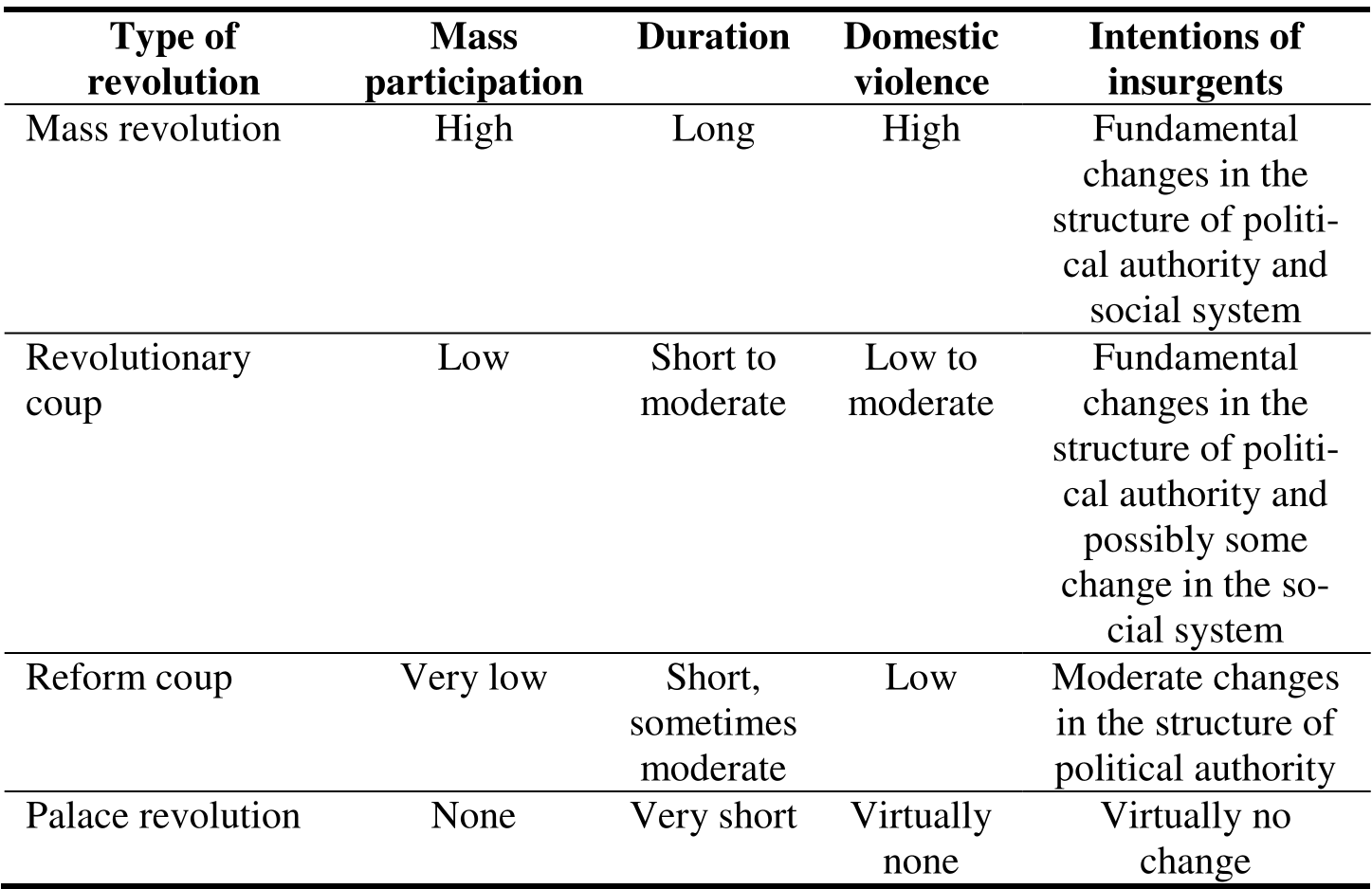
The authors categorize the Arab Spring as a "Mass Revolution"—a group phenomenon requiring mediated communication to overcome time and space. To analyze this, they adopt a two-pronged approach:
- Typology Comparison: Using the Tanter/Midlarsky framework to differentiate between mass revolutions, coups, and "palace revolutions."
- Mathematical Modeling: They propose that revolutionary heat follows a "Sin Sinc" pattern (damped oscillation).
The Revolutionary Timeline
The authors suggest that revolutions are not single spikes but a series of waves. The formula below reflects the struggle for power: a main peak (the ousting of a leader) preceded by smaller waves of mobilization and followed by the "struggle for the new order."

Core Insight: The Need for Speed
The most compelling section of the paper compares different sectors to highlight the evolution of technology. While transportation speed increased by ~165x over two centuries, information diffusion speed increased by millions.
| Era | Event | Diffusion Time |
|---|---|---|
| 1805 | Battle of Trafalgar | ~16 Days |
| 1812 | French Invasion of Russia | ~19 Days |
| 2011 | Arab Spring (Twitter/FB) | Seconds |
This "compression of time" allows for the synchronization of mass emotions in real-time, which was physically impossible in the 18th century.
Critical Analysis & Conclusion
The authors conclude that social media is a supportive infrastructure. The Arab Spring was a response to socio-political reality; it could have happened without Facebook, albeit at a different pace and through different channels (like Western TV or underground pamphlets).
Future Outlook: The paper looks ahead to "Real-time Perceptions." If current social media is in its "infancy" compared to high-frequency trading, the next phase involves ubiquitous computing (Wearables). Imagine a revolution where not just "news" but human "emotions and physiological states" (e.g., via iWatch/Google Glass) are synchronized across a network in milliseconds.
Takeaway for Researchers
Don't confuse the channel with the source. Technology lowers entry barriers and increases speed, but the "fuel" for mass revolution is always grounded in the social conditions of the physical world.