
The Calculus of Cooperation: Why Being Part of a Group Radically Boosts "Social IQ"
On Efficiency of Collective Intelligence Phenomena
The paper formalizes "Collective Intelligence" (CI) as an emergent properties of social structures, introducing a "molecular model of computation" (mCIm) to evaluate its efficiency. By simulating bacterial colonies and mammal hunting groups, it demonstrates that CI significantly enhances problem-solving probability (IQS) under time-sensitive environmental pressures.
TL;DR
Why did evolution not result in a single "perfect" individual being? This paper argues that Collective Intelligence (CI) is a computational strategy that allows groups to solve problems that are impossible for isolated individuals. Using a "molecular" model of computation, the authors prove that joining a social structure can nearly double a group's problem-solving power (IQS), especially when the environment changes rapidly.
Background: The Spiral of Intelligence
In the grand theater of evolution, the transition between individual existence and group living is a persistent cycle. The authors suggest that individual intelligence and collective intelligence exist on a spiral of growth, where one inspires the other. However, the fundamental question remains: In a given environment, is it better to rely on your own brain or join the "live computer" of a social structure?
Methodology: Social Structures as "Live Computers"
The core innovation of this research is the mCIm (Molecular Collective Intelligence Model). Unlike a standard Turing Machine which is deterministic and serial, mCIm views a social group as a fluid experiment:
- Information Molecules: Facts, rules, and goals are "carried" by individuals.
- Quasi-Brownian Movement: Individuals move randomly (or semi-randomly), encountering others.
- Stochastic Inference: When two people (or bacteria) "rendezvous," they can combine their local knowledge to generate a new "conclusion molecule."
The "N-Element" Inference
To measure efficiency, the authors introduced the Social IQ (IQS). This isn't a static score like a human IQ test; it is a probability function.
IQS = P(successful conclusion | time t, complexity N)
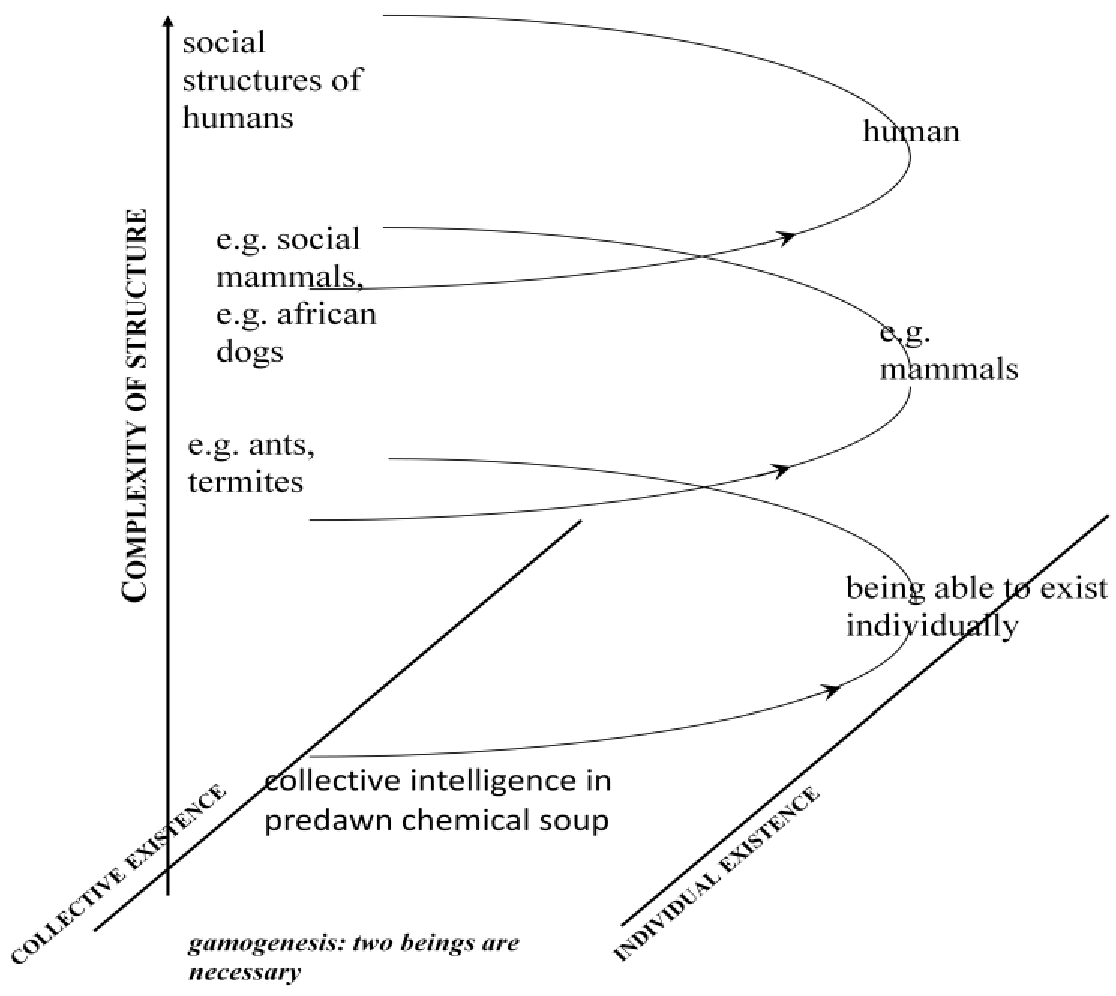 Fig 1: The relation between individual complexity and collective existence.
Case Study 1: The Bacterial Colony
Even without brains, bacteria exhibit CI through genetic exchange. The authors simulated a colony facing a fluctuating environment (simulating an antibiotic attack).
- Results: When the "fluctuation period" was high (hostile environment), the CI-enabled colony was significantly more likely to adapt and grow compared to an isolated "individualist" population.
- The Delta: The IQS increased by roughly 34.5%.
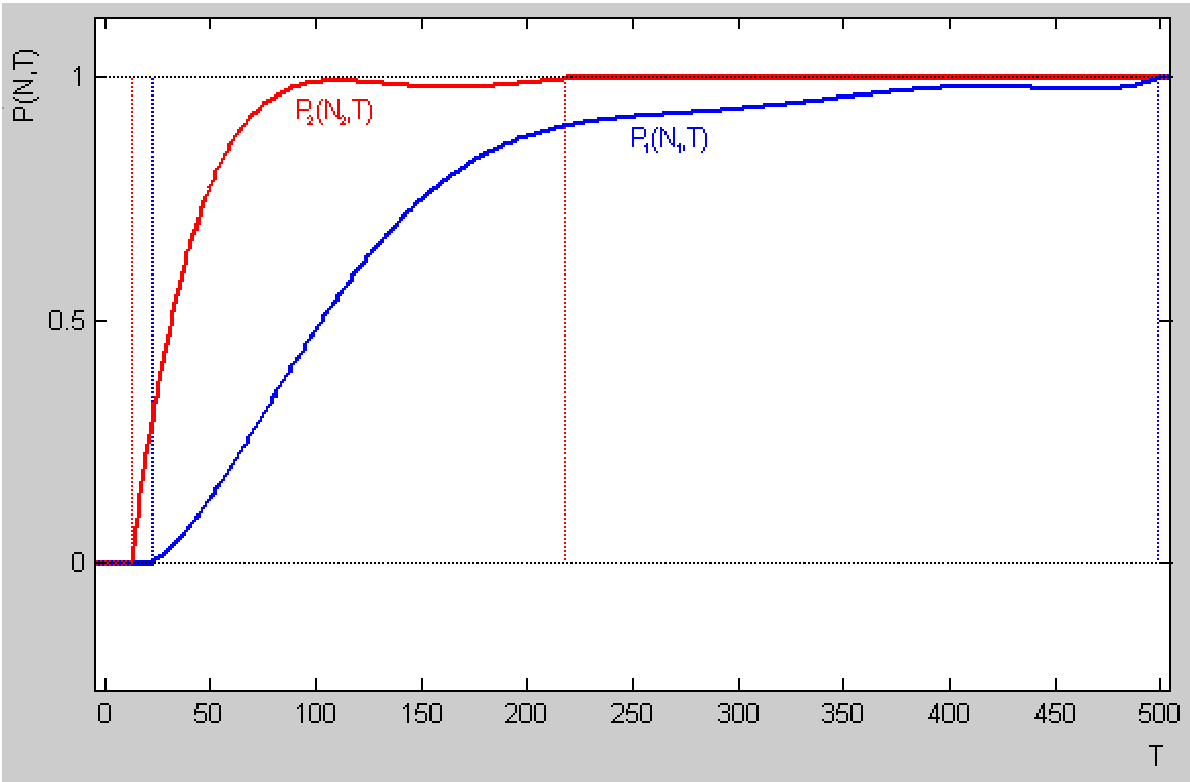 Fig 2: Collective Intelligence efficiency (red) vs. Individual strategy (blue) across environmental volatility.
Case Study 2: The Hunter and the Dog
The second model evaluated a more complex system: a hunter and a dog tracking a rabbit. This is an "inter-species CI" where the partners communicate via guesses and training.
- Insight: Neither the hunter nor the dog is fast enough to catch a rabbit alone. However, when they cooperate, the hunter provides the tools (rifle/strategy) and the dog provides the sensors (smell/tracking).
- The Delta: The IQS gain here was a staggering 68%. According to the paper, this is the equivalent of shifting a "dull" IQ (80) to "genius" levels (140+).
Deep Insight: The "Time Pressure" Sweet Spot
The most profound finding is that Collective Intelligence is a high-pressure strategy.
- Low Volatility: In calm environments, the cost of communication and "social dispersed profits" makes CI less attractive. Individualism works.
- High Volatility: When a problem must be solved quickly (before a colony dies or a rabbit escapes), CI is the only way to succeed.
- Optimal Density: For the bacteria, the IQS speed hit a plateau after 20 neighbors. Adding more "computing units" didn't make the logic faster; it only increased the "memory" of the colony.
Critical Analysis & Conclusion
The paper proves that social structures are essentially distributed inference engines. Whether it's a medieval village or a modern company using the Internet, the "safety in numbers" isn't just physical—it's computational.
Limitations
- Case Specificity: The study only looked at two specific cases.
- Cost of Coordination: The model largely glazes over the "energy cost" of communication, which in real human systems can be quite high (e.g., bureaucracy).
Future Outlook
This research lays the groundwork for evaluating Artificial Collective Intelligence. As we move toward swarms of autonomous drones or multi-agent LLM systems, calculating the "IQS" of these digital social structures will be critical for determining their reliability in crisis scenarios.
The Takeaway: If you want to solve an impossible problem, don't just look for a smarter individual; look for a better-organized architecture of cooperation.