
Match & Privacy: Bridging Bidirectional Discovery in Mobile Social Networks
An Efficient Privacy-Preserving Bidirectional Friends Matching Scheme in Mobile Social Networks
This paper introduces an efficient and secure bidirectional friends matching scheme for Mobile Social Networks (MSNs). By integrating Matchmaking Encryption (ME) with Outsourced Attribute-Based Encryption (ABE), it enables two users to mutually verify if they satisfy each other's attribute-based policies before establishing a connection, achieving a privacy-preserving "double-handshake" mechanism.
TL;DR
Social networking often involves a paradox: we want to find "like-minded" people based on specific traits, but revealing those traits to strangers is a privacy nightmare. This paper proposes a breakthrough bidirectional matching scheme. Unlike traditional models where you just "unlock" someone else's data, this system requires a mutual policy match verified by a cloud intermediary—without the cloud or the users seeing the underlying attributes or failing criteria.
The "Passive Participant" Problem
Current mobile social networks (MSNs) usually utilize Ciphertext-Policy Attribute-Based Encryption (CP-ABE). In these systems, a sender encrypts a message with a policy (e.g., "Age > 20 AND Hobby = Hiking"). The receiver is passive; if they have the keys, they open it.
The authors identify a critical gap: Receiver Autonomy. Why should the receiver be forced to accept a match just because they fit the sender's criteria? True social matching should be a two-way street—a mutual "opt-in" where both parties' requirements are met simultaneously before any private data is revealed.
Methodology: The Outsourced "Double-Handshake"
The core innovation lies in combining Matchmaking Encryption with Decryption Outsourcing. The architecture involves three main entities: the Sender, the Receiver, and a Semi-Trusted Outsourcing Center (OC).
1. The Dual-Policy Construction
Each party defines an LSSS (Linear Secret-Sharing Scheme) access structure. The matching succeeds only if:
- Sender's Attributes satisfy the Receiver's Policy.
- Receiver's Attributes satisfy the Sender's Policy.
2. Efficiency through Outsourcing
Bilinear pairings are the "expensive" parts of these cryptographic protocols. Instead of making a smartphone do the heavy lifting, the users generate Transformation Keys (TK). These keys allow the OC to partially decrypt the ciphertext.
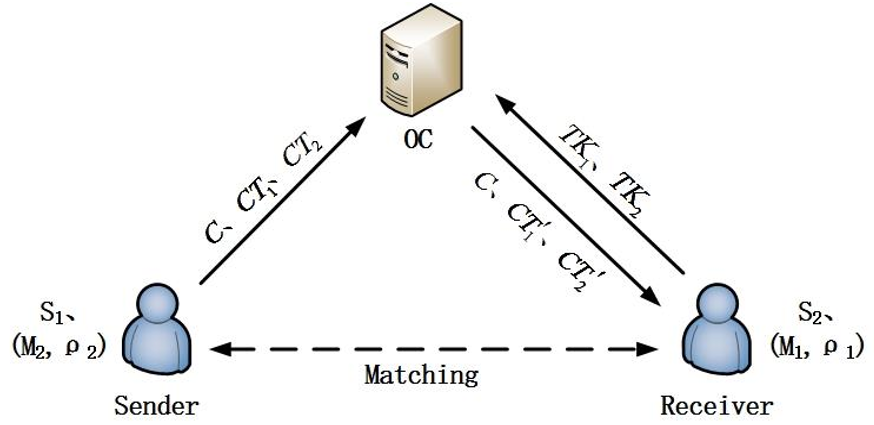 Figure 1: The process involves the OC performing time-consuming transformations, returning only a simple, constant-size ciphertext to the user.
The magic here is that the OC performs the work but stays blinded. It only knows if (a match occurred); it cannot see the attributes () or the policies ().
Experimental Validation: Breaking the Linear Growth
In standard ABE, as you add more requirements (hobbies, location, profession), the time to match grows linearly. On a mobile phone, this eventually becomes a battery-killer.
Performance Highlights:
- Constant Local Cost: The local decryption time remains constant even as the number of attributes increases.
- Ciphertext Compression: The OC transforms complex LSSS ciphertexts into short El Gamal ciphertexts.
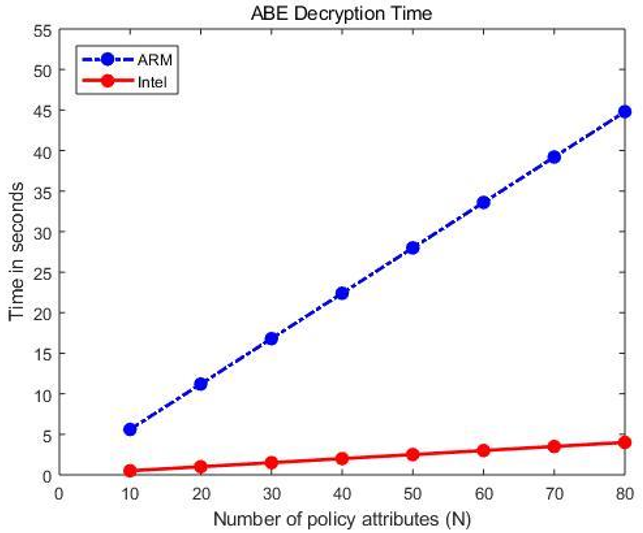 Table 1: Comparison showing the proposed scheme's support for bidirectional matching and reduced local computational ops compared to SOTA.
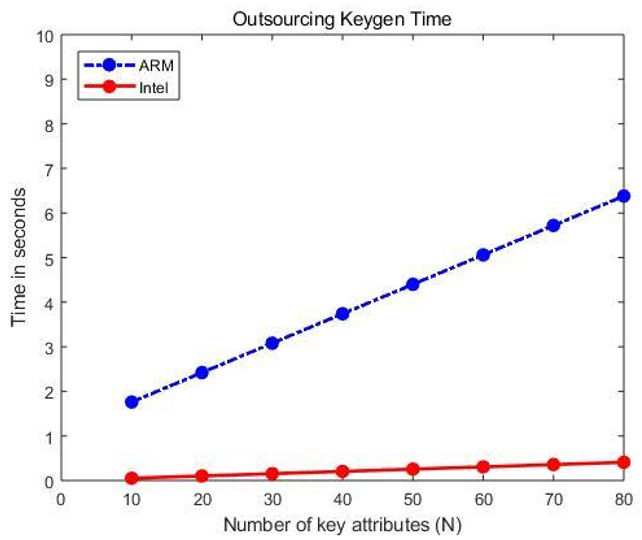 Figure 4: Standard ABE decryption time skyrockets with attribute complexity, whereas the proposed method stays nearly flat for the end-user.
Critical Analysis & Future Outlook
The scheme is a massive win for mobile efficiency. However, the authors rely on a "semi-trusted" cloud. If the OC were truly malicious, it might attempt to return false negatives.
Key Takeaways for Future Research:
- Verifiability: Future iterations need a way for the user to verify the OC actually performed the transformation correctly (Verifiable Outsourced Decryption).
- Fully Untrusted Clouds: Moving toward protocols that assume the cloud is actively trying to cheat would be the next logical step for high-security applications.
In summary, by shifting the heavy lifting of attribute-based matching to the cloud while maintaining a bidirectional "consent" gate, this paper paves the way for a more private and efficient era of mobile digital discovery.