
Boosting Expert Search: The Power of Co-occurrence and Support Documents
Efficient top-k support documents for expert search using relationship in a social network
The paper proposes an efficient expert search framework that combines an improved Language Model with a co-occurrence based Social Network. By utilizing a "Top-k Support Document" (SD) set instead of full corpus profiles, it achieves state-of-the-art performance on the TREC W3C collection, significantly outperforming traditional PageRank and basic language models.
TL;DR
Finding the right expert in a massive organization is often like finding a needle in a haystack. This paper introduces an efficient methodology that skips the heavy preprocessing of building global "expert profiles." Instead, it identifies experts by looking at the top-k relevant documents for a specific query and leveraging co-occurrence relationships to build a dynamic social network. The result? A significant boost in precision (MAP increased from 6% to 26%) with far less computational overhead.
Context: Why Traditional Expert Search is Slow
In the world of Information Retrieval (IR), expert search ( popularized by the TREC Enterprise Track) usually follows one of two paths:
- Document-Centric Models: They find documents related to a topic and then see which experts are mentioned.
- Profile-Centric Models: They build a massive "knowledge resume" for every person in the database.
The problem is that building profiles for thousands of people across millions of documents is slow and expensive. Moreover, most models treat experts as isolated islands, ignoring the fact that experts in the same field usually appear together in discussions, papers, or emails.
The Core Insight: "If they appear together, they are experts together"
The authors argue that we don't need a complete social hierarchy to find an expert. Simple co-occurrence—the frequency with which two names appear in the same paragraph or document—is an incredibly strong proxy for professional relationships.
By focusing only on the Top-K Support Documents (SD) for a given query, the system effectively "zooms in" on the most relevant area of the corpus. This local view provides a cleaner social network where authority can be propagated more effectively than in a noisy, global graph.
Methodology: The Two-Step Propagation
The framework operates in two distinct phases:
1. Initial Expertise Scoring
Instead of a standard Language Model, the authors use an improved version that emphasizes local frequency within the support documents while penalizing "globally frequent" names that might just be common names rather than experts (using a normalization).
2. The Co-occurrence Social Network
Once initial scores are assigned, the model builds an adjacency matrix based on how often candidates co-occur. The influence is updated iteratively: Here, acts as a dampening factor (found to be optimal at 0.7), ensuring that a person's own expertise remains more important than who they know.
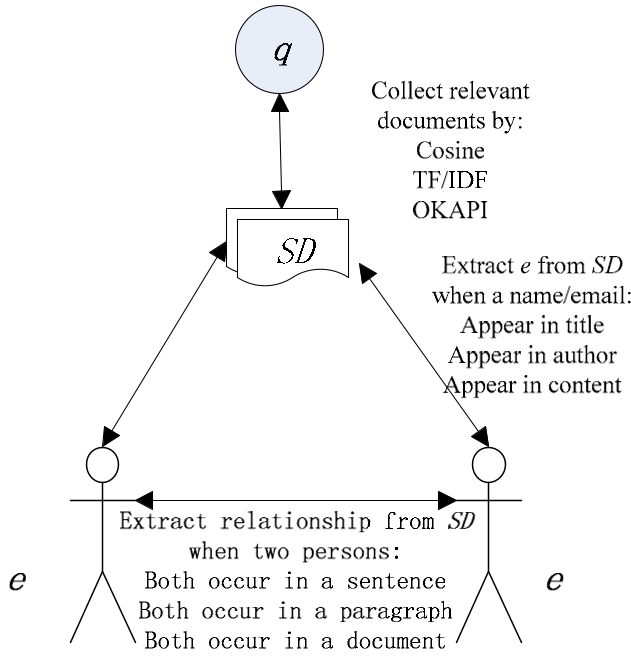 Figure 1: The workflow from Query to Social Network Propagation.
Experiments & Breakthrough Results
The model was tested on the W3C corpus (over 330,000 documents). The performance gains were dramatic:
- Baseline (Raw LM): 0.0621 MAP
- PageRank Model: 0.1903 MAP
- Proposed Network Model: 0.2617 MAP
The "Brian McBride" Effect
In Table 2 of the paper, the authors highlight a specific case: "Brian McBride." In the initial model, he was ranked 6th. However, because he co-occurred with 314 other related experts in the support documents, the Network Model successfully recognized his "centrality" in the topic and promoted him in the rankings.
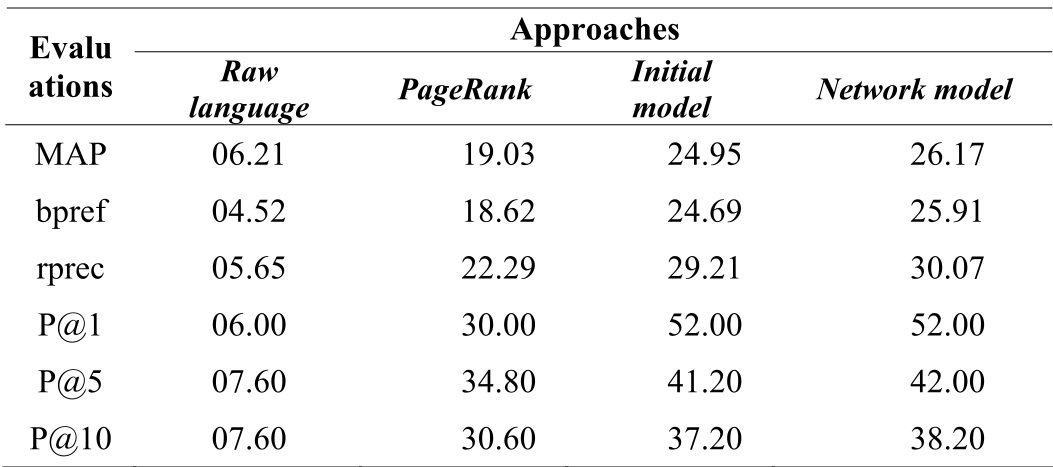 Table 1: Comparative performance across different metrics. Note the significant jump in P@1 (Precision at 1), which is crucial for real-world applications.
Critical Analysis & Takeaways
The brilliance of this work lies in its efficiency. By limiting the "world" to the Top-45 documents (as shown in their parameter tuning), the system avoids the "Six Degrees of Separation" problem where everyone eventually connects to everyone else, diluting the expertise signal.
Limitations:
- The model relies heavily on the quality of the initial Retrieval Model (e.g., OKAPI). If the top-k documents are irrelevant, the social network will be built on sand.
- It assumes expertise is reflected in co-occurrence, which might not hold true for "hidden" experts who don't frequently collaborate or aren't mentioned in the popular discourse of the organization.
Future Outlook
The authors suggest that this "Top-K Support" method isn't just for people; it can be used for Entity Search in general (finding software packages, organizations, or technologies). As we move toward more real-time search, the ability to build and propagate influence on a "local" query-specific graph rather than a "global" static graph will be essential.