
ACP: Reimagining Location Privacy in Opportunistic Networks via Appointment Cards
ACP: An Efficient User Location Privacy Preserving Protocol for Opportunistic Mobile Social Networks
The paper introduces the Appointment Card Protocol (ACP), a decentralized location-privacy scheme for Opportunistic Mobile Social Networks (OMSNs). By pre-distributing "Appointment Cards" (ACs) through social links and strangers, users can decouple their identity from Location-Based Service (LBS) queries, achieving high delivery success ratios comparable to non-privacy protocols.
TL;DR
The Appointment Card Protocol (ACP) addresses the fundamental tension between Location-Based Services (LBS) and user privacy in Opportunistic Mobile Social Networks (OMSNs). Unlike previous methods that struggle to find proxies in real-time, ACP uses a proactive system of "Appointment Cards" to pre-build anonymous query paths, achieving the performance of non-private routing with the security of k-anonymity.
Strategic Position: This work moves beyond simple "friend-based forwarding" by introducing a buffer of pre-distributed credentials, significantly improving the reliability of privacy-preserving queries in sparse networks.
Problem & Motivation: The "Encounter" Bottleneck
In an OMSN, devices (smartphones) communicate only when in close proximity. While LBS providers require location data to offer value (e.g., "Where is the nearest cafe?"), this data reveals a user's trace and identity.
Existing solutions like SLPD or MHLPP try to hide the requester by routing queries through friends. However, in a nomadic world, friends are hard to find.
- High Latency: Waiting to meet a friend to "start" a query delays the LBS response significantly.
- Low Success Rate: If no friend is encountered, the query simply fails.
- The Stranger's Threat: Routing through strangers offers better availability but risks exposing the requester’s identity.
The authors' insight was simple: Don't wait to meet a friend when you need to query; have a friend's "proxy identity" ready in your pocket.
Methodology: The Life of an Appointment Card
The core of ACP is the Appointment Card (AC). Every user (Creator) generates ACs and distributes them.
1. The Obfuscation Chain
An AC travels through agents before it is "Ready."
- Distributing Phase: The card moves among strangers, recording a chain of "Appointment Numbers" (AN) that act as breadcrumbs for the return path.
- Ready Phase: Once it has passed through enough agents, it is handed to a Friend of the original requester.
2. The Logic of Query & Reply
When a user (Requester) wants to send a query:
- They pick a Ready-AC.
- They "borrow" the identity of the First Agent on that card.
- The LBS sees the query as coming from the First Agent.
- The LBS sends a reply back to the First Agent.
- The reply follows the "breadcrumbs" (the recorded agent chain) back to the Requester.
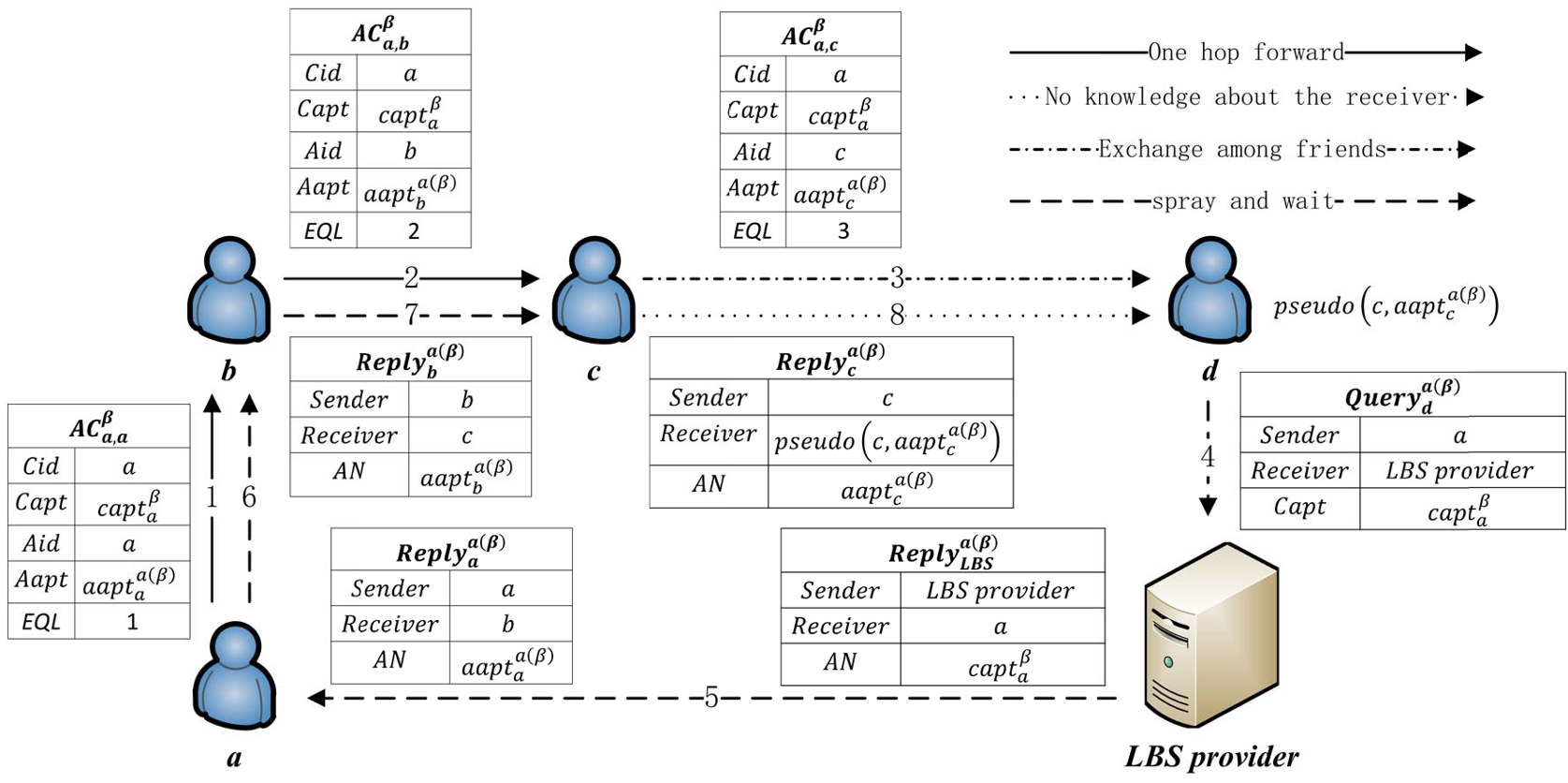 Fig 1: The full lifecycle of an AC, from stranger-exchange to used-query.
3. Separation of Concerns
Crucially, the Trusted Agent (a friend of the requester) sits between the chain of strangers and the requester. Strangers know the chain but not the requester; the LBS knows the requester's query but only the first agent's identity.
Experiments & Results
The authors tested ACP using the ONE Simulator on a map of Helsinki, comparing it against the "Spray and Wait" (BSW) baseline and privacy competitors like SLPD.
Key Performance Metrics:
- Query Success: ACP achieved a success ratio nearly identical to the non-private BSW protocol (~95% in high-range scenarios). In contrast, SLPD struggled to reach 60% within the same timeframe because it was still stuck in the "finding friends" phase.
- Efficiency: ACP reduced the "Total Number of Query Relays" compared to MHLPP, meaning it consumes less bandwidth to achieve higher reliability.
- Overhead: The proactive exchange of cards is lightweight, occurring less than 3 times per minute on average.
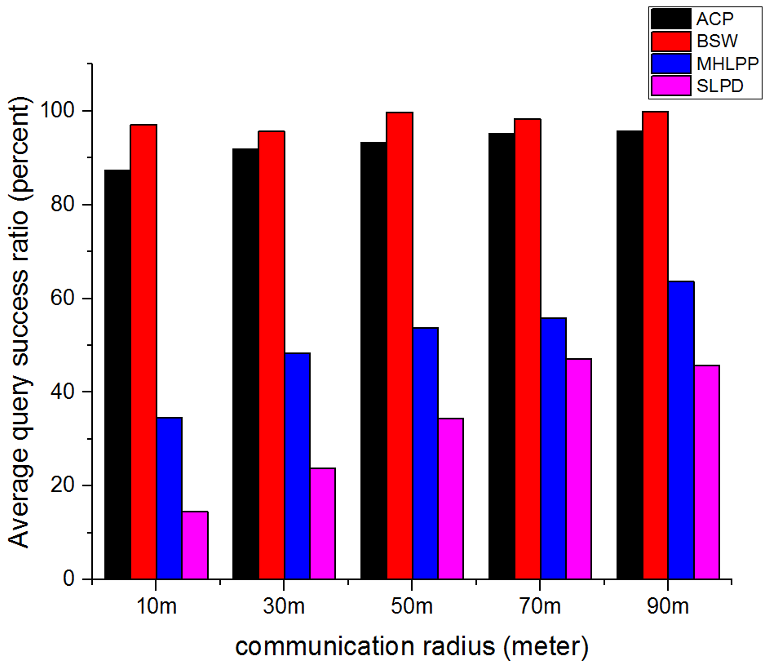 Fig 2: ACP tracks the performance of the non-privacy BSW baseline closely, while others lag.
Critical Analysis & Conclusion
Takeaway
ACP solves the "sparsity problem" in mobile privacy. By decoupling the obfuscation process from the query generation time, it removes the performance penalty typically associated with k-anonymity in DTNs.
Limitations
- Storage Persistence: Users must maintain "relay tables" for ACs they have handled. If a node goes offline or clears its cache, the return path for a reply is broken.
- Social Reliance: While it reduces real-time reliance, the protocol still requires an underlying social graph to provide the "Ready-ACs." In a city of total strangers, the protocol's privacy guarantees weaken.
Future Outlook
The concept of "identity borrowing" via pre-distributed credentials could be extended to Edge Computing or Privacy-Preserving IoT. As we move toward more decentralized networks, ACP provides a robust blueprint for keeping user locations private without sacrificing the speed of the service.