
SARACEN: Reimagining Emergency Response through Social-P2P Multimedia Synergy
Emergency operations support through social networking and P2P multimedia services
The paper introduces SARACEN, a specialized platform for emergency operations (e.g., wildfires and train accidents) that integrates Social Networking Services (SNS) with P2P-based Scalable Video Coding (SVC). It aims to provide high-quality, context-aware multimedia communication between first responders, volunteers, and command centers.
TL;DR
The SARACEN project proposes a paradigm shift in emergency management by moving away from fragmented, verbal-heavy communication toward a Socially Aware P2P Multimedia Platform. By combining Scalable Video Coding (SVC) with Social Networking data, the platform ensures that the right information reaches the right responder in the highest possible quality, even when network infrastructures are compromised.
Background: The Information Gap in Crisis
In life-threatening situations like wildfires or large-scale accidents, the Command and Control Centre (CCC) often operates on "incomplete and delayed" information. Traditional systems like TETRA offer highly reliable but extremely low data rates (as low as 2.5 kBit/s), making rich multimedia sharing nearly impossible. The authors argue that the missing link is a bridge between volunteer social communities and robust media distribution.
Problem & Motivation: Why Traditional Streaming Fails
Most current media platforms use standard H.264/AVC encoding. In a disaster zone with fluctuating signal strength, these streams often suffer from high redundancy or severe motion jitter when frames are dropped.
The authors identify three core pain points:
- Cross-Organizational Silos: Lack of automated collaboration between heterogeneous fire, police, and medical units.
- Context Deficit: Systems treat data (who, what, where) but fail to adapt media delivery (e.g., text-to-speech or quality scaling) based on the user's immediate environment.
- Network Fragility: Heavy reliance on centralized infrastructure that may fail during a disaster.
Methodology: The SARACEN Core
The SARACEN platform architecture is built on a synergy of three pillars: Social Awareness, Scalable Coding, and P2P Distribution.
1. Socially-Driven Resource Discovery
Instead of simple geolocation, SARACEN uses social network profiles. Volunteers register skills (first aid, languages, motor vehicle ownership). When an event occurs, the system utilizes "matching and notification" tools to alert the most relevant experts, effectively turning a social network into a dynamic virtual rescue organization.
2. Multi-Path Scalable Media (SVC + MDC)
This is where the technical heavy lifting happens. The platform breaks a media stream into multiple bitstreams.
- SVC (Scalable Video Coding): Allows the video to be adapted to available bandwidth on the fly.
- MDC (Multiple Description Coding): Sends different "descriptions" of the same video via different P2P paths. If one path fails, the receiver can still reconstruct a usable video from the other descriptions.
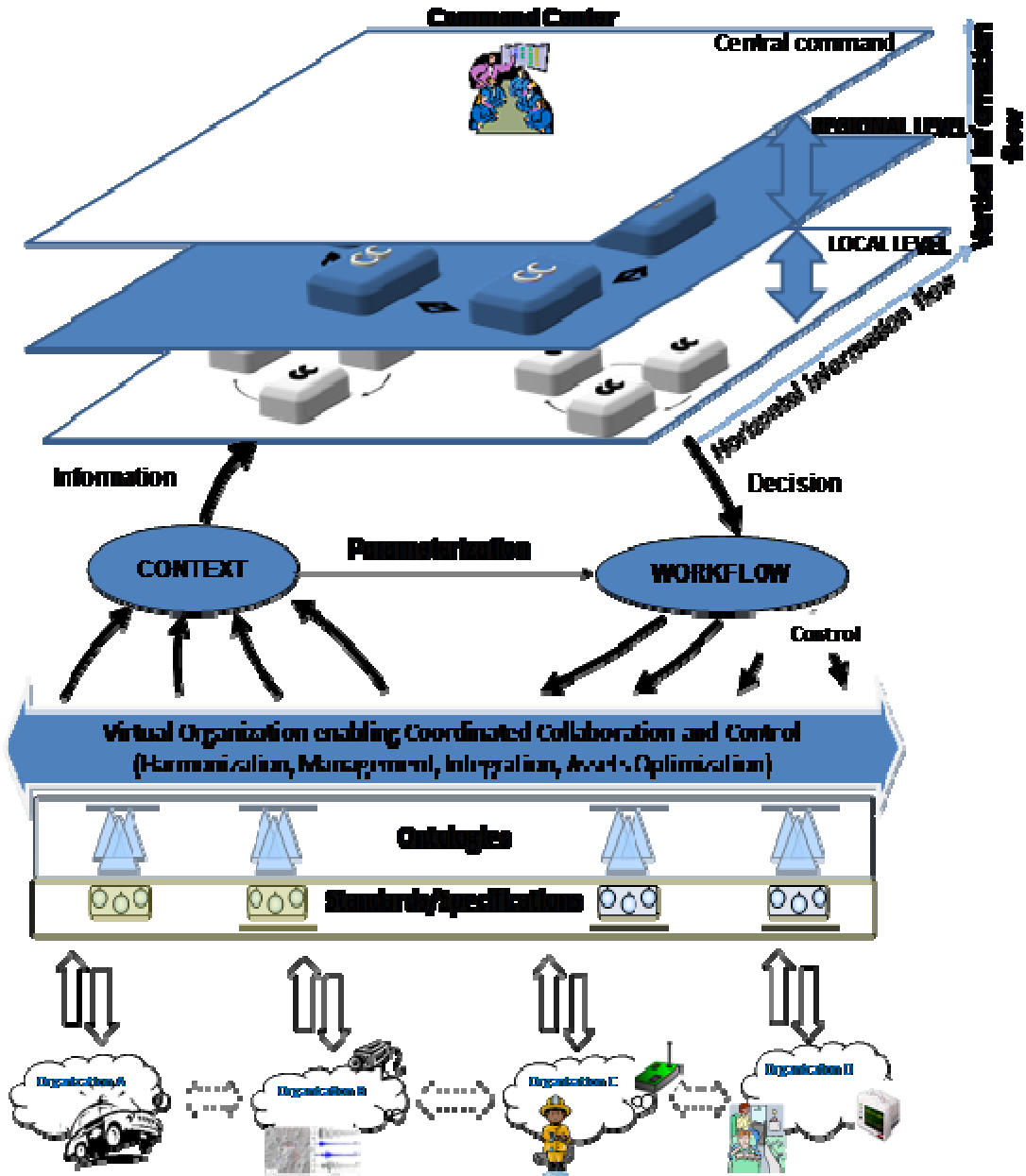 Figure 1: The overall SARACEN architecture showcasing the flow from content production to P2P consumption.
3. Pure P2P Infrastructure
The system operates on a "real" P2P network without super-nodes, addressing NAT gateway traversal directly. Nodes act as "reflectors," ensuring that user-generated content (e.g., a volunteer filming a fire) can be distributed to all participants simultaneously to maintain a "common operational picture."
Use Case: From Forest Fires to Train Wrecks
In the forest fire scenario, SARACEN turns civilian mobile phones into sophisticated sensors.
- Phase 1: Civilians capture video with GPS/compass annotations.
- Phase 2: The P2P network distributes this to fire fighters for "early assessment."
- Phase 3: Fire fighters receive an augmented view on their PDAs, showing hazardous areas (like fuel tanks) overlaid on the map.
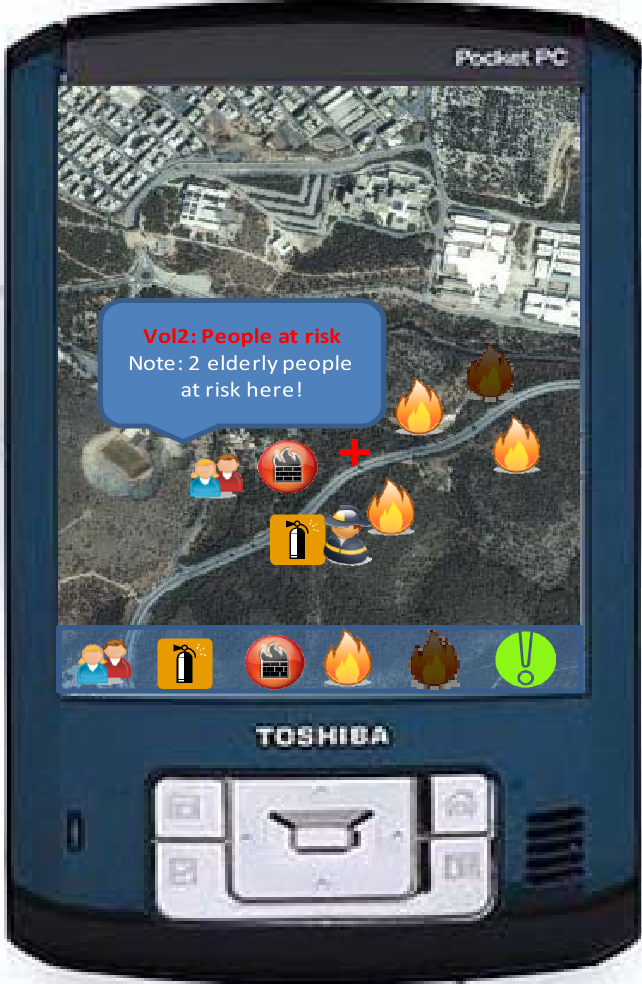 Figure 2: Mock-up of a handheld device providing visual situational awareness via data overlays.
Experiments & Core Insight: Convergence of Media & Network
Unlike prior works that focus solely on either P2P or only SVC, SARACEN's primary contribution is the integrated view.
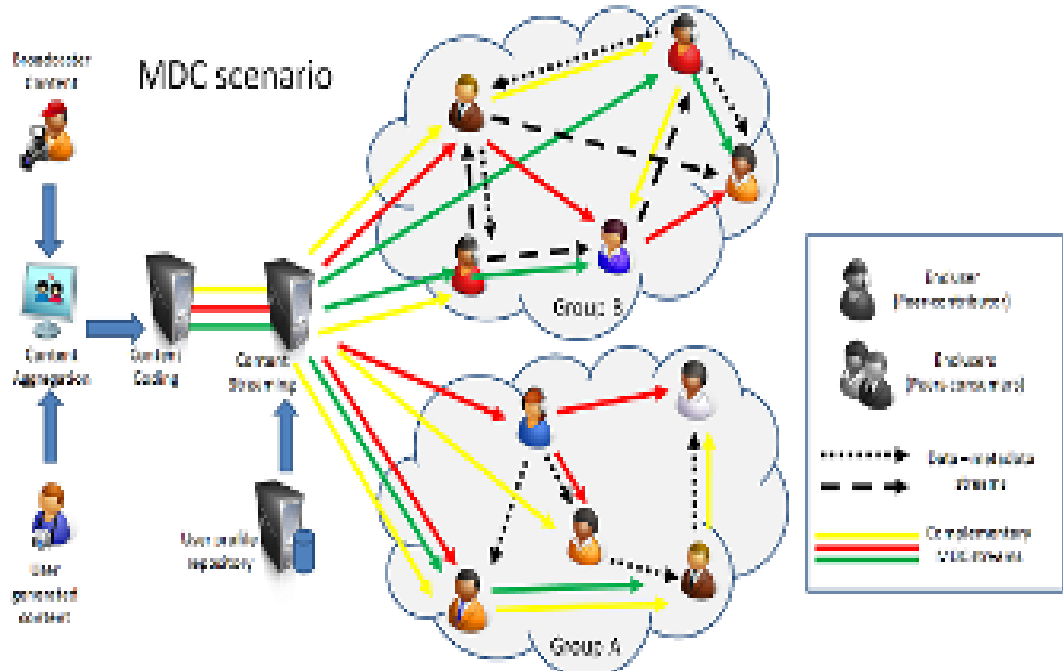 Figure 3: Detailed view of bitstream fragmentation for robust P2P delivery.
By using congestion control protocols like DCCP (Datagram Congestion Control Protocol) and TFRC (TCP-Friendly Rate Control), the system achieves a level of "Quality of Experience" (QoE) that traditional SIP/3G infrastructures cannot maintain during network spikes.
Critical Analysis & Conclusion
Takeaway
SARACEN successfully bridges the gap between social media and critical infrastructure. The move toward a "Content-Aware" and "Socially-Aware" distribution scheme is a logical evolution for disaster relief, where human context is as important as raw data.
Limitations & Future Work
While the architecture is robust, the paper leaves some questions open:
- Trust and Security: In a pure P2P network during a crisis, how do we prevent malicious actors from injecting "fake news" or misleading video annotations?
- Battery Consumption: P2P "reflecting" on mobile devices is notoriously power-hungry. In a disaster, battery life is a critical resource.
- Incentives: Beyond altruism, how are "reflector" nodes incentivized to stay online in high-latency environments?
The future of rescue operations lies in this fusion of human intelligence (Social) and algorithmic resilience (P2P/SVC). SARACEN sets the stage for a more connected and responsive emergency infrastructure.