
Distributed Agent Cooperation: Solving Complex Task Allocation in Large-Scale Social Networks
EMERGING TOPICS IN COMPUTING
This paper proposes a distributed multiagent-based model for complex task allocation in Social Networks (SNs). By leveraging mobile and cooperative agents to represent subtasks, the method optimizes both load balancing and social effectiveness, achieving performance near centralized optimal solutions with significantly lower computational complexity.
TL;DR
In modern social networks, complex tasks (like software projects) require teams that are not only skilled but also socially close to ensure efficient communication. This paper introduces a distributed multiagent model where subtasks are represented by mobile agents that negotiate and move cooperatively. The result? A system that achieves near-optimal load balancing and communication efficiency while being orders of magnitude faster than conventional centralized algorithms.
The Core Challenge: The "Quality-Scale" Tradeoff
Allocating a complex task—defined as a set of interdependent subtasks—presents a dual challenge:
- Load Balancing: Distributing work to prevent bottlenecks (Social Waiting Cost).
- Social Effectiveness: Ensuring collaborators are "socially near" to minimize coordination overhead (Social Communication Cost).
Prior works (e.g., Lappas et al.) treat this as a centralized optimization problem. However, in a network with millions of nodes, a central controller becomes a bottleneck and a single point of failure. Conversely, purely selfish distributed agents often converge to poor local minima (Nash Equilibria) that harm global social welfare.
Methodology: Mobility + Cooperation
The authors propose a "Social Execution Cost" (SEC) framework that quantifies the balance between waiting times and social distance. The innovation lies in the Cooperative Multiagent Model.
1. Mobility
Each subtask is assigned a mobile agent. These agents move between social nodes searching for the lowest SEC.
2. Intra-node Cooperation
To avoid the massive message overhead of global negotiation, agents only negotiate with others currently "queuing" at the same node. They use a Breadth-First negotiation mechanism to form teams. If moving a whole team to a new node reduces the collective cost, they migrate together.
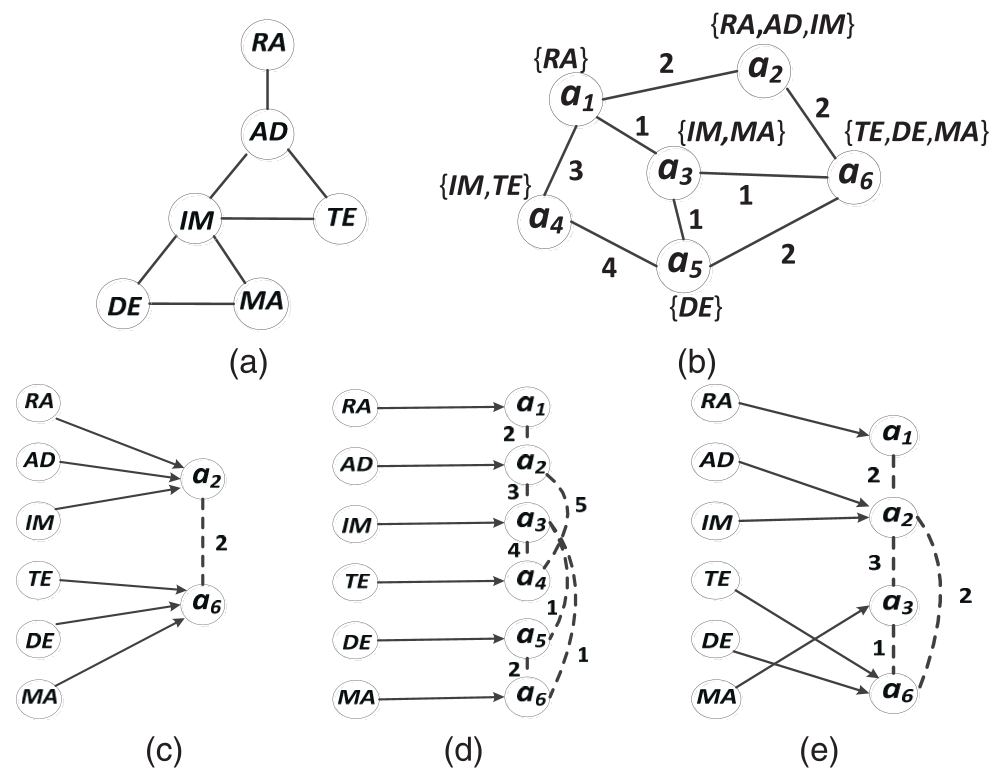 Figure 1: The transition from simple skill matching (Scheme 1) to load balancing (Scheme 2) and finally to the proposed social effectiveness optimization (Scheme 3).
3. Mathematical Intuition
The paper defines the team benefit of moving from node to as: The authors prove that every such move reduces the global SEC, ensuring the system is guaranteed to converge to a stable state.
Experimental Results: Performance and Scalability
The authors tested the model across small-world, scale-free, and random network topologies.
- Effectiveness: Compared to a brute-force "Optimal" search, the agent-based model achieves nearly identical SEC scores.
- Scalability: This is where the model shines. In a network of 2,000 nodes with 1,000 complex tasks, the centralized "Greedy" algorithm took over 90 minutes to solve. The multiagent model finished in minutes.
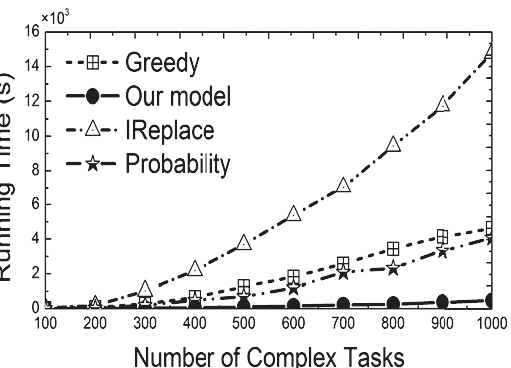 Figure 2: Performance across different network topologies. The multiagent model (Our Model) consistently outperforms distributed probability-based baselines.
Robustness in Dynamic Environments
Social networks are never static; users join and leave, and connections break. The paper demonstrates that the agent-based approach acts as an anytime algorithm. When a disturbance occurs (e.g., a node exits), the agents immediately begin re-negotiating to reach a new equilibrium, showing remarkable resilience compared to static centralized models.
Critical Insight: Why Local Cooperation Works
The "magic" of this paper is the discovery that local intra-node negotiation is sufficient to approximate global optimization for complex tasks. By restricting cooperation to agents on the same node, the authors eliminate the communication "storm" usually associated with distributed constraint satisfaction (DCOP), making the approach practical for real-world platforms like GitHub or LinkedIn.
Conclusion and Future Outlook
This work shifts the paradigm of task allocation from "top-down scheduling" to "bottom-up emergence." While the current model assumes agents have a global view of node capabilities, future extensions could limit agents to local neighborhood views, further increasing the biological realism and decentralization of the system.
Takeaways for Research/Industry:
- For Devs: Agent-based migration is a viable way to balance loads in distributed microservices where "social distance" (latency/topology) matters.
- For Academics: The proof that local team formation drives global SEC reduction provides a strong theoretical basis for simplified negotiation protocols.