
Socially-Aware Epidemic Spreading: Balancing Energy and Delay in MSNs via Optimal Control
SPECIAL SECTION ON EMERGING TRENDS, ISSUES, AND CHALLENGES IN ENERGY-EFFICIENT CLOUD COMPUTING
This paper proposes an Optimal Control Theory-based Epidemic Spreading Scheme for Information delivery in Mobile Social Networks (MSNs). It characterizes four distinct social relationships—blood, geography, work, and interest—to develop an ODE-based analytical model that optimizes the tradeoff between transmission delay and energy consumption.
TL;DR
In Mobile Social Networks (MSNs), information doesn't just spread; it flows through the filters of human intimacy and device battery limits. This paper introduces a sophisticated Optimal Control framework that models information spreading as an epidemic process influenced by four social relationship tiers (Blood, Geography, Work, Interest). By solving the Hamilton-Jacobi-Bellman equations (via Pontryagin’s Minimum Principle), the authors identify a dynamic transmission strategy that outperforms static and random baselines in energy efficiency.
Background: The Invisible Fabric of Social Information
Most opportunistic network models treat "encounters" as purely stochastic events (like gas molecules colliding). However, in MSNs, the willingness to forward a packet is a function of the social bond. You are far more likely to share a video with your brother (Blood) or a neighbor (Geography) than with a random classmate from five years ago (Work/Interest).
The authors correctly identify that failing to account for these "priorities" leads to poor network performance. Furthermore, because mobile devices are energy-constrained, a user must decide: "How hard should I try to transmit this data?"
Problem & Motivation
Current information spreading models face a critical bottleneck:
- Uniform Social Ties: They assume all neighbors are equal.
- Resource Blindness: They ignore the cost of "store-carry-forward" operations on battery life.
- Static Strategies: Existing protocols often use fixed transmission rates, which are inefficient if the network state changes over time.
The motivation here is to find the Optimal Effort Degree (). If , the node goes "all-in" on broadcasting; if , it stays silent to save juice.
Methodology: ODEs Meets Optimal Control
The authors model the fraction of "Infected" (informed) and "Susceptible" (uninformed) nodes using Ordinary Differential Equations (ODEs).
1. The 4-Tier Social Model
They define the meeting probability based on:
- Blood (PRB): Highest priority.
- Geographical (PRG): Medium-high (fellow-townsman).
- Work (PRW): Medium-low (colleagues).
- Interest (PRI): Lowest (hobby groups).
2. The Control Law
To find the best tradeoff, they define a Hamiltonian function that represents the "cost" of the system:
Using Pontryagin’s Minimum Principle, they derive the optimal trajectory. The core insight is that the "effort" should typically be high early in the time window and decrease as more nodes become "informed," preventing redundant energy waste.
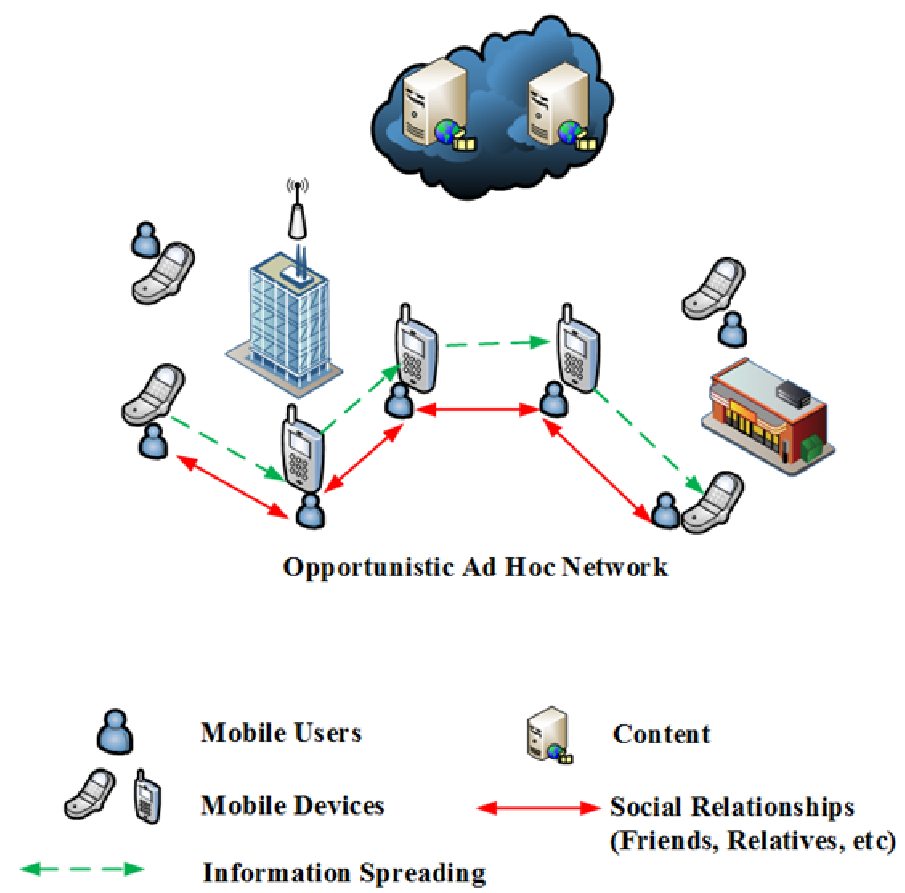 Figure 1: The system architecture showing the interplay between Cloud Computing, MSNs, and diverse social relationships.
Experiments & Results
The researchers validated their theory using a real-world dataset of 802 nodes collected over a week via XMPP protocols.
Key Findings:
- Geographical dominance: Surprisingly, the geographical relationship showed the most significant impact on the total informed count across varied time windows, even more so than blood ties in some configurations.
- Rate Decay: Figure 7 illustrates that the optimal transmission rate is not a flat line. It starts aggressively to "seed" the network and then throttles down as the marginal benefit of reaching new nodes decreases.
- Energy Efficiency: When compared to the "Fixed Rate" and "Random" schemes, the proposed Optimal Control scheme significantly lowered the area under the energy curve.
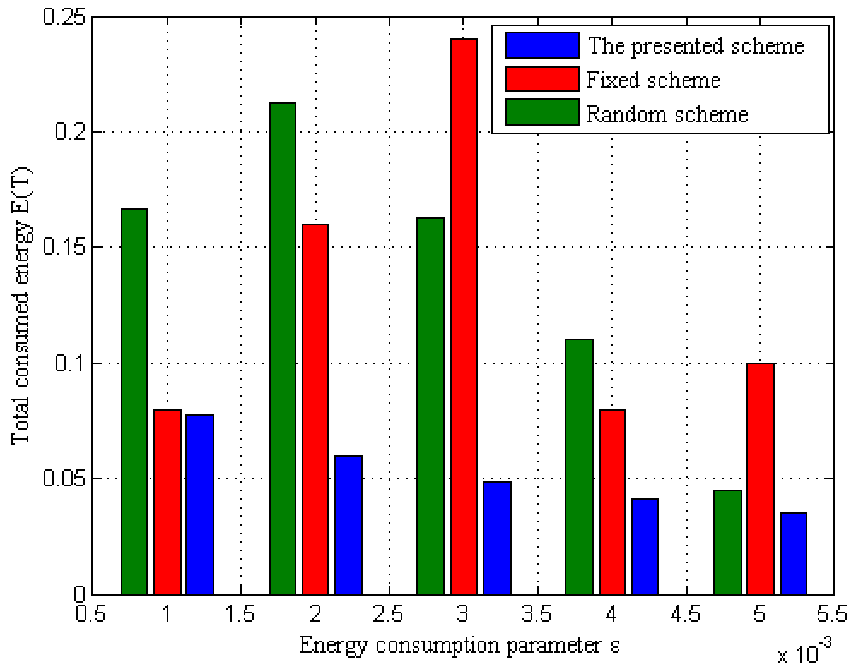 Figure 2: Performance comparison showing the proposed scheme's superior energy-delay optimization over conventional methods.
Critical Insight & Conclusion
The genius of this work lies in treating Human Social Priority as a mathematically rigorous weight in an Epidemic ODE. It moves away from the "dumb pipe" view of networking toward a "socially-aware" intelligence.
Limitations:
The model assumes that social priorities are static. In reality, a "work" relationship might become an "interest" relationship over time. Furthermore, the Poisson arrival assumption for meetings—while standard—may not capture the "bursty" nature of real human mobility as accurately as higher-order Markov chains.
Takeawayสำหรับ researchers:
If you are building data-dissemination protocols for 5G/6G V2X or IoT, stop optimizing for "shortest path" alone. Start optimizing for "most trusted/socially probable path" while applying dynamic energy control. Relatives aren't just for holidays; they are the high-bandwidth backbones of mobile social information.