
Decoding the Pulse of Panic: How Emotions Shape Social Networks in Crises
An analysis of emotion-exchange motifs in multiplex networks during emergency events
2019-03-21
Summary
Problem
Method
Results
Takeaways
Abstract
This research introduces the concept of "emotion-exchange motifs" to analyze communication patterns on Twitter during emergency events (shootings and terror attacks). By constructing a multi-layered multiplex network from 1.9 million tweets, the study identifies distinct structural subgraphs associated with specific emotional states like anger, fear, and sadness.
## TL;DR
When tragedy strikes, social media becomes a digital nervous system. This study by Kušen and Strembeck analyzes 1.9 million tweets across five major terror events to uncover **emotion-exchange motifs**. Key discovery? Anger and fear create "loops" of conversation (reciprocity), while sadness remains a lonely, one-way broadcast.
## The Research Intuition: Beyond the "What" to the "How"
Most crisis research focuses on *what* people say (sentiment analysis). However, this paper asks a more structural question: *How does the emotion itself change the shape of the network?*
The authors argue that emotions aren't just labels; they are the "glue" or "repellent" of social structure. By using a **multiplex network**—where each layer represents a different emotion—they can see if the "Fear Network" looks structurally different from the "Sadness Network."
## Methodology: The Multiplex Lens
The researchers didn't just look at who tweeted whom. They categorized every interaction into eight emotional layers based on Plutchik’s wheel.
### 1. The Architecture
They used a 12-layer model:
* **8 Basic Emotions**: Anger, Fear, Sadness, etc.
* **4 Aggregated Layers**: Positive, Negative, Interlayer, and Overall.
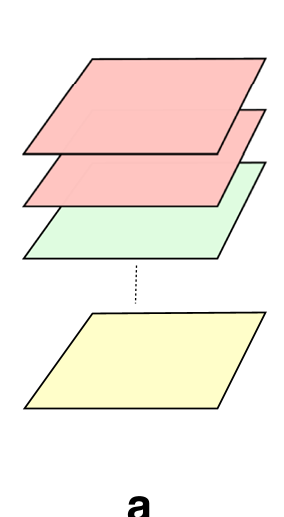
*Figure 1: The 8-layer multiplex emotional framework allows for a "granular" view of interaction.*
### 2. Hunting for Motifs
A **motif** is a sub-structure (like a triangle) that appears more often in the real world than by pure chance. The team ran **720,000 simulations** (null models) to prove that the patterns they found weren't just noise.
## Key Insights: Why Reciprocity Matters
### High Arousal = High Interaction
The most striking finding involves **reciprocal edges** (A ↔ B).
* **Anger and Fear**: These high-arousal emotions trigger two-way conversations. When people are scared or furious, they engage, reply, and argue. Motifs like `120U` (a triangle with a reciprocal base) peak here.
* **Sadness and Joy**: These are "broadcasting" emotions. We express grief or relief *at* the world, but we don't necessarily engage in deep back-and-forth threads as much. These result in the `021D` (out-star) or `021U` (in-star) motifs.
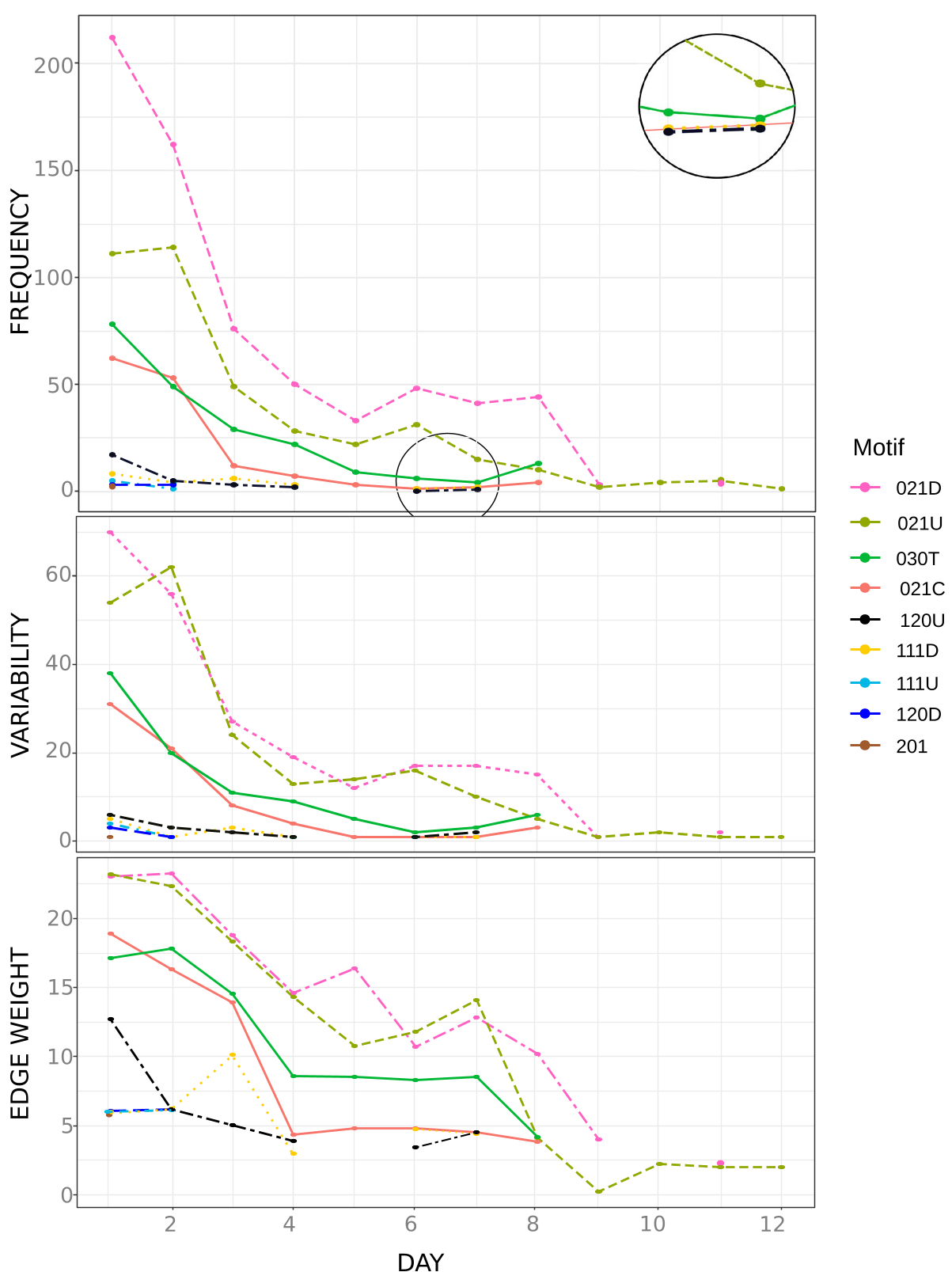
*Figure 2: Daily dominance of different motifs. Notice how variability peaks on Day 1 (the event shock) and simplifies over time.*
### The "Surprise" of Surprise
Interestingly, the **Surprise** layer exhibited the highest edge density in "chain" motifs (`021C`). This suggests that shock acts as a catalyst for information chains, where User A tells User B, who immediately tells User C.
## Experimental Results: The Arousal Dimension
The study used **Significance Profiles (SP)** to compare layers. Surprisingly, the "Negative" layers (Anger vs. Sadness) didn't look that much alike. Instead, the layers that correlated best were those that mixed a high-arousal emotion with a low-arousal one.
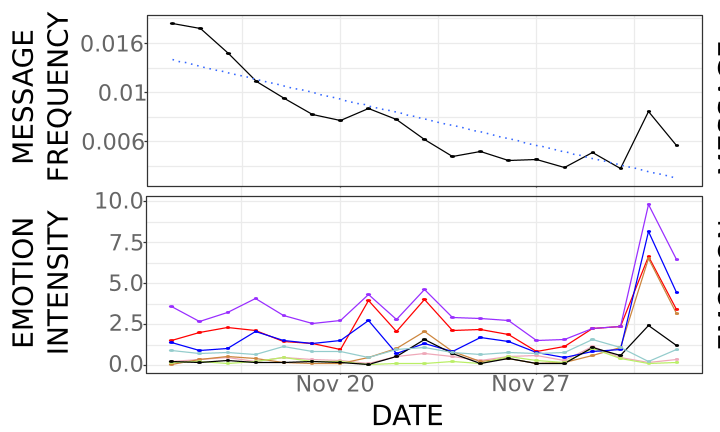
*Figure 3: Fear (Orange) dominates the immediate aftermath, while Anger and Sadness (Empathy) emerge during the recovery phase.*
## Critical Analysis & Takeaways
* **Design for Arousal**: For developers of AI safety and crisis monitoring tools, this suggests that "anger" and "fear" are the primary drivers of network growth. If you want to stop a rumor, you must intervene in the high-arousal layers.
* **Limitations**: The study is limited by the Twitter API's 7-day lookback and the challenges of lexicon-based emotion detection (which can miss sarcasm or cultural nuances).
* **Future Impact**: This work bridges the gap between **Socio-Psychology** and **Graph Theory**. It moves us away from simply counting words to understanding the "physics" of emotional dissemination.
**Conclusion**: In the wake of an emergency, our digital footprint isn't random. Our emotions dictate the geometry of our connections. Whether we are building a "broadcast" of grief or a "loop" of anger depends entirely on the arousal of our hearts.