
Bio-sensors: The Silent Frontier of Affective Computing
Emotion Recognition Using Bio-sensors: First Steps towards an Automatic System
This paper presents a multi-modal emotion recognition system utilizing bio-sensors (EMG, SC, BVP, ECG, Temperature, and Respiration). By mapping physiological signals to the Arousal-Valence space using a Neural Network classifier, the authors achieved SOTA accuracies of 96.6% for arousal and 89.9% for valence.
TL;DR
Researchers from Sony Corporate Laboratories have developed an automatic system that "reads" human emotions by monitoring internal physiological changes. By bypassing external expressions like smiles or tone of voice, they achieved nearly 97% accuracy in detecting emotional intensity (arousal) and 90% in detecting emotional quality (valence) using a suite of bio-sensors and neural networks.
Background: Beyond the Face and Voice
In the quest for seamless Human-Computer Interaction (HCI), the "Rational Machine" paradigm is shifting. Computers are traditionally logical, yet humans are inherently emotional. While facial and speech recognition are common, they are easily hampered by shadows, background noise, or a user's stoic demeanor. Bio-sensors offer a "hardware-level" truth: our autonomic nervous system (ANS) reacts to fear, joy, and stress in ways we cannot easily mask.
The "Why": Solving the Reliability Gap
The primary motivation behind this work is to create an unobtrusive and robust modality for emotion detection.
- The Problem: Facial recognition requires a camera and good lighting; speech recognition requires the user to speak.
- The Insight: Emotions are biological events. When scared, our heart races (ECC/BVP) and our palms sweat (Skin Conductivity). These signals are persistent, measurable, and increasingly viable for integration into everyday wearables like rings or smartwatches.
Methodology: Mapping the Biological Landscape
1. The Elicitation Protocol
How do you make a test subject feel "real" emotion in a lab? The authors used the IAPS (International Affective Picture System), a validated set of images ranging from neutral landscapes to disturbing imagery. They adopted a progressive arousal strategy to prevent "emotional residue" from one image affecting the next.
2. Signal Processing & Feature Engineering
The core of the system lies in how it processes raw electrical noise into emotional features:
- ECG/BVP: Detecting the "QRS Complex" (the heartbeat peak) to measure Heart Rate Variability (HRV).
- Skin Conductivity (SC): Separating slow-moving (tonic) components from fast (phasic) emotional spikes.
- EMG: Measuring tension in the masseter (jaw) muscle, a classic indicator of stress.
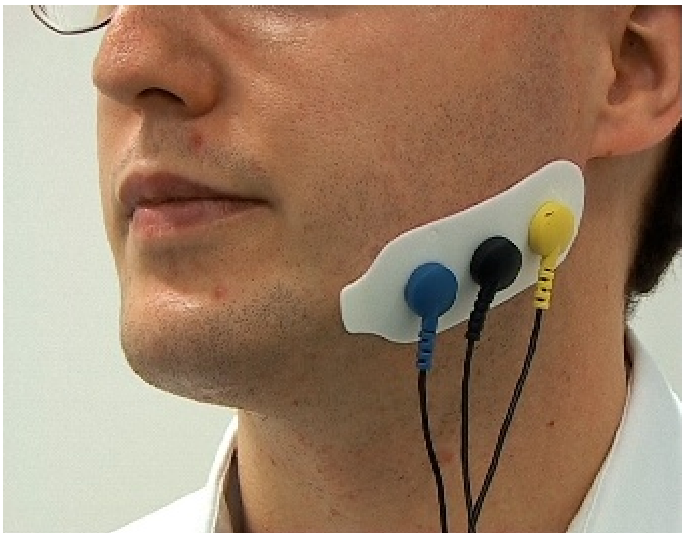 Fig 1: The experimental setup using ProComp+ sensors for multi-modal data collection.
3. The Neural Network Classifier
The researchers used a three-layer Neural Network with Resilient Propagation. The input consists of 13 key features (mean/SD of heart rate, respiration, etc.), and the output is a point on the Arousal-Valence scale.
Experimental Results: Precision under Pressure
The study reveals a significant gap between detecting "intensity" and "positivity":
- Arousal (Excitement Level): Highly detectable. The system achieved 96.58% accuracy.
- Valence (Pleasure Level): More nuanced and difficult to classify, reaching 89.93% accuracy.
 Table 1: Classification accuracy based on allowanced bandwidth (error margin).
The findings echo a common theme in Affective Computing: our bodies react loudly to how much we feel (arousal), but the difference between "angry" (negative valence, high arousal) and "excited" (positive valence, high arousal) is much subtler in the bio-data.
Critical Insight & Future Outlook
Is Bio-sensing Enough?
The authors frankly admit that bio-signals alone may not be the "silver bullet." The ideal system is Multi-Modal Fusion: combining bio-sensors with eye-blink tracking and facial analysis to resolve ambiguities.
Current Limitations
- Subject Dependence: The current model was optimized for a single subject. Future SOTA needs to tackle Subject-Independent models—learning the universal "Bio-signature" of fear that applies to everyone.
- Sensor Form Factor: The cables used in the study are intrusive. However, with the rise of modern wearables, this data is becoming more accessible than ever before.
Conclusion
This work represents a foundational step toward a world where technology doesn't just respond to our commands—it understands our state of being. By quantifying the Autonomic Nervous System, we move one step closer to computers that feel like companions rather than just tools.