
Driving Emotions: A Biosignal Approach to Mapping the Racing Mind
Toward Emotion Recognition in Car-Racing Drivers: A Biosignal Processing Approach
This paper introduces a multisensorial wearable system designed for real-time emotion recognition in car-racing drivers by processing biosignals including facial EMG, ECG, respiration, and EDA. Utilizing Support Vector Machines (SVM) and Adaptive Neuro-Fuzzy Inference Systems (ANFIS), the methodology achieves State-of-the-Art classification accuracy of 79.3% across four emotional states: high stress, low stress, disappointment, and euphoria.
TL;DR
Researchers have developed a wearable "smart" system for race car drivers that senses emotions through muscle tension, heart rate, and skin sweat. By bypassing the need for cameras (useless behind a helmet), the system uses SVM and Fuzzy Logic to identify stress and euphoria with nearly 80% accuracy.
Positioning: This work moves beyond laboratory-based "Ekman" facial expression recognition, tackling the "black box" of human emotion in extreme, high-noise environments where traditional CV-based methods fail.
The "Helmet Problem" and the Motivation for Biosignals
In the high-stakes world of professional racing, a driver's emotional regulation is as critical as their reflexes. Excessive stress leads to "tunnel vision," while disappointment can result in fatal lapses in judgment.
However, monitoring a driver is a technical nightmare:
- Vision is Blocked: Safety casques (helmets) make facial expression analysis impossible.
- Audio is Distorted: Engine roar and wind noise render speech-based affect recognition unreliable.
- Physical Artifacts: High G-forces and rapid movement create "noise" in biometric sensors.
The authors' insight was to move toward a multisensorial biosignal fusion approach, treating the body's Autonomic Nervous System (ANS) as the primary data source.
Methodology: Decoding the Nervous System
The system utilizes four key biosignals:
- Facial EMG: Measures clenching of the frontalis and masseter muscles—a classic indicator of mental effort and stress.
- ECG: Tracks heart rate variability (HRV).
- Respiration: Monitors breathing depth and rate (shallow breathing often signals acute stress).
- Electrodermal Activity (EDA): Captures the skin's electrical conductance, which spikes during "arousal" events.
The Architecture
The system follows a three-stage pipeline: Acquisition (via fireproof textile sensors), Feature Extraction (calculating RMS and Mean Absolute First Difference), and Classification.
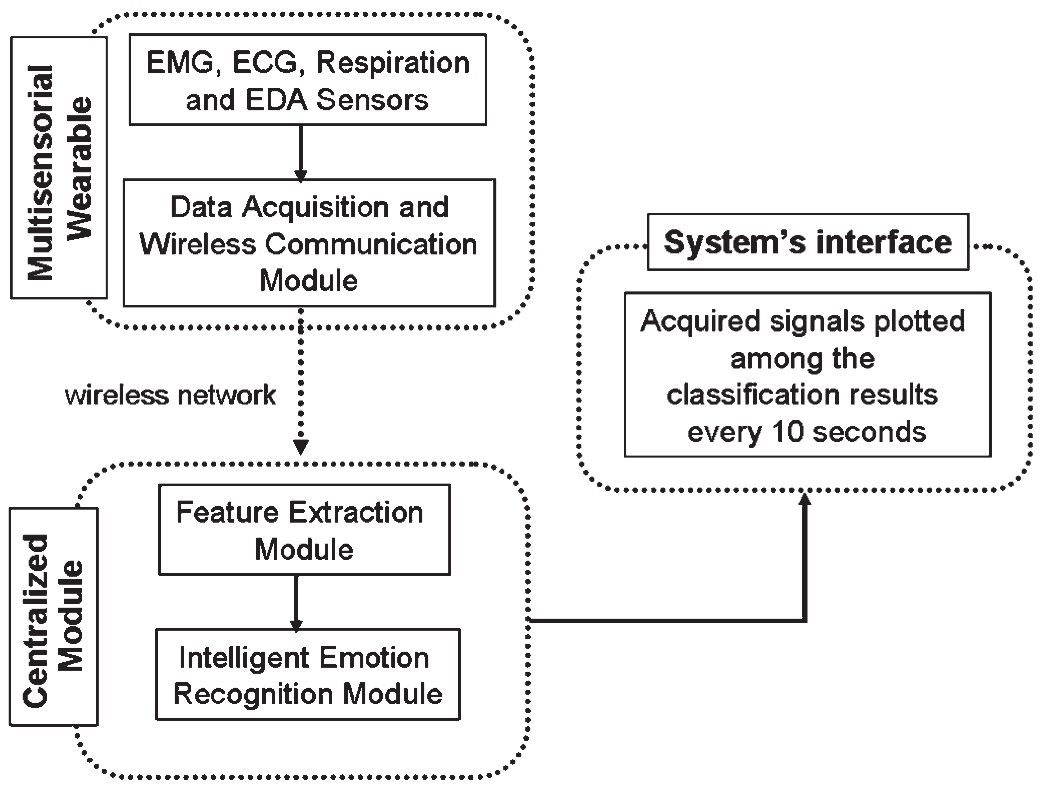 Figure 1: The three-tier architecture connecting the driver's biosensors to the centralized computing module.
The researchers compared two heavy-hitters in pattern recognition:
- Support Vector Machines (SVM): Using a Radial Basis Function (RBF) kernel to map complex, non-linear biological data into a higher-dimensional space where emotions become separable.
- ANFIS (Adaptive Neuro-Fuzzy Inference System): Combining the learning power of Neural Networks with the "human-like" reasoning of Fuzzy Logic (if-then rules).
Experimental Results & Performance
The system was tested on ten drivers in a simulated 3D racing environment. Emotional categories were mapped to the Arousal-Valence space: High Stress, Low Stress, Disappointment, and Euphoria.
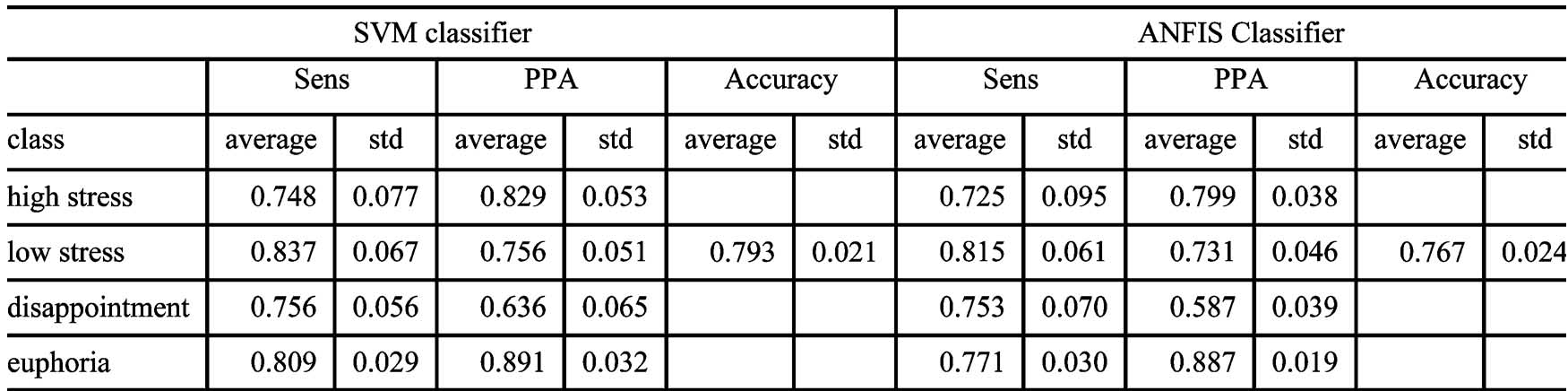 Table 1: SVM vs. ANFIS performance metrics. SVM consistently showed higher accuracy and lower variance.
Key Findings:
- SVM reigned supreme: Achieving 79.3% accuracy, it proved more robust at distinguishing subtle differences between "high stress" and "low stress."
- Euphoria was the easiest to detect: The "positive" high-arousal state of euphoria had a Positive Predictive Accuracy (PPA) of 89.1%, likely due to distinct spikes in heart rate and skin conductance.
- The 10-Second Window: The authors discovered that a 10-second sliding window is the "Goldilocks zone"—long enough to capture physiological changes (which lag behind thoughts) but short enough to be considered "near real-time."
Critical Analysis & Outlook
Limitations
While the results are impressive, the study was conducted in a simulator. Real-world racing introduces significantly higher physical vibration and "Electromagnetic Interference" from the car's engine, which could degrade signal quality. Furthermore, the dataset (10 males) lacks demographic diversity, which is crucial since physiological responses to stress vary by gender and age.
Future Value
Beyond shaving seconds off a lap time, this technology has profound implications:
- Safety: Cars could eventually "intervene" if the driver's stress levels suggest an imminent loss of control.
- Medical Diagnostics: The same wearable sensors could be used for patients with Parkinson's or stroke victims who struggle to communicate their internal emotional states.
Conclusion
This paper represents a significant step toward "Machine Emotional Intelligence." By turning the driver's own body into a sensor array, the researchers have found a way to see through the helmet and into the driver's mind, bridging the gap between raw physiology and human feeling.