
Elevating Affective Computing: How HDR Videos Unlock Superior EEG Emotion Recognition
Emotion Recognition using Electroencephalography in Response to High Dynamic Range Videos
This paper introduces a novel framework for EEG-based emotion recognition specifically utilizing High Dynamic Range (HDR) video stimuli. By leveraging the immersive properties of HDR content, the authors achieved state-of-the-art classification accuracies of 80.55% for arousal and 70.37% for valence using a Support Vector Machine (SVM) classifier.
TL;DR
Researchers have discovered that the "visual feast" provided by High Dynamic Range (HDR) content—with its superior contrast and color—is significantly more effective at triggering recognizable brain activity than standard videos. Using a 5-channel EEG headset and SVM classification, this study achieved an impressive 80.55% accuracy in detecting arousal, proving that HDR is the new frontier for immersive emotional studies.
Background: The Immersive Gap in Emotion Research
For years, affective computing has struggled with the "intensity" of stimuli. Standard Dynamic Range (SDR) videos often fail to bridge the gap between a digital screen and real-world experience. When the stimulus is dull, the biological response is faint, leading to mediocre performance in emotion recognition tasks. The authors of this paper hypothesized that HDR technology, which mimics real-world light levels and color saturation, could provide the "jumpstart" the human limbic system needs to produce clearer neural signatures.
Methodology: Capturing the Digital Pulse
The study utilized a streamlined but effective pipeline to move from light waves to emotional data:
- Stimuli Selection: 60-second HDR clips from high-end sources like The Nun (Fear) and Gladiator (Sadness) to ensure maximum emotional "drag."
- EEG Acquisition: 27 subjects wore Emotiv Insight headsets (5 channels: AF4, T7, PZ, T8, AF3) while viewing content on a 55-inch UHD HDR display.
- Feature Engineering: 17 time-domain features (including Hjorth parameters and statistical moments) were extracted.
- Classification: A wrapper-based feature selection identified the "heavy hitters" for an SVM classifier.
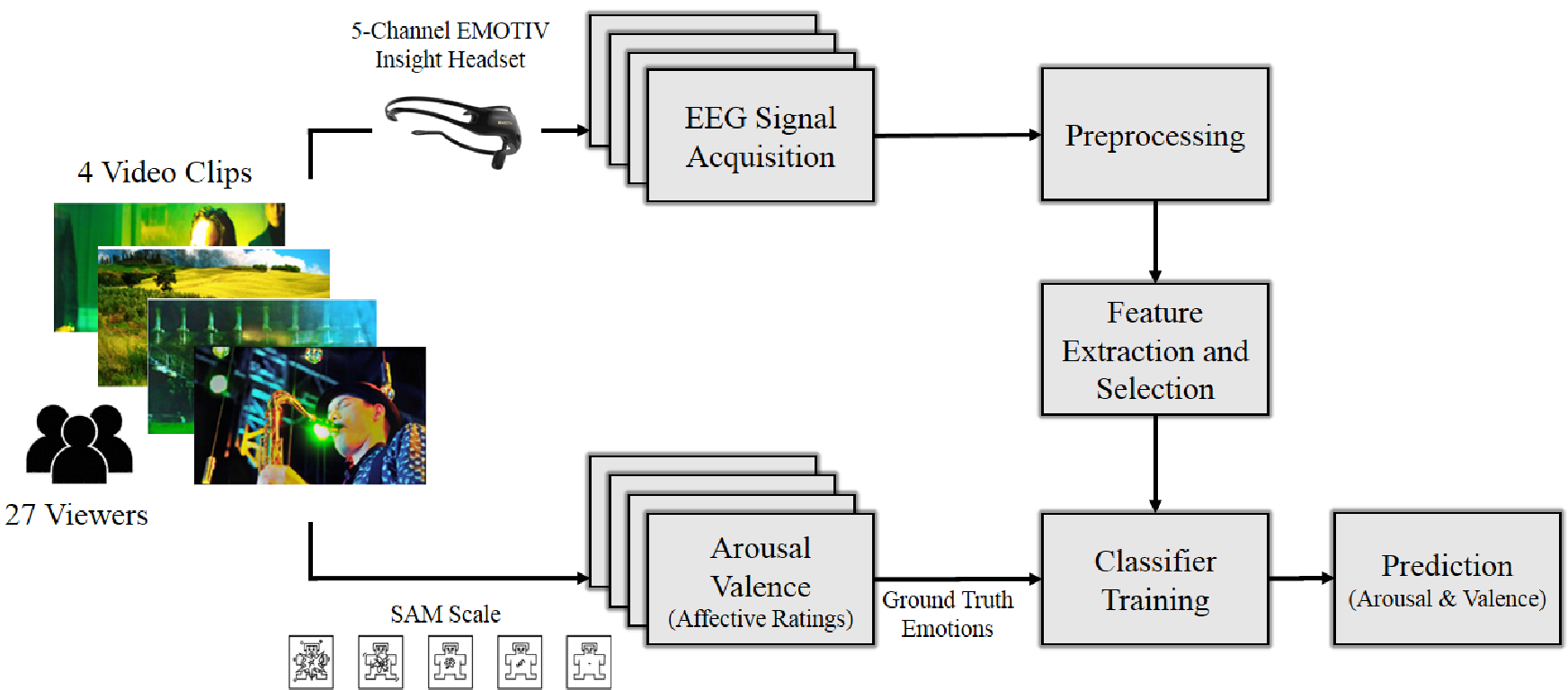 Figure 1: The proposed methodology workflow, from HDR stimulus to SVM classification.
Why HDR Works: The Intuition
The "Why" behind this paper is rooted in human perception. HDR content provides Full-Array Local Dimming and intense brightness. This increased "Visual Attention" translates directly to higher Arousal levels. The data backs this up: the 80.55% accuracy in Arousal suggests that the brain is more "electrically reactive" to the vividness of HDR, making it easier for machine learning models to find patterns across the noise of EEG signals.
Experimental Battlefront: SOTA Comparison
The results show a clear dominance over traditional methods. When compared to the famous DEAP dataset or other recent studies using film pieces, the HDR-based approach consistently yields higher scores.
 Table 1: Performance comparison showcasing the superiority of the proposed HDR method over existing SDR benchmarks.
The study found that:
- Arousal (excitement vs. calm) was much easier to classify than Valence (positive vs. negative).
- Features like Mobility and Complexity (Hjorth parameters) in the AF3 and T7 channels were critical markers for identifying these states.
Deep Insights and Further Horizons
The Takeaway: This research proves that the quality of the medium is just as important as the content of the message in affective computing. If you want to understand human emotion via sensors, you must first provide an environment that truly moves the human.
Limitations: The study used a 5-channel headset. While great for portability, future studies might explore high-density EEG (64+ channels) to map exactly where HDR's visual richness impacts the emotional processing centers of the brain.
Future Outlook: We are moving toward a world of "Emotional Design," where your TV or VR headset could sense your boredom or fear in real-time and adjust the content's dynamic range or narrative flow to keep you engaged. HDR is the first step toward that seamless human-machine loop.