
Emotion-Aware Learning: Leveraging Physiological Sensors to Foster Self-Regulation
Emotion Recognition from Physiological Sensor Data to Support Self-regulated Learning
This paper presents the LISA project, which utilizes wearable sensor data (EDA and ECG) to perform emotion recognition for supporting Self-Regulated Learning (SRL). By analyzing data from 70 students exposed to emotional stimuli (IAPS), the authors developed a system capable of detecting stressful learning states (Low Valence, High Arousal) with 75% accuracy using machine learning.
TL;DR
The LISA (Learning Analytics for sensor-based Adaptive Learning) project introduces a framework for detecting student emotions through wearable sensors (EDA and ECG). By mapping physiological signals to the "Valence-Arousal" model, the research successfully identifies high-stress learning states with 75% accuracy, paving the way for "Learning Companion" systems that intervene when a student is overwhelmed.
Background: The Affective Gap in Learning
Self-Regulated Learning (SRL) is the "holy grail" of education—the ability for a student to monitor, regulate, and evaluate their own progress. However, most digital tutors are "emotionally blind." They see the score, but not the frustration. This paper argues that by using non-intrusive sensors, we can bridge this gap, transforming software from a passive tool into an active, empathetic companion.
Problem & Motivation
Traditional emotion detection often relies on cameras for facial expression analysis, which raises privacy concerns and is context-dependent. Physiological data (heart rate and skin conductance) offers a "direct wire" to the autonomic nervous system, theoretically providing more objective evidence of stress or engagement. The challenge lies in the Inductive Bias: how do we build a general model when every human's "baseline" physiology is different?
Methodology: From Raw Signals to Emotional Insights
The researchers conducted an experiment with 70 university students, utilizing the International Affective Picture System (IAPS) to induce specific emotional states while recording data via BITalino wearable sensors.
1. The Sensor Suite
- EDA (Electrodermal Activity): Measures skin conductance. The authors focused on the gradient of change, linking it to Arousal (intensity).
- ECG (Electrocardiogram): Measures cardiovascular activity. They extracted Heart Rate Variability (HRV) to link to Valence (positive/negative feeling).
2. Analytical Approaches
The study didn't rely on a single "black box." Instead, it used a hybrid methodology:
- Statistical Analysis: Confirmed that EDA gradients significantly differ between high and low arousal ().
- Machine Learning (Auto-ML): Used AutoSKLearn and Random Forests to handle high-dimensional feature sets.
- Fuzzy Logic: Integrated expert knowledge (e.g., "IF EDA is high THEN Valence is likely low") to create more interpretable models.
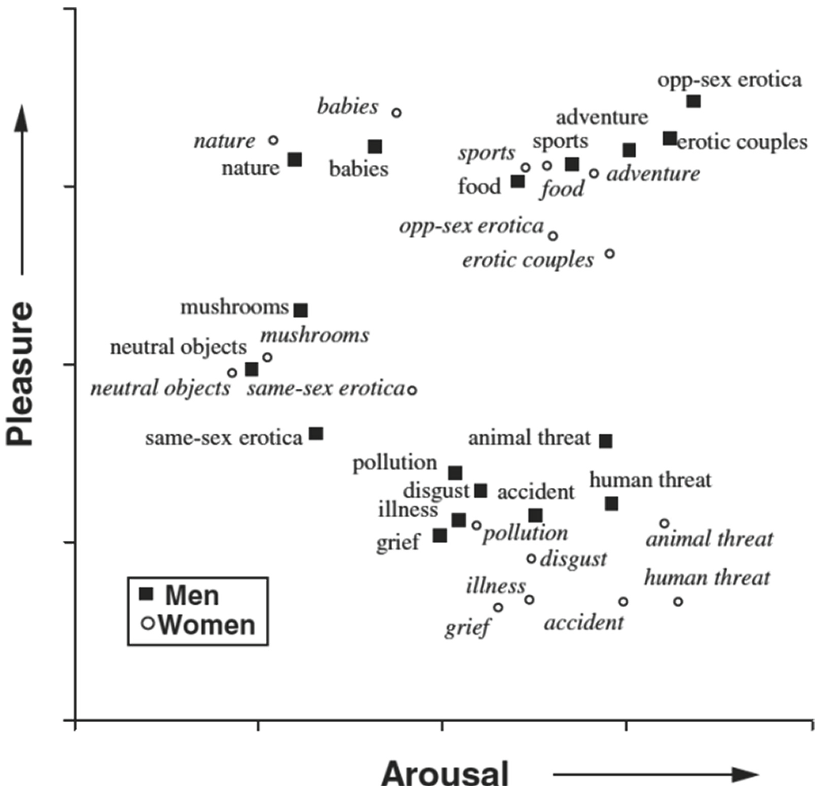 Figure 1: The Circumplex Model of Affect used to map sensor data to emotional quadrants.
Experiments & Results: Identifying the "Stress Zone"
The most significant breakthrough was the detection of the LH (Low Valence, High Arousal) quadrant. In a learning context, this represents stress, anger, or frustration.
- Stress Detection: Using a 2-class problem (LH vs. others), the system achieved 75% accuracy.
- Valence Classification: Distinguishing positive from negative states reached 63% precision.
- Overfitting Challenge: The authors noted that while models trained on specific individuals reached 90% accuracy, general models are harder to build due to physiological variance—a key problem for future SOTA research to solve.
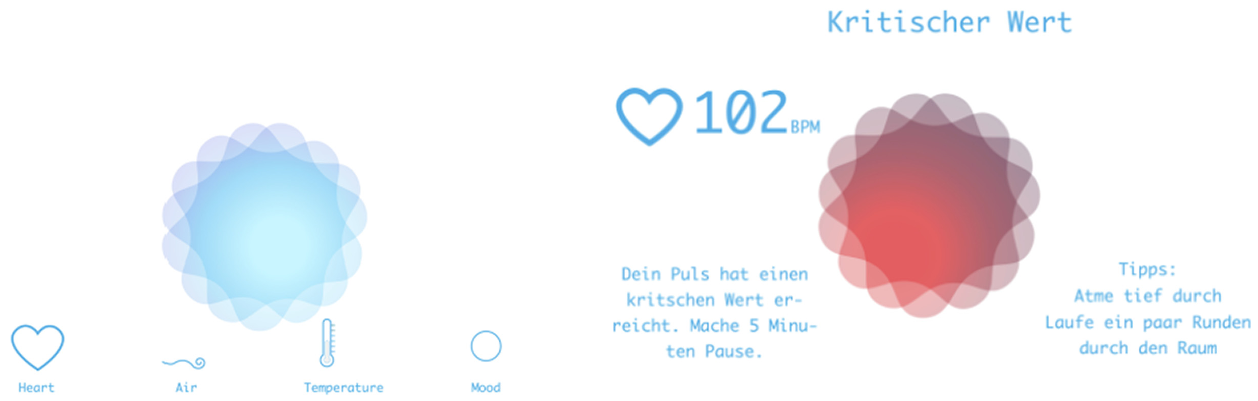 Figure 2: The LISA SmartMonitor, a metaphor-based UI designed to help students reflect on their emotional state.
Deep Insight: Toward the "Learning Companion"
The paper concludes by proposing three prototypes: SmartMonitor, Charlie, and LISA SmartMonitor. These aren't just dashboards; they are designed as "Learning Companions" that:
- Promote Awareness: Visualizing stress levels through metaphors (e.g., emojis or status bars).
- Provide Volitional Support: Recommending breaks or "refocusing" strategies (e.g., "count backward from 10") when the sensors detect the stressful LH state.
Limitations & Future Work
While the results are promising, the "person-independent" model remains the primary hurdle. Future iterations will likely need to incorporate Transfer Learning to adapt a general model to a specific student's physiological baseline quickly. Nonetheless, this work proves that the "stress signature" in our skin and heart is a powerful signal for the future of adaptive education.