
From Text to Toon: Bridging Semantic Analysis and 3-D Facial Animation
13840_Emotion Recognition in Text for 3-D Facial Expression Rendering.
This paper presents a framework for automatic emotion detection in descriptive text and its application in 3-D facial expression rendering. Using Support Vector Machines (SVM) and an innovative emotion-sensitive feature selection algorithm, the authors achieved comparable accuracy to manual feature selection in identifying "The Big Six" emotions from children's stories.
TL;DR
This research bridges the gap between Natural Language Processing (NLP) and Computer Graphics. By applying Support Vector Machines (SVM) and a specialized emotion-probability algorithm to children's stories, the authors demonstrate that we can automatically extract emotional tones from text to drive the facial expressions of 3-D characters.
Background: The Labor of Expression
In the world of animation, conveying emotion is everything. However, manually adjusting a character's facial "rig"—the complex set of digital muscles and bones—for every line of dialogue is a grueling task. This paper explores Text-to-Scene processing, aiming to automate the initial rendering of emotional states directly from descriptive sentences.
The Challenge: Context and Imbalance
Emotion recognition in text is notoriously difficult for two reasons:
- Semantic Ambiguity: Words like "furious" are obvious, but "darkened" or "stilled" may imply emotion only in specific contexts.
- The Neutral Wall: In most corpora (like the UIUC children's stories used here), "Neutral" sentences outnumber emotional ones by nearly 10-to-1. Standard machine learning models often default to "Neutral" to achieve high accuracy, failing to catch the actual emotions.
Methodology: Probability-Driven Feature Selection
The authors didn't just rely on pre-made lists of "angry" or "sad" words. They developed an Emotion Sensitive Feature Selection Algorithm.
The Intuition
Instead of just counting frequencies, the algorithm calculates a word's emotional weight by dividing its occurrences in emotional classes by its total appearances in the corpus. This helps identify "context words" that are relevant to the story's emotional arc but aren't strictly emotion adjectives.
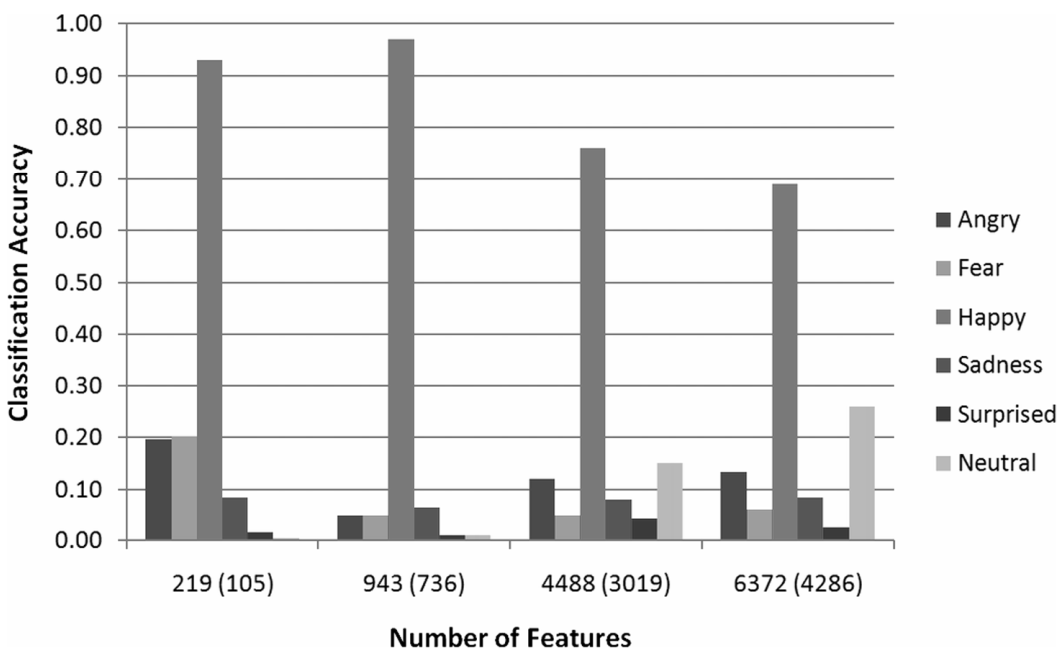 Fig 1: The flow from text analysis to 3-D rendering parameters.
The Weighted SVM
To combat the class imbalance, the authors assigned different "weights" to classes. For example, the class Happy was given a weight of 8, while Neutral was given a weight of 1. This forced the SVM to treat missing a "Happy" sentence as a 8x larger error than misclassifying a "Neutral" one.
Experimental Results: Man vs. Machine
One of the study's most striking findings was that the automated feature selection performed as well as, and sometimes better than, manual human selection. The algorithm discovered words like "unicorn," "hanged," and "seam" as highly predictive of specific emotional contexts within the Grimm, Andersen, and Potter stories.
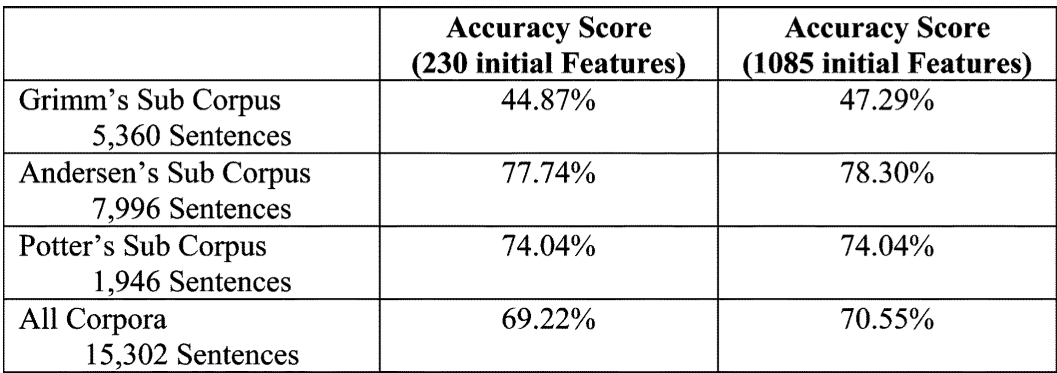 Table 1: Accuracy variations across different sub-corpora. Note that the Andersen corpus yielded the highest reliability at 78.30%.
From Pixels to Prototypes: 3-D Rendering
Once the SVM identifies an emotion (e.g., "Sadness"), the system maps this to a Frame-Based Representation. These frames contain specific values for face-representation parameters (eyebrow tilt, mouth curvature) which are then fed into Blender scripts to deform the character mesh.
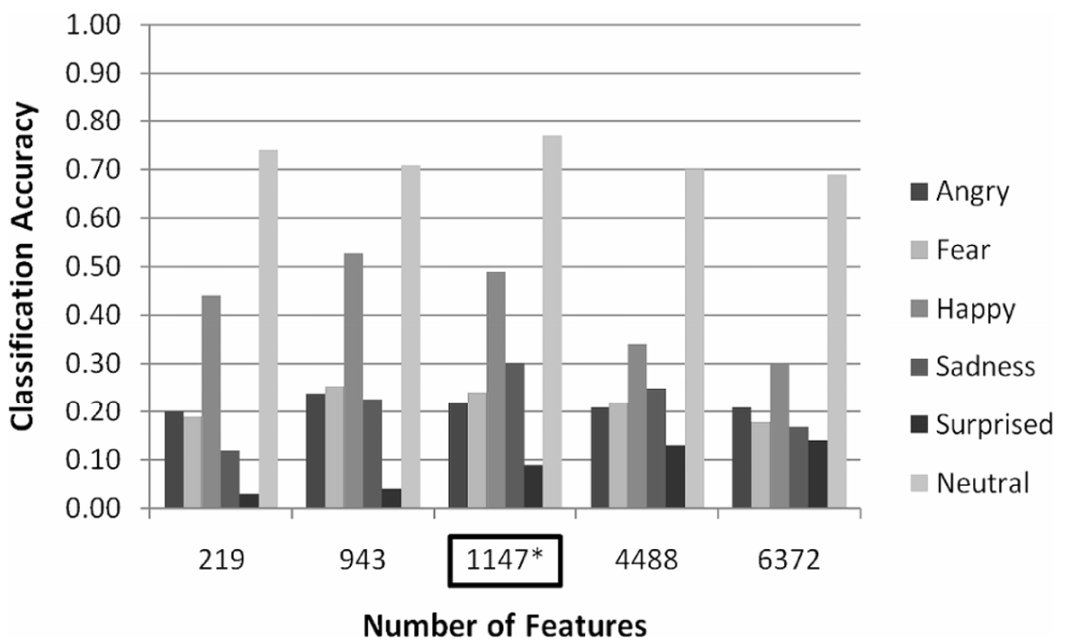 Fig 2: The "Mancandy" rig in Blender showing the six basic emotional outputs generated from text.
Critical Insight & Future Outlook
While this work proves that "words alone" contain significant emotional signal, the authors admit that lexical analysis is only the first step. The high failure rate on sub-classes like "Disgust" or "Surprise" (seen in Table II of the paper) suggests that the model needs more than just keywords—it needs Syntactic Awareness and Common Sense Knowledge.
The future of this field lies in moving beyond the "bag-of-words" and into deep contextual embeddings (long before the era of LLMs, this paper laid the groundwork for why context matters). By automating the "Emotional Rigging" of characters, we take one step closer to a future where a writer can see their story come to life in 3-D in real-time.