
Decoding Sentiment: A Deep Dive into SOTA Emotion Recognition in Text
A survey of state-of-the-art approaches for emotion recognition in text
This paper provides a comprehensive survey of state-of-the-art approaches for emotion recognition in text, categorizing them into keyword-based, rule-based, classical learning, deep learning, and hybrid methods. It specifically evaluates performance across benchmark corpora like ISEAR, SemEval, and Alm, highlighting the shift from explicit keyword detection to implicit context-aware emotion modeling.
TL;DR
Emotion recognition has evolved from simple "keyword spotting" to sophisticated Hybrid and Deep Learning architectures. This survey critically reviews the transition from identifying explicit emotional words to understanding implicit context using distributed representations (Word2Vec, GloVe) and neural networks (LSTMs, CNNs).
Problem & Motivation: The "Implicit" Challenge
Why is recognizing emotion so hard for a machine? Most early systems excelled at Explicit Emotion Recognition—if a user wrote "I am happy," the system tagged it as "Joy." However, real-world communication is often Implicit.
Consider the sentence: "Finally, the long-awaited results arrived, and I could finally breathe again." There are no emotion keywords like "happy" or "relieved," yet a human understands the sentiment. Existing rule-based systems often struggle with the "Text Quality" problem—slang, sarcasm, and grammatical errors in social media (Twitter/Weibo) render traditional parsers ineffective.
Methodology: The Five Pillars of Emotion AI
The paper categorizes the research landscape into five distinct methodologies:
- Keyword-based: Relying on lexicons like WordNet-Affect. High precision but low recall.
- Rule-based: Using linguistic cues (e.g., OCC model) to map sentence structures to emotions.
- Classical Learning: Utilizing SVMs and Naive Bayes with handcrafted features like TF-IDF and POS tags.
- Deep Learning: Utilizing LSTMs and Bi-LSTMs to capture long-term dependencies without manual feature engineering.
- Hybrid: The current gold standard, merging the reliability of lexicons with the predictive power of neural networks.
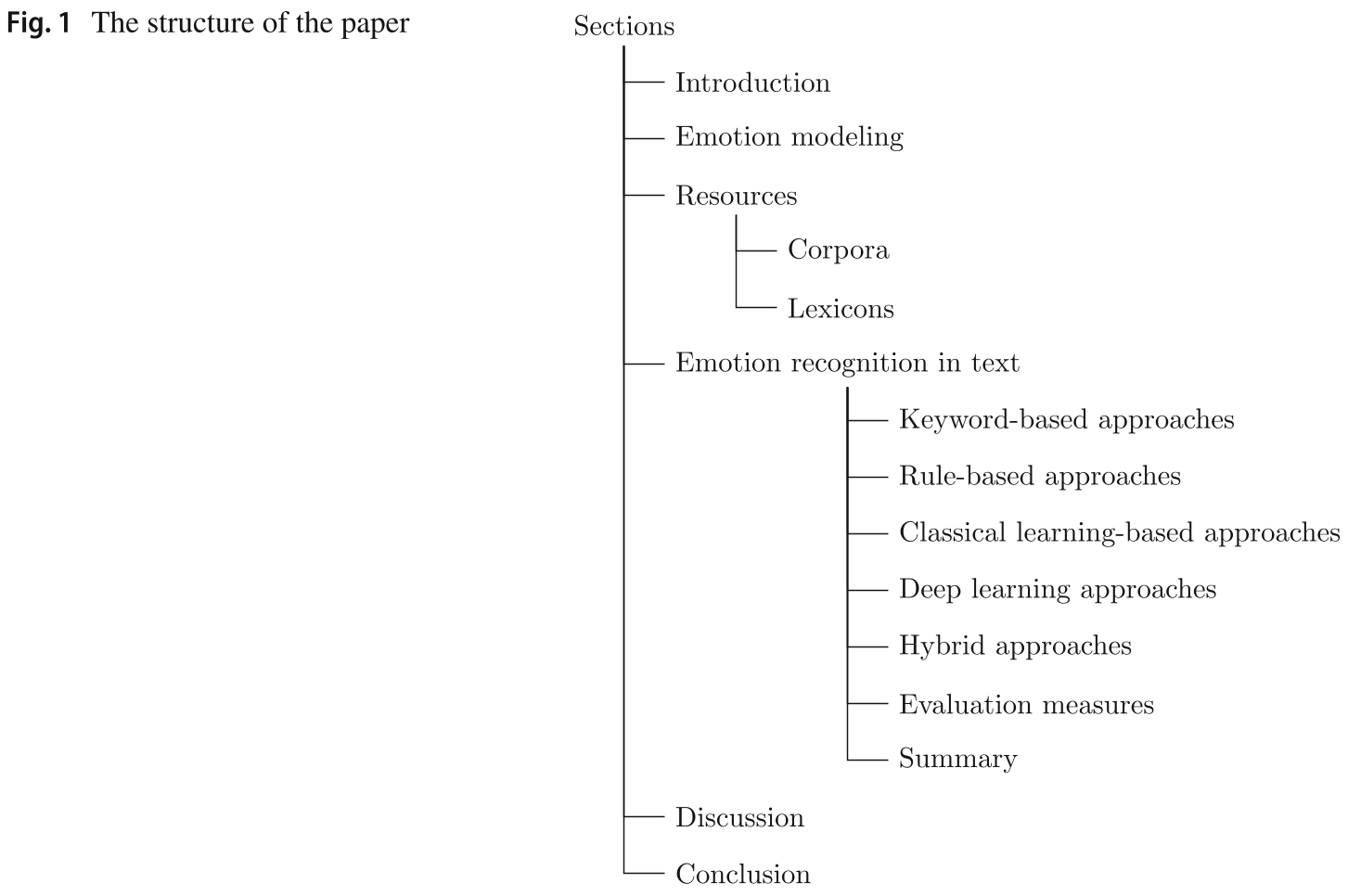 Figure 1: The taxonomy of emotion recognition approaches investigated in the survey.
The Core Insight: Feature Engineering vs. Representation Learning
The survey observes a pivot: Classical methods depend heavily on selecting the "right" features (capitalization, punctuation, emoticons). In contrast, Deep Learning models like the one shown below utilize embedding layers and attention mechanisms to "weight" specific words based on their emotional contribution to the context.
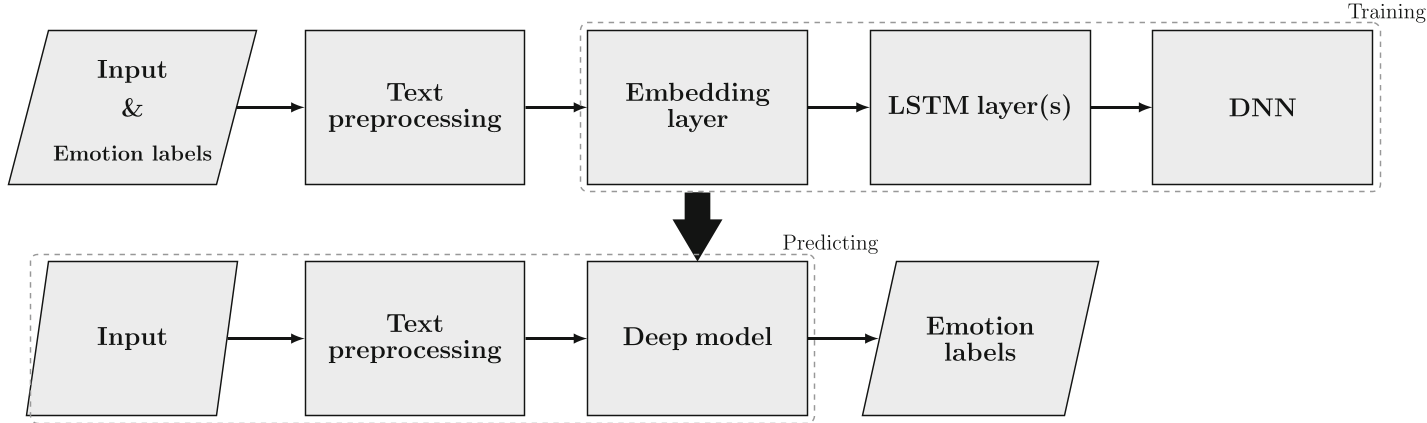 Figure 2: A typical LSTM-based architecture for emotion classification.
Experiments & Results: Benchmark Showdown
The authors compare results across multiple datasets. A key finding is the impact of Data Imbalance. For instance, in the Alm dataset, "Positive" emotions only make up ~10% of the data, leading to poor performance in that specific class compared to "Neutral" or "Sorrow."
| Approach | Typical Performance (F-Score/Accuracy) | Top Ranked Teams (SemEval) |
|---|---|---|
| Keyword-based | High variability, context-dependent | N/A |
| Deep Learning | ~58.8% (Jaccard) | Baziotis et al. [18] |
| Hybrid | ~84% (on specific balanced blogs) | Badaro et al. [12] |
The study highlights that Transfer Learning (pre-training on massive unlabeled tweet datasets) is the most effective way to handle the small size of annotated emotion corpora.
Critical Analysis & Conclusion
Why Hybrid wins
Hybrid models are inherently more robust. While Deep Learning captures the "latent" features, lexicons (like NRC or SentiWordNet) provide a safety net for domain-specific terminology that a neural network might miss if it wasn't in the training set.
Limitations & Future Work
- The "Happy" Problem: Across SemEval-2019, many models struggled to distinguish "Joy" from "Others" due to class overlap.
- Culture & Language: Most resources are English-centric. There is a dire need for high-quality corpora in Arabic, Chinese, and Spanish to move beyond English-biased emotion models.
- The Era of Transformers: The paper accurately predicts the dominance of Transformers (BERT, GPT). These models' ability to handle bidirectional context essentially solves many of the "implicit" recognition issues faced by earlier RNNs.
Final Takeaway: Emotion recognition is shifting from "Word spotting" to "NLU (Natural Language Understanding)." If you're building a system today, start with a Pre-trained Transformer and augment it with an Affective Lexicon for the best of both worlds.