
Decoding the Digital Heartbeat: Which Emotional Brand Values Drive Tourism Engagement?
Which emotional brand values do my followers want to hear about? An investigation of popular European tourist destinations
This study investigates the communication of European destination brands through Twitter and Facebook, focusing on emotional adjectives. By analyzing over 21,000 posts from top DMOs using Aaker’s brand personality scale, it identifies specific "effective values" that maximize user engagement across different platforms.
Executive Summary
TL;DR: In the hyper-competitive landscape of European tourism, "what" you say matters less than "how" you make followers feel. This research analyzes 15,000+ tweets and 6,000+ Facebook posts from 10 top European destinations to prove that DMOs (Destination Management Organizations) are often shouting into the void with the wrong emotional adjectives. By aligning brand values with platform-specific user psychology—moving from "glamour" to "happiness" on Twitter, or from "tradition" to "getaway" on Facebook—destinations can drastically amplify their digital reach.
Positioning: This work moves beyond simple activity metrics to provide a granular, Aaker-based semantic mapping of "effective" vs. "ineffective" emotional values in digital place branding.
The "Functional" Trap: Why DMOs are Missing the Mark
Most tourism marketing traditionally focuses on the functional: "We have a museum," or "The beach is sunny." However, digital users are seeking Self-Congruity—they follow brands that reflect who they are or who they want to be.
The authors identify a critical "Identity-Image Gap." DMOs often guess which emotional values appeal to their audience, leading to a mismatch where a destination’s self-promotion (Identity) fails to resonate with the user's perception (Image). The result? High posting frequency but low engagement.
Methodology: Semantic Mapping of Emotions
The researchers didn't just count keywords; they used Natural Language Processing (NLP) and the Wu-Palmer similarity measure to calculate the distance between adjectives used in posts and Aaker’s (1997) Brand Personality dimensions:
- Sincerity: (e.g., Honest, Wholesome)
- Excitement: (e.g., Trendy, Daring)
- Competence: (e.g., Reliable, Innovative)
- Sophistication: (e.g., Glamorous, Romantic)
- Ruggedness: (e.g., Outdoorsy, Tough)
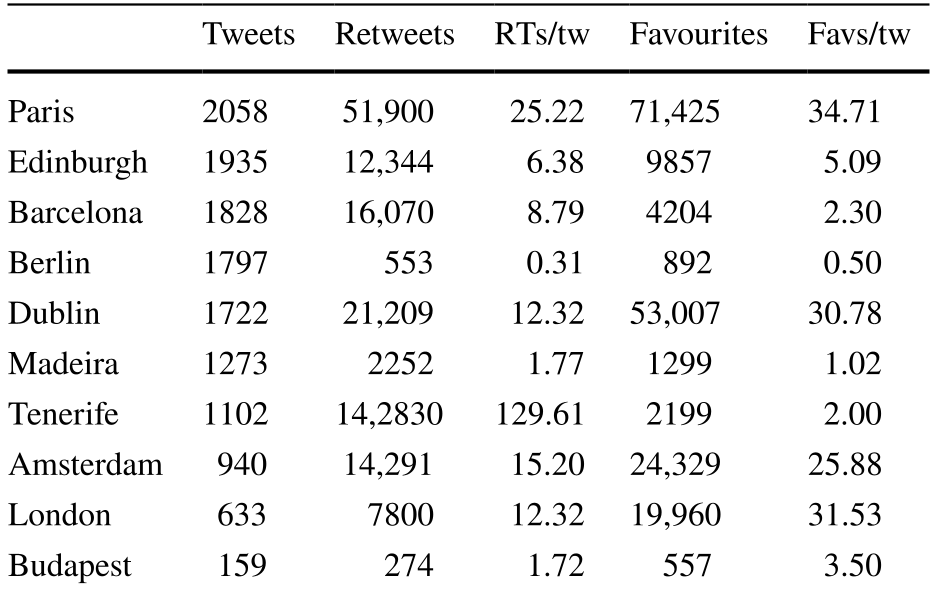 Table 1: Twitter engagement metrics highlighting the massive gap between activity (tweets) and impact (retweets per tweet).
Core Findings: The Platform Divide
Twitter: The Land of Sentiment and Sincerity
While DMOs loved using "Glamorous" and "Fresh" on Twitter, these were not the values that went viral. The highest Retweet Ratios came from:
- Effective: Real, Sentimental, Happiness (Sincerity dimension).
- Ineffective: Ambitious, Magical, Hospitable.
Facebook: Seeking Excitement and Escape
On Facebook, the "Like" reigned supreme, but the triggers were different. While "Honest" and "Traditional" were the most communicated, they weren't the most loved.
- Effective: Getaway, Tough, Young (Ruggedness/Excitement dimensions).
- Warning: Adjectives like "Down-to-earth" or "Family-oriented" actually correlated with higher "Angry" reactions (though not statistically significant, the trend suggests a clash with the 'escapist' nature of the platform).
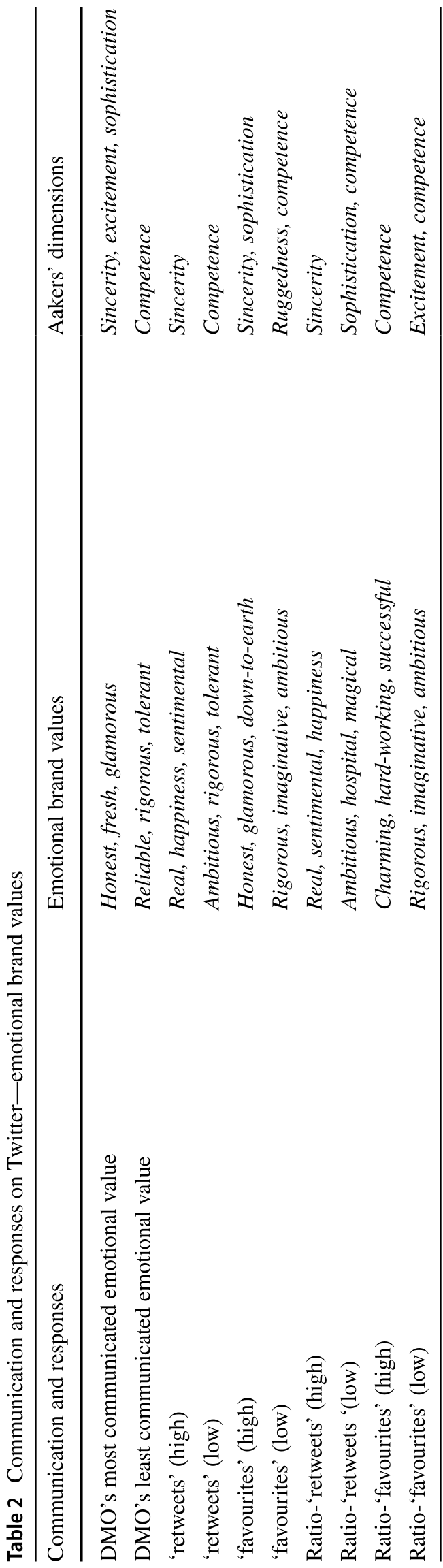 Table 2: Mapping DMO communication against actual user 'Impact' on Twitter shows that Sincerity is the undisputed king of retweets.
Deep Insight: Why Why This Works
The study reveals a psychological divergence in platform usage:
- Twitter acts as a "Social Mirror." Users retweet values like "Happiness" and "Realness" because it reflects a curated, sincere persona to their professional and social circles.
- Facebook acts as a "Mood Board." Users "Like" the idea of a "Getaway" or "Vitality" as a form of aspirational escapism.
Conclusion & Strategic Takeaways
Key Lesson: Stop using a "one-size-fits-all" emotional vocabulary.
- For Twitter: Focus on the human element. Be "Real" and "Sentimental."
- For Facebook: Sell the "Escape." Be "Young" and "Exciting."
Limitations: The study primarily focused on English-language posts and didn't account for the visual impact of photos—a critical next step for researchers looking to combine Computer Vision with Sentiment Analysis in tourism.
Future Outlook: As AI-driven sentiment analysis becomes more accessible, DMOs will likely transition to "Dynamic Emotional Branding," where post adjectives are adjusted in real-time based on trending user sentiments to maximize the "Identity-Image" fit.