
WT-CNN: Elevating Emotional Intelligence through EEG and Deep Learning
Research on Emotional Classification of EEG Based on Convolutional Neural Network
This paper presents an emotional classification study using EEG signals, comparing traditional SVM classifiers with a deep learning-based Convolutional Neural Network (CNN). By utilizing Wavelet Transform (sym8) and Differential Entropy (DE) features, the authors achieve a state-of-the-art average accuracy of 86.90% in identifying positive and negative emotional states.
TL;DR
Researchers have developed a more robust way to "read" human emotions by combining Wavelet Transform (WT) with Convolutional Neural Networks (CNN). By focusing on Differential Entropy (DE) as the core feature, the proposed model achieved an 86.90% accuracy in distinguishing positive from negative emotions, surpassing traditional SVM methods in both precision and cross-subject stability.
Context & Motivation
Emotional recognition is a cornerstone of next-generation Human-Computer Interaction (HCI), with applications ranging from autonomous driving safety to mental health monitoring. While facial expressions and voice are easy to capture, they are easy to "fake." EEG signals, however, provide an authentic, involuntary reflection of the brain's internal state.
The challenge lies in the nature of EEG: it is noisy, non-stationary, and "shallow" models (like SVMs) often fail to capture the intricate patterns hidden within the signal. This paper addresses these limitations by shifting from manual feature engineering to a deep learning paradigm.
Methodology: The WT-CNN Framework
The authors' approach follows a rigorous pipeline: Induction -> Acquisition -> Preprocessing -> Feature Extraction -> Classification.
1. The Power of sym8 Wavelets
Before feeding data into the CNN, the raw signals are decomposed using the sym8 (Symlet) wavelet. Unlike standard wavelets, sym8 offers better symmetry, which reduces phase distortion during signal reconstruction—a critical factor when dealing with the high-sensitivity requirements of brain waves.
2. Why Differential Entropy (DE)?
The study compared four features: Band Energy (E), Energy Ratio (REE), Log Energy Ratio (LREE), and Differential Entropy (DE).
- The Finding: DE emerged as the clear winner. While E and REE produced erratic results (sometimes below 50% accuracy), DE provided a stable foundation for the classifier.
3. Tailored CNN Architecture
The proposed CNN isn't just a standard image classifier. Since EEG feature matrices (64 channels × 5 bands) are not square, the authors used rectangular convolution kernels.
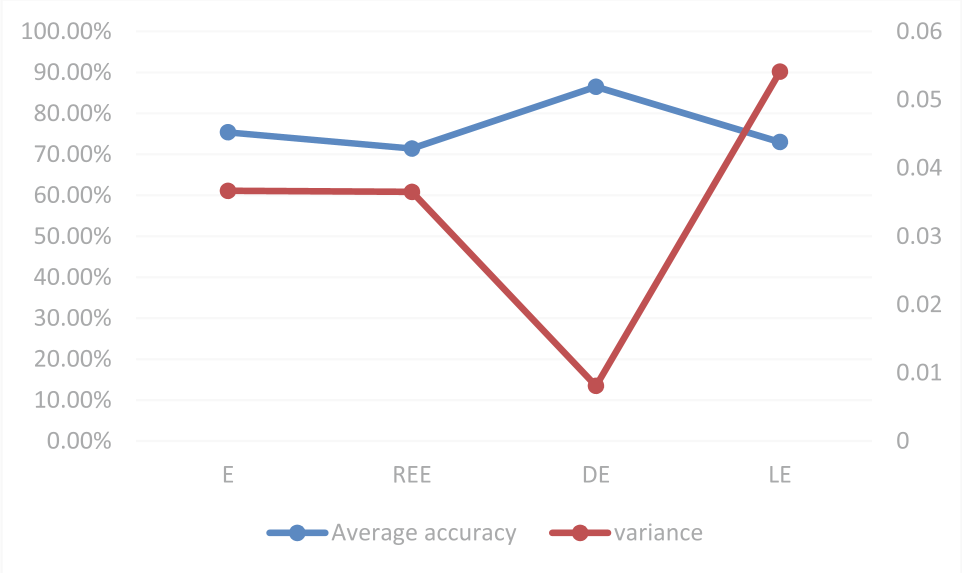 Figure 1: The architecture of the proposed CNN, specialized for DE feature matrices.
Key Design Choice: The model excludes Pooling Layers. Usually used for dimensionality reduction, pooling was omitted here to preserve the subtle feature variations necessary for distinguishing nuanced emotional states.
Experimental Results
The study conducted a head-to-head battle between WT-SVM and WT-CNN.
- Baseline (SVM): Achieved a respectable 86.51% using DE features.
- WT-CNN: Pushed the boundary to 86.90%.
While the numerical jump might seem modest, the variance analysis reveals the real victory. The CNN model showed much higher stability across the six different subjects, suggesting it is better at handling the "Individual Difference" problem that plagues physiological signal processing.
 Figure 2: Statistical comparison showing higher accuracy and lower variance for the WT-CNN model.
Critical Insight & Outlook
This research proves that even a "lightweight" deep learning model can outperform mature machine learning techniques in bio-signal analysis. The transition from SVM to CNN allows the system to learn secondary features—patterns within the extracted features themselves—that humans might not know how to define.
Limitations: The study is limited by its small sample size (6 subjects). For deep learning to truly shine, larger datasets are required to avoid overfitting and to capture a broader spectrum of human emotional responses.
Future Directions: Integrating Temporal information (using RNNs or Transformers) or Spatial information (using GCNs) alongside this CNN approach could potentially push emotional classification accuracy beyond the 90% threshold, making real-time "mind reading" a viable tool for clinical and industrial use.
Conclusion
By optimizing the feature extraction through Differential Entropy and leveraging the hierarchical learning of CNNs, this work sets a new baseline for EEG-based emotion recognition, moving us one step closer to truly empathetic machines.