
Decoding the Pulse of Crisis: How Emotions Shape the Architecture of Social Networks
Emotional Communication During Crisis Events: Mining Structural OSN Patterns
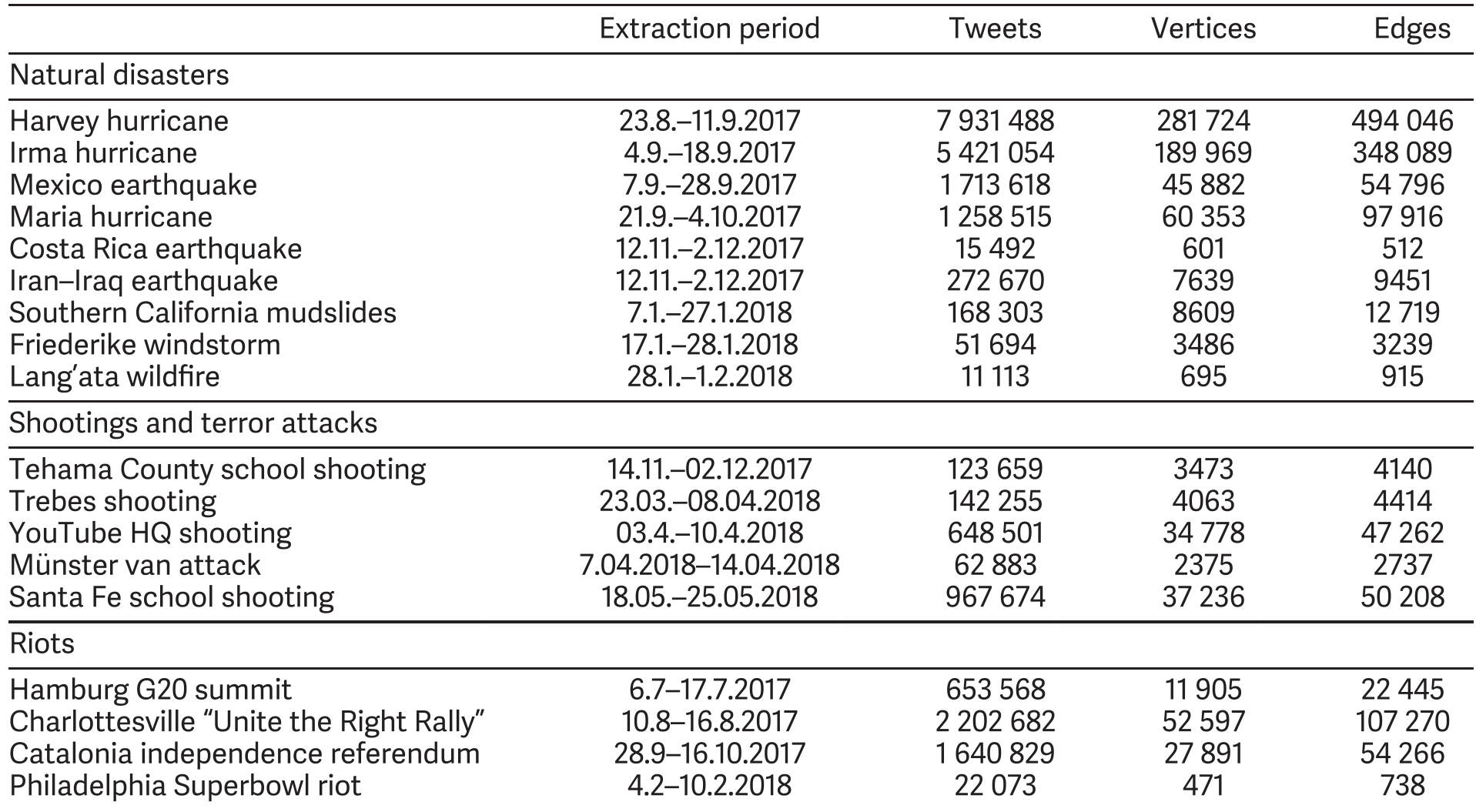
This study investigates the structural dynamics of emotional communication on Twitter during 18 crisis events. By analyzing a dataset of 23.31 million tweets, the authors introduce "emotion-exchange motifs"—recurring triadic network patterns—to categorize how specific emotions like fear, anger, and joy shape the topology of social media interactions.
TL;DR
When disaster strikes, we don't just tweet—we form specific structural patterns based on our feelings. This study analyzes 23 million tweets to reveal that emotions like disgust trigger aggressive message clusters, while joy and hope build chain-like structures that foster social bonding. By mapping these "emotion-exchange motifs," we can finally see the hidden geometry of human resilience and panic.
Context: Beyond Simple Sentiment
In the wake of a hurricane or a public shooting, social media becomes a digital town square. Traditionally, researchers have looked at what people say (Sentiment Analysis). However, this paper argues that the structure of these conversations—who mentions whom and in what emotional context—is far more telling. The study bridges the gap between psychology and network science by treating emotions as the "layers" of a complex multiplex network.
Methodology: High-Performance Motif Mining
The researchers tracked 18 crisis events (2017–2018) using a rigorous 7-phase pipeline.
The Pipeline:
- Emotion Detection: Using the NRC lexicon and AFINN dictionary, they classified tweets into eight basic emotions (Anger, Fear, Sadness, etc.).
- Multiplex Construction: They built an 8-layer network where each layer contains only edges of a specific emotion.
- Motif Discovery: Using the ESU (Exact Subgraph Enumeration) algorithm, they looked for triadic (3-node) patterns that appeared more frequently than they would by pure chance.

Key Insights: The Geometry of Feeling
The study discovered that the structural "signature" of a conversation changes depending on the dominant emotion.
1. The "Broadcaster" vs. The "Recipient"
The most common patterns across all crises were the 021D (Broadcaster) and 021U (Message-Receiver) motifs.
- Fear and Anticipation often drive the "Receiver" motif, as people mention officials to seek information or express concern.
- Disgust creates high-intensity "heated" exchanges, where a single user might fire off multiple messages to different people, or a group might dog-pile on a controversial figure.
2. The Healing Power of Positive Motifs
A fascinating finding is the role of Joy and Sadness. Despite being opposites, they share a similar structural profile. They both form 021C (Chain) and 030C (Cyclic) motifs.
- In the aftermath of a crisis, positive emotions (gratitude, hope) serve as a therapeutic "tension release."
- These motifs involve three users in a directed flow, representing a higher degree of social cohesion and cooperation compared to the one-way screaming matches often associated with anger.
Emotional Evolution Over Time
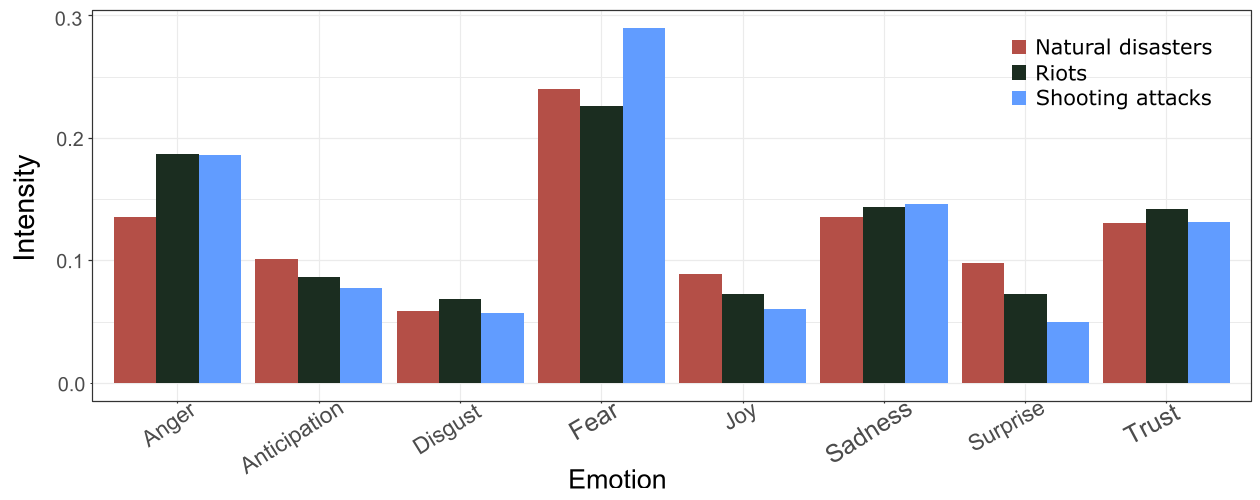
The researchers noted a temporal shift in emotional intensity. Fear dominates the initial shock of the event. As the situation unfolds, Anger and Disgust spike—especially in riots or shootings where a "human culprit" exists to be blamed. However, toward the end of an event's lifecycle, positive emotions usually prevail, acting as a mending mechanism for the community.
Critical Analysis & Takeaways
The real value of this work lies in its predictive potential. By monitoring the real-time formation of these motifs, emergency responders can:
- Identify Panic Peaks: A sudden surge in "disgust" or "fear" motifs can signal a breakdown in public trust.
- Detect Misinformation: Malicious actors and bots often disrupt natural emotional motifs. Detecting "unnatural" structural patterns can help flag bot-driven propaganda.
Limitations: The study relies on Lexicon-based emotion detection, which can struggle with sarcasm or regional slang. Future work integrating Transformer-based models (like BERT or RoBERTa) could increase the precision of the underlying emotion labels.
Conclusion
This paper demonstrates that Online Social Networks are more than just data pipes; they are living, emotional infrastructures. By understanding the "motifs" of our communication, we gain a deeper insight into human sociology under pressure, providing a roadmap for more empathetic and effective crisis management in the digital age.