
Decoding the Emotional Fingerprint: Discovering Logic Rules from Wearable Data
Discovering Emotional Logic Rules From Physiological Data of Individuals
This paper presents a "White Box" knowledge discovery approach to identify emotional logic rules from physiological data (GSR, Respiration, PPG, Temperature) using the C4.5 decision tree algorithm. By analyzing the DEAP dataset, the authors successfully extracted high-accuracy, human-interpretable rules for valence and arousal dimensions across individual subjects.
TL;DR
Researchers have moved beyond "Black Box" AI to extract human-readable logic rules that explain how our bodies react to emotions. By analyzing physiological signals like heart rate and skin conductance from the DEAP dataset, this study demonstrates that while we share emotional categories, our physiological "signatures" are uniquely individual, achieving 100% accuracy in person-specific emotional classification.
The "Black Box" vs. "White Box" Dilemma
In the quest to make computers understand human feelings (Affective Computing), the industry has leaned heavily on Deep Learning. While effective, these models are often "Black Boxes"—they might tell you that a user is sad, but they can't explain why the sensors reached that conclusion.
The authors of this paper argue that for medical and wearable applications, we need "White Box" models. These models—specifically Decision Trees—provide transparent logic rules (e.g., "If Heart Rate increases AND Skin Temperature drops, then High Arousal"). This transparency is vital for understanding the underlying physiological processes that differ from person to person.
Methodology: Mining the DEAP Dataset
The study utilized the DEAP dataset, a gold standard in affective computing containing physiological responses from 32 participants. The team focused on four modalities common in modern wearables:
- GSR (Galvanic Skin Response): Measuring sweat gland activity.
- Plethysmography (PPG): Tracking blood flow and heart rate via light absorption.
- Respiration: Observing breathing patterns.
- Temperature: Monitoring skin surface heat.
The Feature Engineering Secret Sauce
Rather than feeding raw data into a model, the authors created a sophisticated feature set. They extracted 11 statistical attributes per sensor, including a critical "Relational Measure" (e.g., finding the standard deviation of respiration at the exact moment the GSR peaked). This captures the temporal synchronization between different body systems.
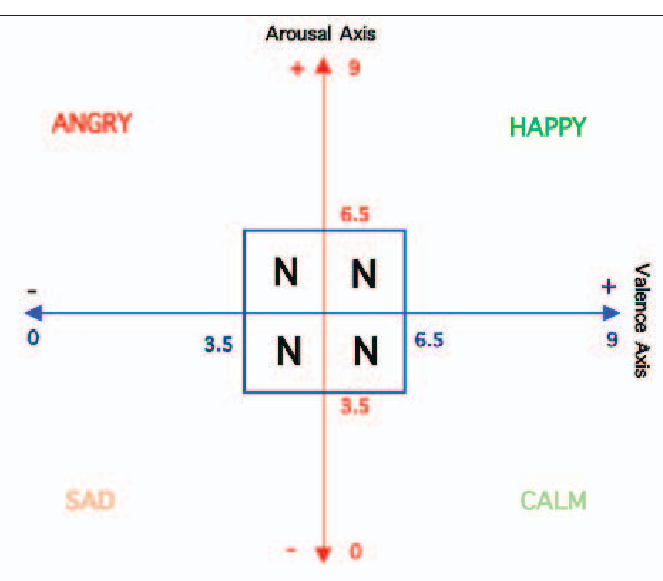 Figure 1: The 3-class model used to categorize Valence (Pleasure) and Arousal (Intensity).
Experimental Insights: Your Body Doesn't Lie, but It is Unique
The researchers generated 64 decision trees (2 per participant for Valence and Arousal). The results were striking: the "logic" of emotion is not universal.
Case Study: Participant 5 and 9
For Participant 5, Negative Valence (feeling bad) was perfectly predicted (100% accuracy) when respiration median values were slightly deviant and blood flow (PPG) showed significant changes.
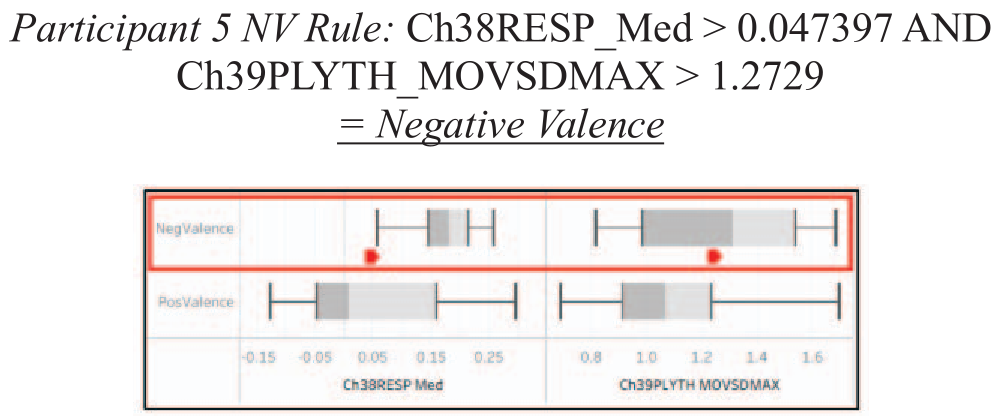 Figure 2: Box and Whisker plots show distinct physiological ranges for positive vs. negative emotional states for Participant 5.
For Participant 9, High Arousal was linked to a specific minimum threshold of skin conductance (GSR) and a high rate of change in that conductance. This represents a "quantifiable emotional signature."
Key Results & Rule Quality
The study evaluated rules based on Lift (strength of the rule) and Accuracy.
- High Performance: Multiple rules achieved 90-100% accuracy.
- The "Individual" Conclusion: Rules that worked for one participant often failed for others, confirming that emotional AI must be personalized to be effective.
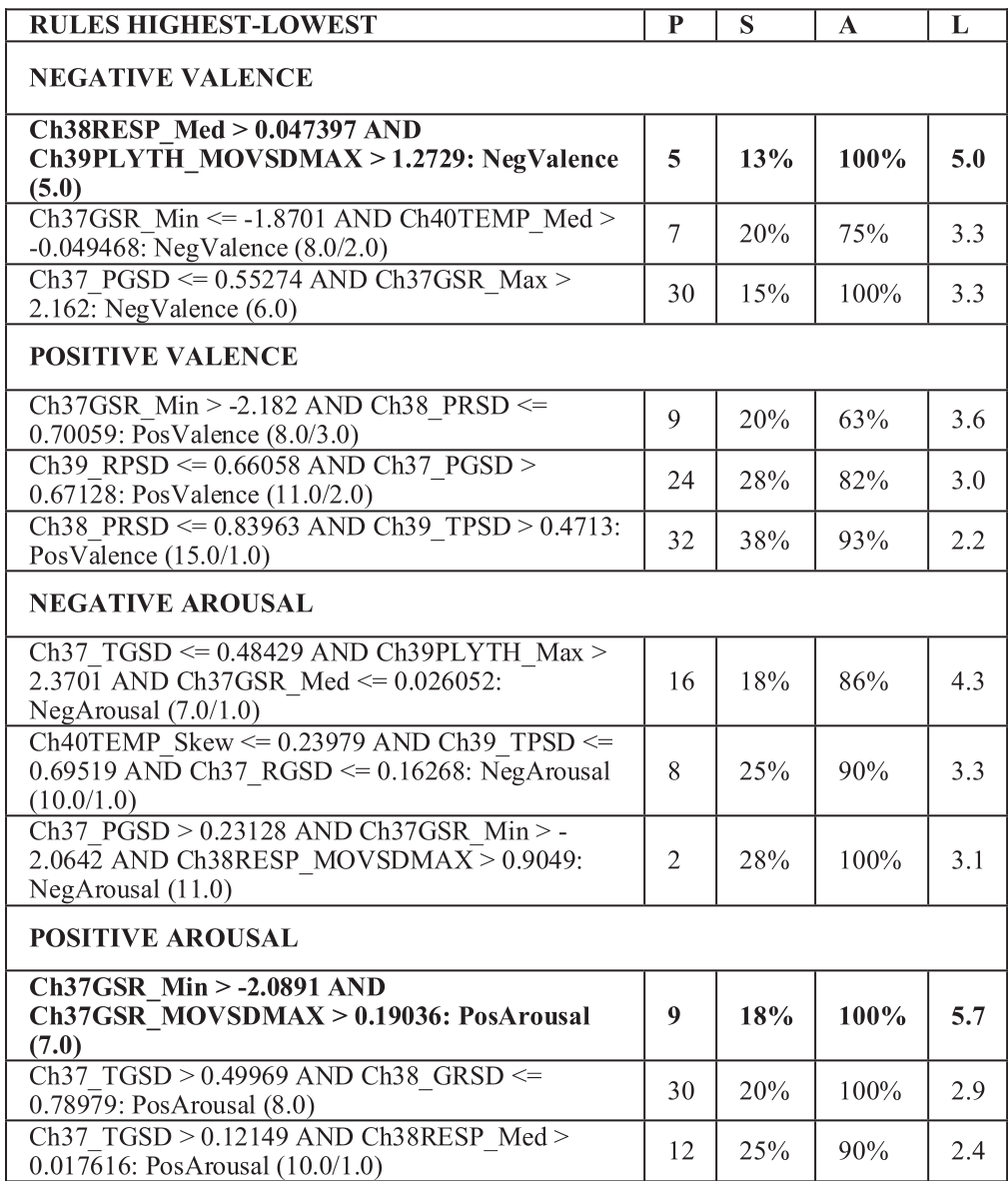 Table 1: Examples of top-performing logic rules extracted for different emotional states.
Critical Analysis & Future Outlook
The strength of this work lies in its interpretability. By moving away from neural networks, the authors provide a framework that clinicians and wearable designers can actually use to understand human physiology.
Limitations:
- The sample size (32 participants) is standard for academic datasets but small for global products.
- The reliance on individual models means a "cold start" problem exists for new users.
Takeaway: The future of wearable tech isn't just about collecting data; it's about discovering the unique logic of your body. This research paves the way for smartwatches that don't just track steps, but truly understand your unique physiological response to stress and joy.