
EmNN: Enhancing Facial Recognition through Simulated Anxiety and Confidence
Application of an emotional neural network to facial recognition
The paper introduces an Emotional Neural Network (EmNN) utilizing a modified back-propagation algorithm (EmBP) for facial recognition. By simulating two artificial emotions—Anxiety and Confidence—within the learning process, the method achieves superior generalization and inference speed compared to conventional neural networks.
TL;DR
This research presents a novel Emotional Neural Network (EmNN) that moves beyond standard logic-driven AI by simulating artificial emotions. By introducing Anxiety and Confidence parameters into the Back Propagation algorithm, the author demonstrates that "emotional machine learning" can significantly improve facial recognition accuracy and inference efficiency.
Background: Why Emotions Matter in AI
Most AI research focuses on the "rational" brain, yet human intelligence is inextricably linked to emotions. In human learning, emotions act as meta-regulators: Anxiety focuses our attention when facing new stimuli, while Confidence allows us to rely on past experiences as we master a task. The author argues that for machines to handle unpredictable, complex information, they need internal regulatory signals—an "artificial affect"—to modulate their learning behavior.
Methodology: The Emotional Back Propagation (EmBP)
The core innovation lies in the modification of the standard weight-update rule. The EmNN includes a dedicated "emotional neuron" in its three-layer architecture.
1. Modeling the Affective Parameters
- Anxiety (): This parameter is a function of the global pattern average and the current feedback error. It is highest (set to 1.0) when the network first encounters a task and decays as the model converges.
- Confidence (): This acts as an "increasing inertia" term. It is inversely related to anxiety; as the model becomes more "familiar" with the data, it relies more on previous weight changes to stabilize learning.
2. The Weight Update Rule
Traditional BP relies on the learning rate () and momentum (). The EmBP adds two emotional components to the weight change ():
- A term driven by Anxiety multiplied by the error signal and the global pattern average.
- A term driven by Confidence applied to the previous weight change.
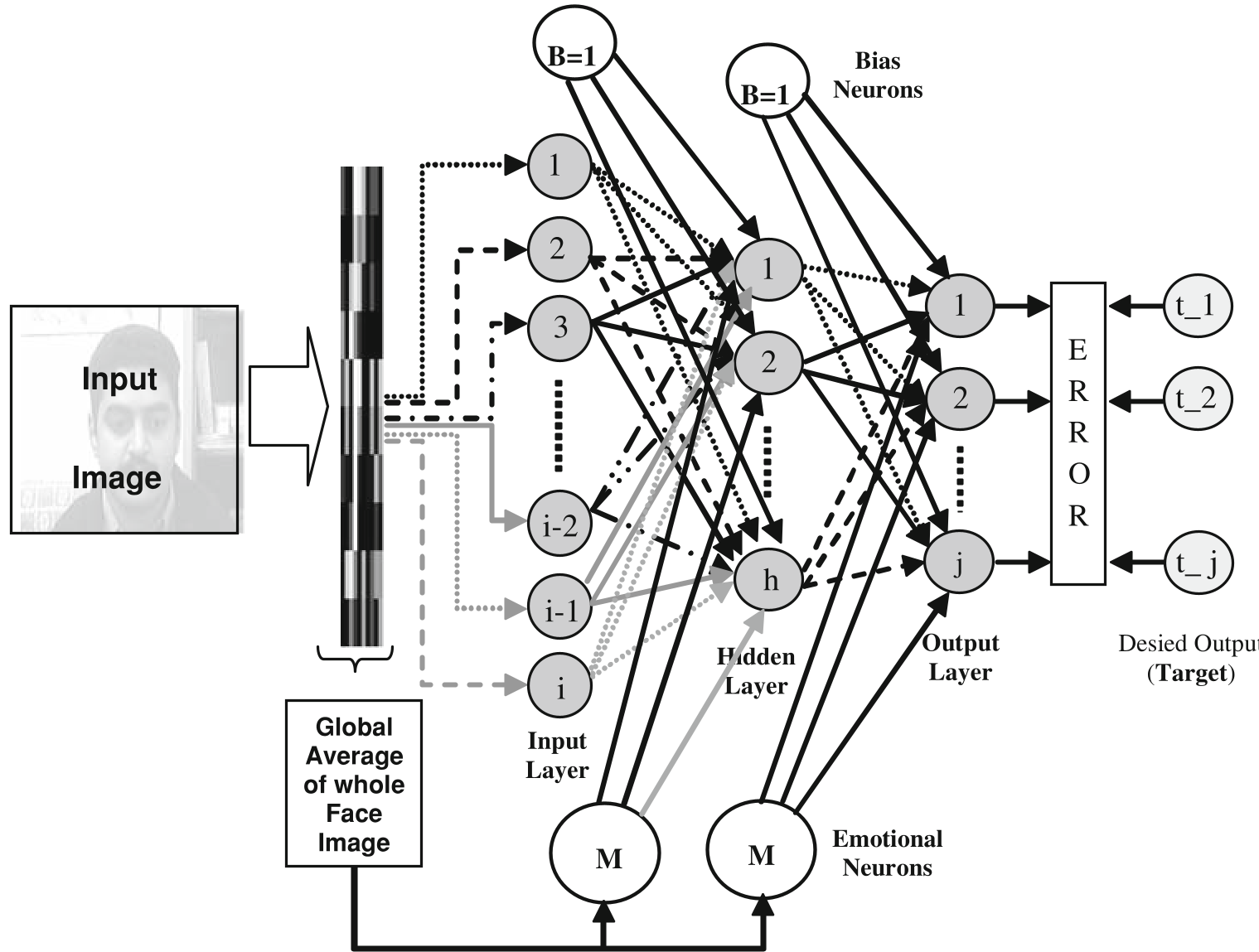 Figure 1: The training topology of the emotional neural network, showcasing the integration of emotional parameters.
Experiments: Facial Recognition under Pressure
The model was tested on a database of 270 images featuring 30 individuals across different orientations (Left, Right, Straight) and contrast levels.
Global Pattern Averaging
To simulate the human "glance," the author used Global Pattern Averaging. Instead of feeding raw pixels, the image is segmented and averaged, creating a "fuzzy" representation that reduces computational overhead while retaining essential diagnostic features.
Results & Comparison
| Metric | Emotional NN | Conventional NN |
|---|---|---|
| Recognition Rate (Testing Set) | 87.78% | 83.33% |
| Iterations to Converge | 3,795 | 3,184 |
| Inference Speed | 5.22 × 10⁻⁴ s | 8.78 × 10⁻⁴ s |
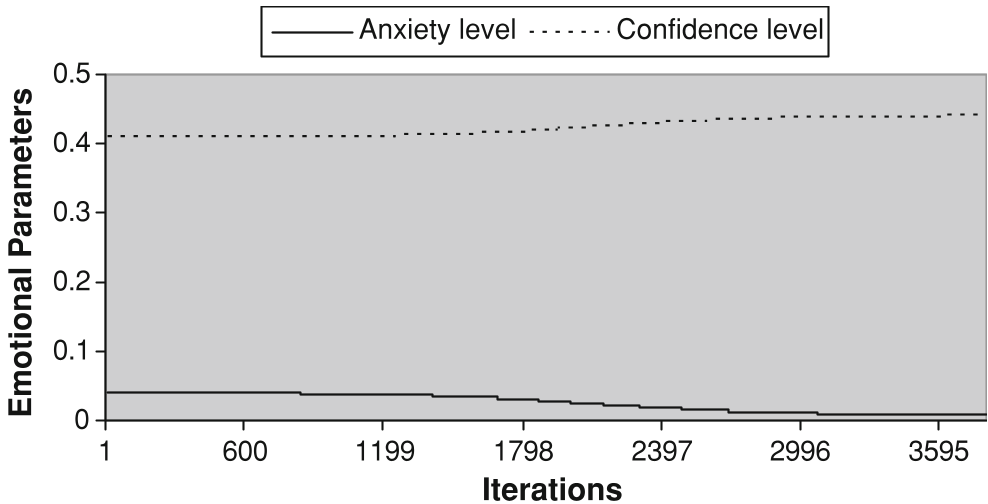 Figure 2: Graphs showing the dynamic behavior of Anxiety and Confidence during the learning process.
Critical Insight: The "Steady Steps" Intuition
From a mathematical perspective, why does this work? As the model approaches the minimum of the cost function, the anxiety level drops. This signals the system to stop being swayed by the errors of individual patterns (which might be outliers or noise) and instead follow the "accumulated memory" of recent steps (Confidence). This mimics the transition from a cautious student to a confident expert.
Conclusion & Future Outlook
The EmNN demonstrates that artificial emotions are not just a philosophical curiosity but a functional tool for improving neural network performance. While the training phase is slightly more complex, the gains in generalization—identified by the network's ability to recognize a "straight" face after only seeing "left" and "right" orientations—and personal inference speed make a compelling case for affect-aware architectures.
Future AI might not need to "feel" joy or sadness, but it certainly benefits from feeling a bit of artificial "anxiety" when the error is high.