
Beyond Instantaneous Feeling: Extending EmotionML for Deep Personality Modeling
Estendendo o conhecimento afetivo da EmotionML
This paper proposes an extension to the EmotionML 1.0 standard by integrating complex psychological layers including Personality, Mood, and Affection. The core method builds upon the Affective Knowledge Representation (AKR) to provide a hierarchical structure for more nuanced Human-Computer Interaction (HCI).
TL;DR
Human emotions don't exist in a vacuum; they are filtered through the lens of personality and mood. This paper argues that the W3C standard EmotionML 1.0 is too superficial for high-stakes Human-Computer Interaction. The authors propose a major extension—incorporating Personality, Mood, and 16 granular emotional components—to transform how machines "understand" and "react" to human affect.
Background: The Gap in Affective Computing
In the realm of Affective Computing, we've become quite good at identifying if a user is "happy" or "sad" based on facial expressions or keywords. However, as the authors point out, these are instantaneous and volatile states.
The missing link is Personality. Personality is stable and predictable; it dictates how a person usually reacts. For instance, a "Fear" response in a person with an "Anxious" personality is interpreted differently than in someone with a "Brave" personality. Current standards like EmotionML 1.0 lack the tags to represent this crucial hierarchy.
The Hierarchical Insight (Methodology)
The authors pivot from a flat emotion-tagging system to a hierarchical Affective Knowledge Representation (AKR). They argue that compute agents should follow a top-down influence model:
- Personality: The stable core.
- Affection/Mood: The medium-term filter.
- Emotion: The short-term reaction.
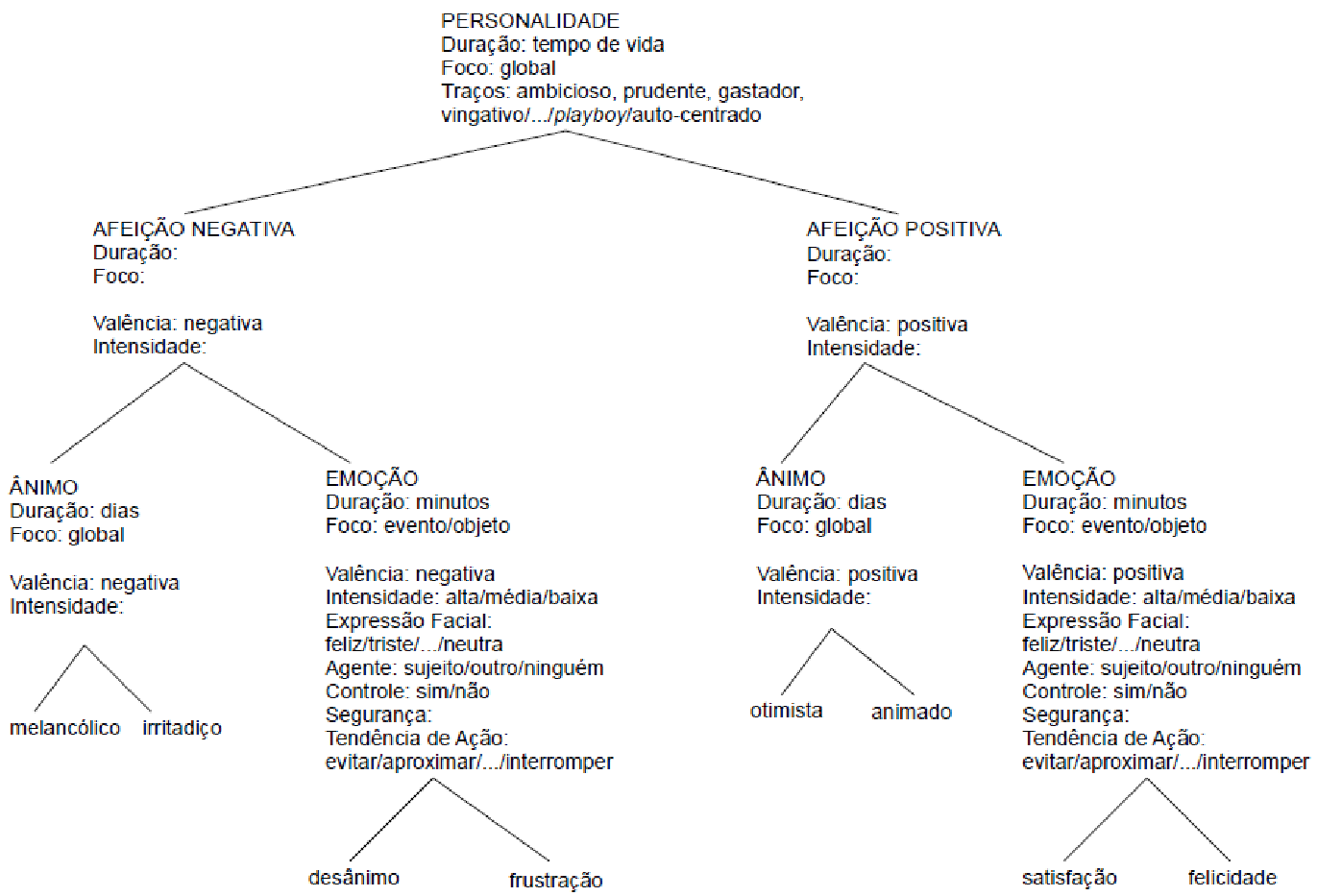 Figure 1: The hierarchical model adapting Personality, Affection, Mood, and Emotion.
Expanding the Tag Set
The proposal adds 16 specific components to the <dimensions> tag. This allows the system to describe not just what the emotion is, but its Focality (is it about a specific object?), Controlability (does the subject feel they can change the situation?), and Agency (who caused it?).
Decoupling Basic and Derived Emotions
A significant contribution is the categorization of 9 Basic Emotions (based on the OCC model) and their expansion into 28 Derived Emotions. The difference between basic "Fear" and "Frustration" or "Remorse" is often a matter of Intensity and Cognitive Appraisal.
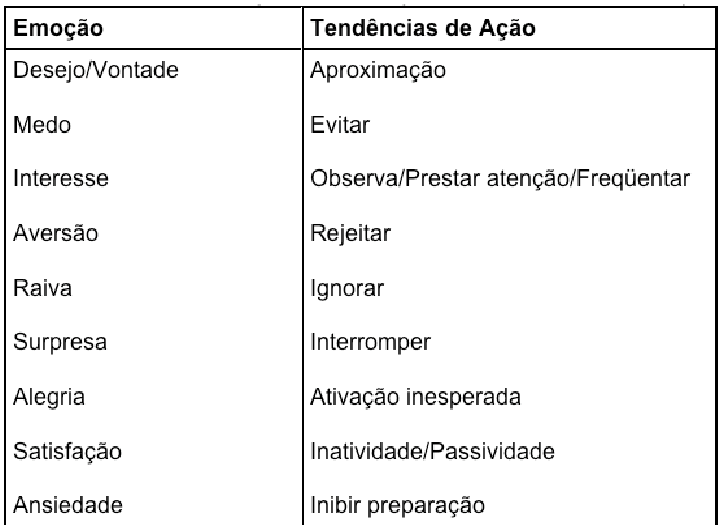 Table 1: Mapping Basic Emotions to Action Tendencies (e.g., Fear leads to 'Avoid', Anger leads to 'Ignore').
Proposed XML Structure
The technical core of the paper is the new schema. Instead of a standalone <emotion> tag, the authors suggest a nested structure:
```xml
<personality type="introvert">
  <affection type="stable">
    <mood type="cheerful">
      <emotion name="joy">
        <dimensions>
          <intensity value="0.8" />
          <valence value="positive" />
          <!-- New 16 components go here -->
        </dimensions>
      </emotion>
    </mood>
  </affection>
</personality>
```
Critical Insight & Future Outlook
This work serves as a foundational step toward PersonalityML. By formalizing the relationship between stable traits and fleeting feelings, the authors provide a roadmap for more empathetic AI.
Limitations: The paper is primarily conceptual and architectural. While it provides a robust markup structure, it does not detail the machine learning architectures required to automatically fill these complex tags from raw sensor data (like voice or video).
Future Impact: As we move toward AI companions and sophisticated digital twins, the move from simple "Emotion Recognition" to "Personality Synthesis" (as outlined here) will be the key differentiator in creating believable, long-term human-AI relationships.